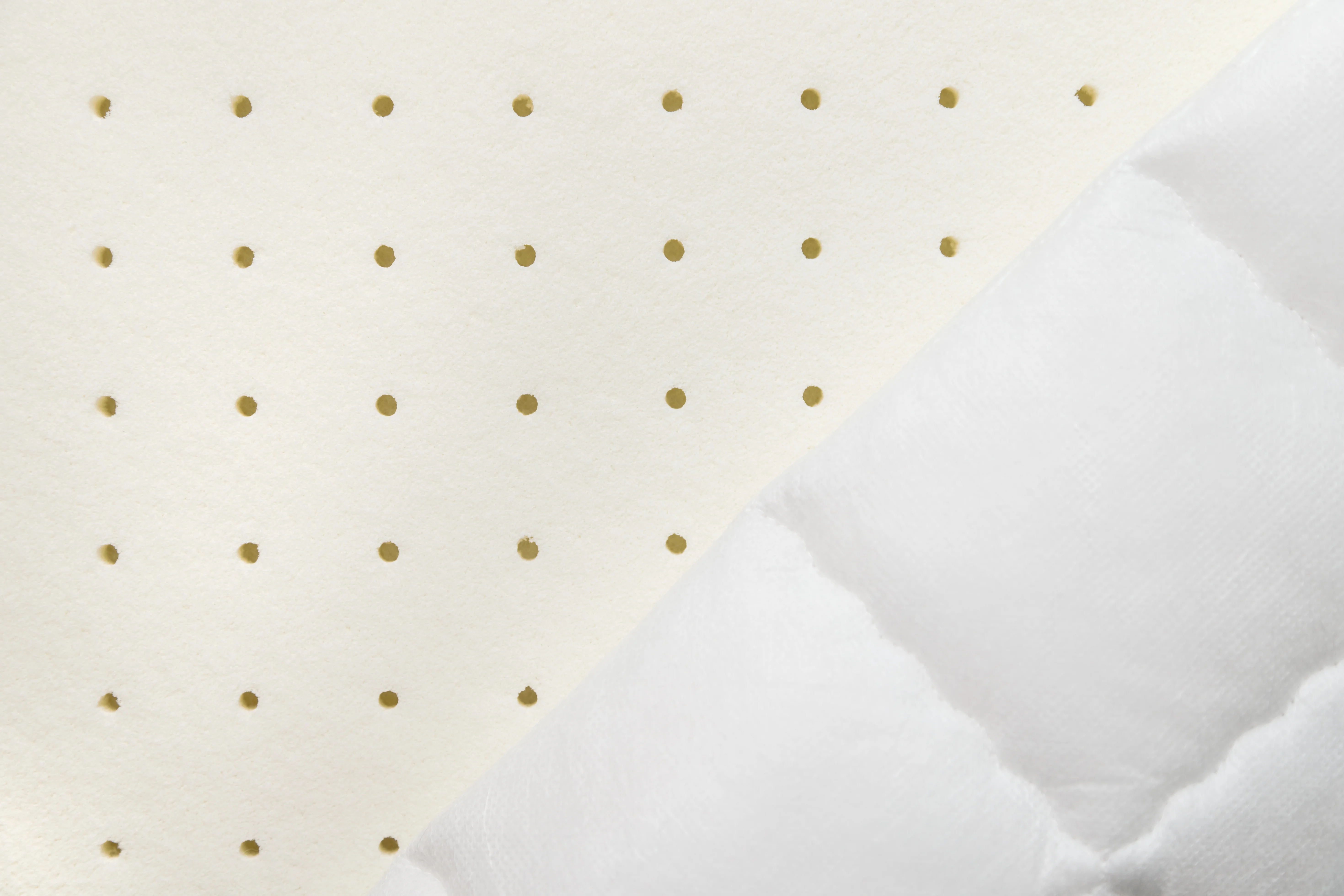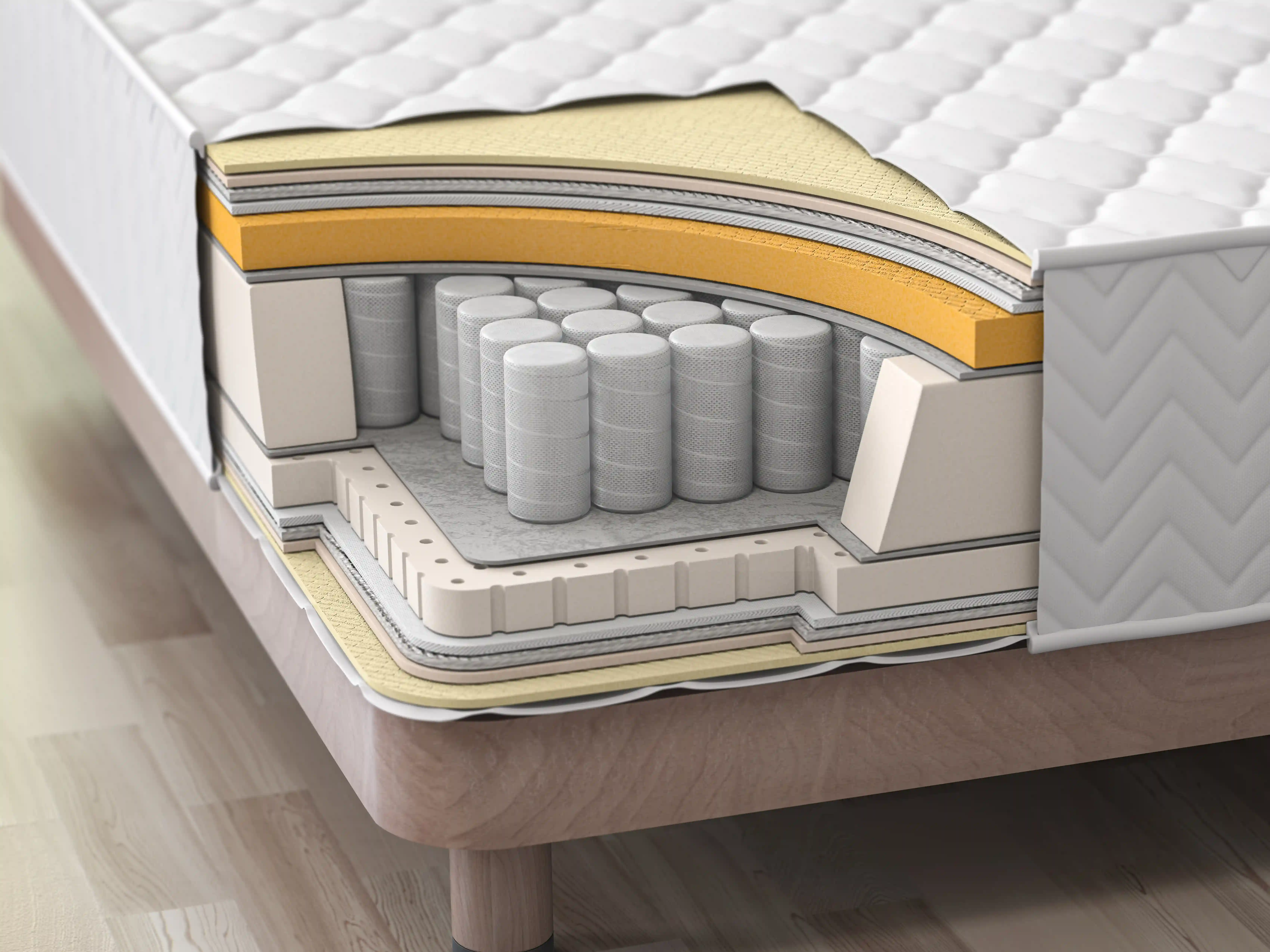


A pillow-top mattress has an additional surface-upholstery panel sewn over the main mattress body. A true pillow top usually has its own side panel, called a gusset, and a visible seam or narrow gap where it joins the mattress below 12.
Pillow top describes how the upper cushioning is built and finished. It does not identify the support core, filling material, firmness, quality, price level, or suitability for a pain condition. A mattress with this top could use coils, foam, latex, air chambers, or another support system beneath it.
Pillow top, Euro top, and tight top
These terms describe the appearance and attachment of the upper upholstery, but sellers do not always use them consistently. An exploded-view diagram and a complete layer list are more dependable than the name.
| Top style | Usual construction | What the name does not establish |
|---|---|---|
| Pillow top | A raised, separate-looking panel sewn over the mattress surface, usually with a visible gusset or seam | Its fill, firmness, thickness, or the support core below |
| Euro top | A raised comfort section attached flush with the mattress perimeter for a more squared-off edge | Better edge support, higher density, or a particular feel |
| Tight top | No separate raised pillow-top or Euro-top panel; cushioning may still sit beneath the continuous cover | A hard or thin mattress |
Industry glossaries distinguish a pillow top's separate encasement from the squared, tape-edge finish of a Euro top. Consumer-facing descriptions often add that Euro tops tend to use denser or firmer materials, but that is a tendency rather than a requirement. Check the actual construction instead of using the outline as a quality ranking 234.
A separate mattress topper is different. It is an accessory laid on an existing mattress rather than an integrated part of the finished mattress. It can usually be removed or replaced without replacing the mattress 5.
What is inside a pillow top?
The panel may contain one material or several. Common examples include conventional polyurethane foam, memory foam, latex, polyester fiberfill, cotton, wool, or blends. Quilting can hold thin foam or fiber layers to the cover, while tufting or stitching patterns can change how freely the filling moves and compresses.
Ask for the following details:
- each material in order and the thickness of each layer
- polyurethane-foam density and firmness or indentation-force measurement when disclosed
- latex type, blend, density, and indentation-load measurement when disclosed
- fiber type, amount, method of bonding or needling, and quilting or tufting pattern
- the layers beneath the pillow top, including transition materials and the support core
Thickness alone does not predict the result. A thick, loosely filled panel may compress quickly, while a thinner panel made from a more resilient material may change less. Quilting, layer firmness, density, temperature sensitivity, the mattress beneath, and repeated loading all affect how much of the initial loft remains.
For flexible polyurethane foam, density measures mass per unit volume, while indentation force deflection measures the force needed to compress a test sample by a stated amount. Density and firmness are separate properties, so a denser foam is not automatically firmer. The test method and sample conditions also matter when comparing reported figures 6.
An IFD or ILD figure describes a tested component under stated conditions, not the firmness of the finished mattress. Compare numbers only when the material, sample thickness, compression percentage, and test method are clear. The cover, quilting, neighboring layers, and support core can make two tops with similar component figures feel different.
What can a pillow top change?
The added panel can make the first contact with the bed feel more cushioned. How far a sleeper sinks, how quickly the surface recovers, and whether deeper layers become noticeable depend on the complete design.
Pressure and support
A compressible top can redistribute contact at the surface, but the label does not prove useful pressure relief. If the panel compresses through easily, the sleeper may feel the firmer layers below. If it allows deep sinking, movement or edge use may become harder. Support depends on how the whole mattress responds under the sleeper, not on whether the top looks plush.
A pillow top is not an orthopedic or back-pain treatment. Pain, numbness, stiffness, and comfort are individual, and a mattress label cannot identify their cause or guarantee improvement.
Temperature
The fill, cover, quilting, protector, sheets, room, and depth of immersion all affect surface temperature. Air space in a coil core does not guarantee a cool pillow top, and a cooling fabric or gel name does not reveal how the finished bed will feel through ordinary bedding.
Motion and response
Slow-recovery foam may damp some surface movement, while springier foam, latex, fibers, or coils may return energy more quickly. The top panel is only one part of the motion path. The support core, foundation, bed size, and how firmly the layers are attached also matter.
Edge feel and movement
A rounded pillow top may compress differently near its seam. A squared Euro top may look firmer at the perimeter without providing stronger support underneath. Sit, lie, turn, and get up near the edge of the exact model if those actions matter in normal use. Notice both surface sink and what the support core does below it.
Height affects more than appearance
Add the pillow top to every other layer when checking total mattress height. The finished height affects:
- fitted-sheet and protector pocket depth
- whether bedding stays tucked under the rounded or squared top
- the height of the sleep surface when combined with the base and frame
- access to headboards, guardrails, and adjustable-base retainer bars
- how easily a person can sit down, stand up, and move across the edge
A taut, shallow protector can compress a soft panel and change its feel. An oversized cover can bunch. Use the mattress's finished dimensions rather than assuming every product sold for a named mattress size has the same depth.
Body impressions, softening, and warranty measurements
A body impression is a visible indentation caused by compression of the mattress materials over time 2. It does not automatically mean the support core is broken, and it is not automatically a defect covered by warranty.
Read how the exact warranty separates normal softening or settling from a covered indentation. Check whether the mattress must be unloaded for a stated recovery period, how depth is measured, the minimum covered depth, and whether quilting or fiber compression is excluded. Also note the required base, stain and damage exclusions, original-purchaser rule, transportation costs, and available remedy.
A warranty is not the same as a sleep trial. The trial addresses preference during a return period. The warranty addresses only its defined defects and conditions. U.S. rules require written warranties on consumer products costing more than $15 to be available before purchase, so obtain the actual terms instead of relying on the number of years in an advertisement 7.
If a depression is developing, photograph the bare, unloaded mattress on its approved base. Follow the maker's measuring method rather than adding boards, pillows, or other objects beneath the low area. Extra padding may mask the surface temporarily, but it does not repair a compressed comfort layer or a failed support system.
Rotation, flipping, and cleaning
Most pillow tops are integrated rather than removable. A zipper does not prove that the cover or top is intended to come off. U.S. mattresses must meet smoldering and open-flame performance standards as finished products or sets, and internal layers may include a fire barrier. Do not unzip, cut, wash, or alter the mattress unless the maker's instructions explicitly permit it 58.
A one-sided pillow-top mattress should not be flipped unless the instructions identify a second sleep surface. Some two-sided mattresses have a pillow top on both sides, so the construction rather than the category controls. Rotate only at the stated interval, use handles only as directed, and follow the approved spot-cleaning and drying method.
Keep the mattress on the specified foundation or frame. Slat spacing, center support, adjustable-base approval, and load limits can affect feel, wear, noise, and warranty eligibility.
Would a separate topper be more practical?
A separate topper can be useful when the mattress underneath is structurally sound and you want a replaceable comfort layer. It also lets you remove the added layer, compare different materials, or replace it when it wears.
A topper may shift or bunch. It also adds bed height, has separate care requirements, and can feel less integrated at the edge. A topper cannot correct a mattress or base that already slopes, sags, or fails to support the sleeper. Confirm how adding one affects the mattress trial or warranty before purchase.
A concise buying and evaluation checklist
Before buying, identify the exact model, size, firmness option, stock-keeping unit, and construction revision. Then:
- compare the cross-section with the written layer list
- confirm whether the top is pillow, Euro, tight, removable, or merely described with mixed marketing terms
- record each top material and thickness, plus meaningful foam or latex specifications that are actually disclosed
- test cushioning, deeper-layer contact, turning, partner movement, temperature, edge sitting, and getting up on the exact model
- calculate the complete bed height and verify sheet, protector, frame, headboard, guardrail, and adjustable-base fit
- read the base, setup, rotation, flipping, cleaning, and cover-removal instructions
- compare the sleep trial, return fees and condition rules, warranty measurement method, exclusions, remedy, and transportation costs
During an at-home trial, use the approved base and ordinary bedding. Note whether the top changes during the night, bunches near the edge, restricts movement, builds heat, or allows uncomfortable contact with deeper layers. Change one removable factor at a time when practical so the effect remains understandable.
The bottom line
A pillow top is a separate-looking upholstery panel sewn onto the mattress surface. It describes the top's construction, not what supports it or how well the complete mattress will perform.
Compare the materials and cross-section, test the exact model, and verify its total height, base, care, trial, return, and warranty requirements. If replaceability matters, compare the integrated pillow top with a sound mattress plus a separate topper.