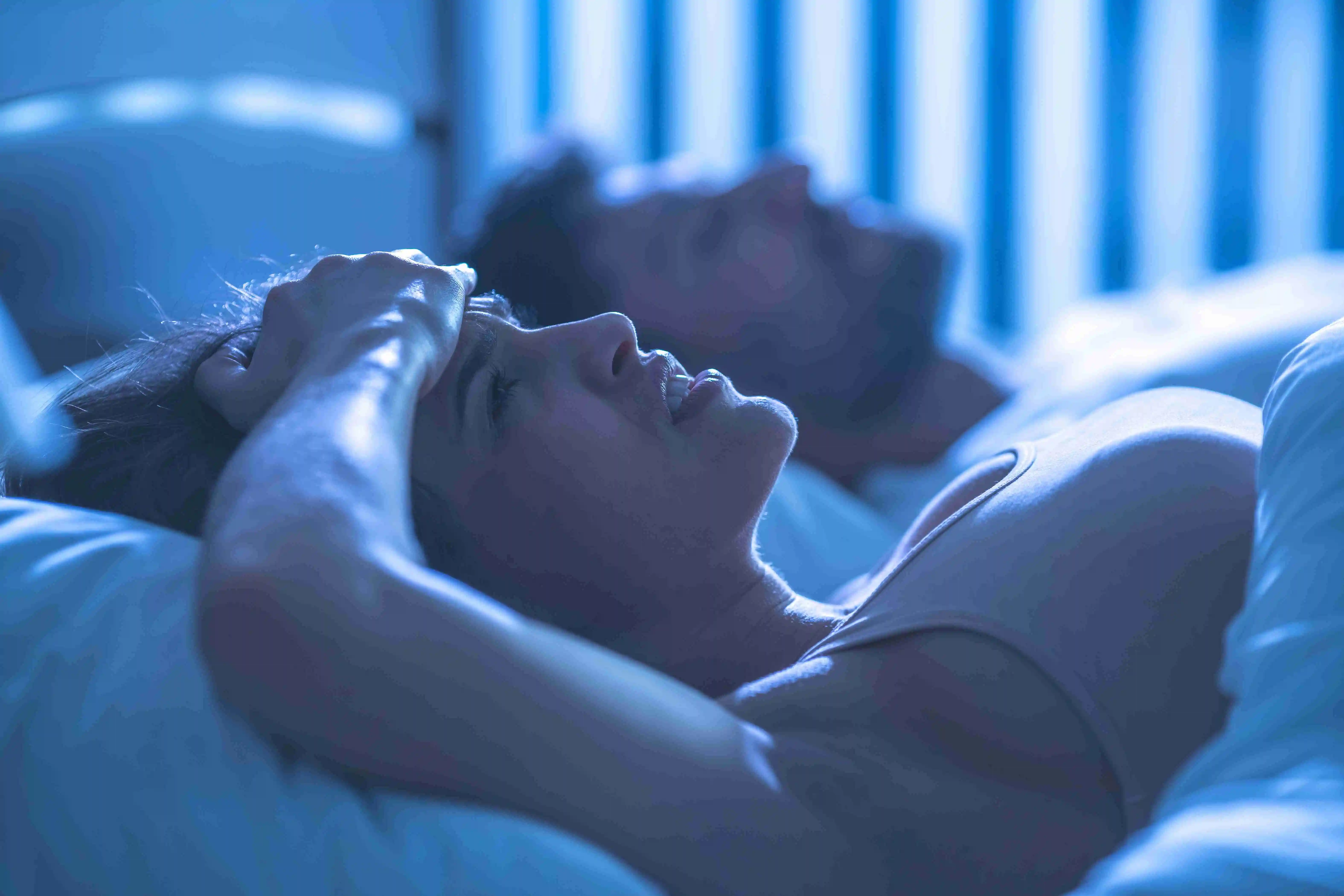

Anxiety can keep you awake, and repeated sleepless nights can create a second worry: fear of not sleeping. That feedback loop is real, but it is treatable. The most effective plan often addresses insomnia directly with cognitive behavioral therapy for insomnia (CBT-I) while treating a coexisting anxiety disorder in parallel.
Bedtime worry does not automatically mean you have an anxiety disorder. Sometimes a stressful event starts the problem, then clock-watching, trying harder to sleep, and spending long periods awake in bed keep it going. In other cases, generalized anxiety, panic, trauma-related symptoms, depression, or another condition is active throughout the day as well as at night. Knowing which pattern you have changes the treatment plan.
How anxiety and insomnia reinforce each other
Anxiety can make it difficult to settle at night. Thoughts may jump between unfinished tasks, feared outcomes, physical sensations, and predictions about how badly tomorrow will go. Sleep problems are also among the symptoms clinicians consider when evaluating generalized anxiety disorder (GAD) 1.
Insomnia can then become a source of anxiety in its own right. After enough difficult nights, getting into bed may cue alertness rather than sleepiness. This is sometimes called conditioned arousal. It does not mean you are choosing to stay awake. It means the bed, the clock, or the effort to sleep has become linked with monitoring and frustration. Stimulus control, a core part of CBT-I, is designed to rebuild the bed as a cue for sleep 2.
The relationship also extends beyond bedtime. In a meta-analysis of 13 longitudinal studies, insomnia at baseline was associated with a higher risk of later anxiety disorders. The studies cannot prove that insomnia caused anxiety in every participant, and the authors rated the overall risk of bias as moderate. Still, the finding supports taking persistent insomnia seriously rather than treating it only as a minor symptom 3.
Is it bedtime worry or an anxiety disorder?
Occasional worry before an exam, conflict, move, illness, or major decision is a normal response to stress. It may disturb sleep for several nights without meeting criteria for either chronic insomnia or an anxiety disorder.
An anxiety disorder is broader and more persistent. For GAD, a clinician looks for hard-to-control worry on most days for at least six months, along with symptoms such as restlessness, fatigue, trouble concentrating, irritability, muscle tension, or sleep problems. The symptoms and their effect on daily life matter, and a physical problem, medicine, or substance may need to be ruled out 1.
Other anxiety-related conditions can look different. Panic attacks may create fear of bodily sensations or another attack. Trauma-related symptoms may involve nightmares, vigilance, or fear of sleep. Obsessive-compulsive symptoms can produce prolonged rituals or intrusive thoughts. These are not interchangeable diagnoses, so treatment should be matched to the condition rather than to the word “anxiety” alone.
Sleep-specific worry can also occur without a daytime anxiety disorder. Clues include feeling calm or sleepy outside the bedroom, becoming alert as bedtime approaches, checking the time repeatedly, extending time in bed to “catch” sleep, or canceling daytime plans after a poor night. These patterns are central targets of CBT-I.
When sleep trouble becomes chronic insomnia
Chronic insomnia disorder involves difficulty falling asleep, staying asleep, or waking earlier than intended despite adequate time and circumstances for sleep. It also causes distress or daytime problems, occurs at least three nights per week, and lasts at least three months 2.
A questionnaire such as the Insomnia Severity Index can help screen for a problem and track change, but it does not make the diagnosis. Chronic insomnia is usually diagnosed from a clinical sleep, medical, and mental health history. A sleep study is not routinely required unless another sleep disorder is suspected 2.
A useful assessment asks about:
-
when you get into bed, when you estimate you fall asleep, when you wake during the night, and when you get up
-
how often the problem happens, how long it has lasted, and how it affects mood, attention, work, school, relationships, or safety
-
daytime anxiety, panic, low mood, loss of interest, trauma symptoms, and past periods of unusually high energy or reduced need for sleep
-
caffeine, nicotine, alcohol, cannabis, and other substance use, including recent changes or withdrawal
-
prescription medicines, over-the-counter products, and supplements that may affect sleep
-
shift work, jet lag, or a sleep schedule that is much later or earlier than required
-
loud snoring, witnessed breathing pauses, gasping, or marked daytime sleepiness, which may suggest obstructive sleep apnea
-
an evening urge to move the legs that improves with movement, which may suggest restless legs syndrome
Depression, bipolar disorder, post-traumatic stress, substance use, medication effects, circadian rhythm disorders, sleep apnea, and restless legs can coexist with insomnia. Finding one does not automatically rule out the others.
CBT-I treats the insomnia cycle directly
CBT-I is more than sleep hygiene or general talk therapy. It is a structured, multicomponent treatment for the thoughts and behaviors that maintain insomnia. The American Academy of Sleep Medicine gives multicomponent CBT-I a strong recommendation for adults with chronic insomnia 4.
CBT-I also works when insomnia occurs alongside many mental health conditions. A systematic review and meta-analysis of 22 randomized trials found moderate to large, sustained improvements in insomnia across several psychiatric populations. Improvements in the coexisting mental health condition were less consistent at follow-up, which is one reason insomnia and anxiety may each need their own treatment 5.
Stimulus control
Stimulus control strengthens the connection between bed and sleep. A typical plan includes:
- going to bed when sleepy rather than simply because the clock says it is bedtime
- reserving the bed for sleep and intimacy
- getting out of bed when you are clearly awake and becoming frustrated
- doing something quiet in dim light elsewhere, then returning when sleepy
- getting up at a consistent time, including after a poor night
You do not need to watch the clock or enforce a precise number of minutes. The goal is to stop rehearsing wakefulness and struggle in bed.
Sleep restriction or sleep compression
Sleep restriction therapy temporarily limits time in bed to more closely match the amount of sleep recorded in a sleep diary. As sleep becomes more consolidated, the sleep window is gradually expanded. Sleep compression reaches a reduced sleep window more gradually and has been studied as a potentially gentler alternative, although its evidence base is smaller 6.
Despite its name, the goal is not permanent sleep deprivation. Temporary sleepiness can occur, especially early in treatment. The 2025 Department of Veterans Affairs and Department of Defense guideline advises adapting or delaying CBT-I in several situations, including excessive daytime sleepiness, bipolar disorder, uncontrolled seizure disorder, active alcohol or drug use disorder, pregnancy or postpartum insomnia, acute mental health symptoms, and some high fall-risk or medically unstable situations 2.
Do not start an aggressive sleep-restriction schedule on your own if any of those situations apply, or if you drive for work, operate dangerous equipment, or cannot safely tolerate additional sleepiness. A clinician trained in CBT-I can adapt the plan and coordinate it with your other care.
Cognitive work
CBT-I helps you examine predictions such as “I will not cope at all tomorrow” or “I must fall asleep now.” The goal is not forced positive thinking. It is to replace catastrophic, absolute conclusions with a more accurate view of what a poor night means and what you can do next.
A therapist may also move problem-solving out of the sleep period. For example, you might set aside time earlier in the evening to write down each worry, identify any practical next step, and note what cannot be solved tonight. This does not erase anxiety, but it reduces the habit of using bed as a planning desk.
Arousal reduction and sleep habits
Slow breathing, progressive muscle relaxation, grounding, or a quiet wind-down can lower physical and mental activation. Caffeine timing, alcohol use, light, noise, and an irregular schedule may also be adjusted.
These steps support treatment, but sleep hygiene alone is not an adequate treatment for chronic insomnia. Current clinical guidance specifically recommends against using sleep hygiene education as the only therapy 2.
Follow-up and relapse planning
CBT-I should be adjusted from sleep-diary results rather than followed as a rigid formula. Once sleep improves, the plan should cover what to do after travel, illness, stress, or a few poor nights. Returning to a steady rise time and stimulus-control principles early may keep a brief setback from becoming another long cycle.
CBT-I may be delivered individually, in a group, by telehealth, or through a guided digital program. A behavioral sleep medicine clinician or therapist with specific CBT-I training is especially useful when anxiety, trauma, bipolar disorder, substance use, another sleep disorder, or safety-sensitive work complicates the picture.
Treat anxiety in parallel
CBT-I targets insomnia. It is not a substitute for treatment of GAD, panic disorder, post-traumatic stress, obsessive-compulsive disorder, depression, or bipolar disorder.
For GAD, established options include psychotherapy, medication, or both. CBT for anxiety focuses on the thought and behavior patterns that maintain worry. A clinician may also recommend an antidepressant or another medication based on the diagnosis, medical history, other medicines, pregnancy considerations, side effects, and preferences 1.
Some anxiety medicines take several weeks to work, and some can initially affect sleep. Report worsening agitation, insomnia, mood changes, or other side effects to the prescriber. Do not stop a prescribed mental health medicine abruptly unless a clinician tells you how to do so safely.
If insomnia improves but daytime anxiety remains, continue anxiety-focused care. If anxiety improves but the bed still triggers alertness and worry, continue treating insomnia. Progress in one track can help the other without making the second track unnecessary.
Sleep medicines, substances, and supplements
A medicine can sometimes serve as a short-term adjunct, but sedation alone does not unlearn conditioned arousal or change catastrophic beliefs about sleep. Choice and duration should be individualized after a clinician reviews other sleep disorders, daytime sleepiness, breathing problems, substance use history, interactions, and a plan for stopping the medicine 2.
Benzodiazepines
Benzodiazepines may rapidly reduce severe anxiety or promote sleep, but they carry risks of misuse, addiction, physical dependence, and withdrawal. Dependence can develop even when they are taken as prescribed. Abrupt stopping or a rapid dose reduction can cause dangerous withdrawal, including seizures, so any taper should be planned with the prescriber 7.
Z-drugs
Eszopiclone, zaleplon, and zolpidem may be used for insomnia in selected adults. The U.S. Food and Drug Administration requires a boxed warning about rare but serious injuries and deaths from complex sleep behaviors such as sleepwalking or sleep-driving. Stop the medicine and contact the prescriber promptly if such a behavior occurs 8.
Sedating antihistamines
Over-the-counter does not mean suitable for ongoing insomnia. The 2025 VA/DoD guideline suggests against diphenhydramine for chronic insomnia. It can also add to next-day sedation and interact with other medicines, so ask a clinician or pharmacist before combining sleep products 2.
Alcohol and cannabis
Alcohol and cannabis are not dependable treatments for the anxiety-insomnia cycle. Alcohol use should be reviewed as part of insomnia care, and mixing alcohol with benzodiazepines or other sedatives can increase the risk of serious harm 7. The 2025 VA/DoD guideline suggests against cannabis or cannabis derivatives for chronic insomnia because the evidence does not establish a favorable balance of benefit and harm 2.
If you use alcohol or cannabis heavily, have withdrawal symptoms, or find that you cannot cut down, tell a clinician before making a sudden change. A safer plan may require substance-use treatment, and active alcohol or drug use disorder may change how CBT-I is delivered 2.
Melatonin and other supplements
Melatonin is not an established treatment for chronic insomnia driven by anxiety or conditioned arousal. Evidence is not strong enough to recommend it for chronic insomnia, and long-term safety is unclear. Supplements may also interact with medicines, and some melatonin products do not contain the amount shown on the label 9.
Evidence is also insufficient or unfavorable for many products marketed for sleep, including magnesium, valerian, chamomile, passionflower, and kava. “Natural” does not guarantee effectiveness or safety. Check with a clinician or pharmacist before using a supplement, especially during pregnancy, while breastfeeding, or alongside prescription medicines 2.
Safe steps you can try tonight
These steps are reasonable while you arrange care or for a brief stress-related sleep problem:
-
Choose a steady rise time. Get up at roughly the same time even after a difficult night. Avoid compensating by spending much longer in bed.
-
Wait for sleepiness. Go to bed when you feel ready to sleep, not simply when you feel tired, worried, or eager to make up lost sleep.
-
Leave the struggle. If you are wide awake and frustrated, move to a safe, dimly lit place and do something quiet. Return when sleepy.
-
Move worry earlier. Write down the concern, one next action if there is one, and when you will revisit it. Keep the list outside the bed.
-
Hide the time. Set the alarm, then turn the clock face away and keep the phone out of reach. Repeated calculations about remaining sleep tend to feed the problem.
-
Keep a simple sleep diary. Record bedtime, estimated sleep time, awakenings, rise time, naps, substances, and daytime effects. Estimates are enough. The diary is for finding patterns, not grading each night.
-
Review what affects alertness. Note caffeine, nicotine, alcohol, cannabis, cold medicines, stimulants, steroids, and the timing of prescription medicines. Discuss changes with a clinician rather than stopping a prescription on your own.
Do not drive or perform a dangerous task when you are struggling to stay awake.
When to get professional help
Arrange an evaluation if sleep difficulty happens at least three nights a week for three months, causes meaningful daytime impairment, or is getting worse. Seek help sooner if anxiety is disrupting work, school, relationships, eating, or daily tasks, or if panic, avoidance, trauma symptoms, or depressed mood are present.
A clinician should also assess loud snoring, gasping, witnessed breathing pauses, an urge to move the legs at night, a markedly delayed sleep schedule, medication or substance concerns, or severe daytime sleepiness. These features may require treatment beyond CBT-I.
Get urgent help if:
-
you are thinking about suicide or self-harm, have made a plan, or do not feel able to stay safe. Contact local emergency services or a crisis service, and stay with a trusted person if possible. Suicidal thoughts and actions require immediate attention 10
-
you need very little sleep and also feel unusually energized, wired, euphoric, intensely irritable, talkative, impulsive, or prone to risky decisions. Reduced need for sleep with these changes can be a sign of mania, not ordinary insomnia 11
-
sleep loss is causing confusion, hallucinations, inability to manage basic needs, severe functional impairment, or dangerous sleepiness
Do not respond to possible mania or a mental health crisis by attempting strict sleep restriction on your own.
Frequently asked questions
Will treating anxiety make insomnia go away?
Sometimes, especially when insomnia is brief and closely tied to a stressful period. Chronic insomnia can continue after anxiety improves because the sleep schedule, time awake in bed, and fear of sleeplessness have become self-sustaining. In that case, CBT-I may be appropriate rather than waiting for anxiety treatment to fix sleep indirectly.
Can I have insomnia without an anxiety disorder?
Yes. You may have sleep-specific worry and conditioned arousal without meeting criteria for GAD or another anxiety disorder. Insomnia can also coexist with a medical condition, circadian problem, medication effect, sleep apnea, restless legs syndrome, depression, or no other diagnosed disorder.
Is one sleepless night dangerous?
One poor night is uncomfortable and may affect attention, mood, and reaction time the next day, but it does not by itself establish chronic insomnia or an anxiety disorder. Focus on safety, avoid driving if sleepy, and return to your usual rise time rather than trying to force extra sleep.
What is the main treatment when anxiety and insomnia coexist?
For chronic insomnia, CBT-I is the central sleep treatment. If an anxiety disorder is also present, add diagnosis-specific psychotherapy and, when appropriate, clinician-directed medication. Sedatives may have a limited short-term role for selected people, but they do not replace either treatment track.