
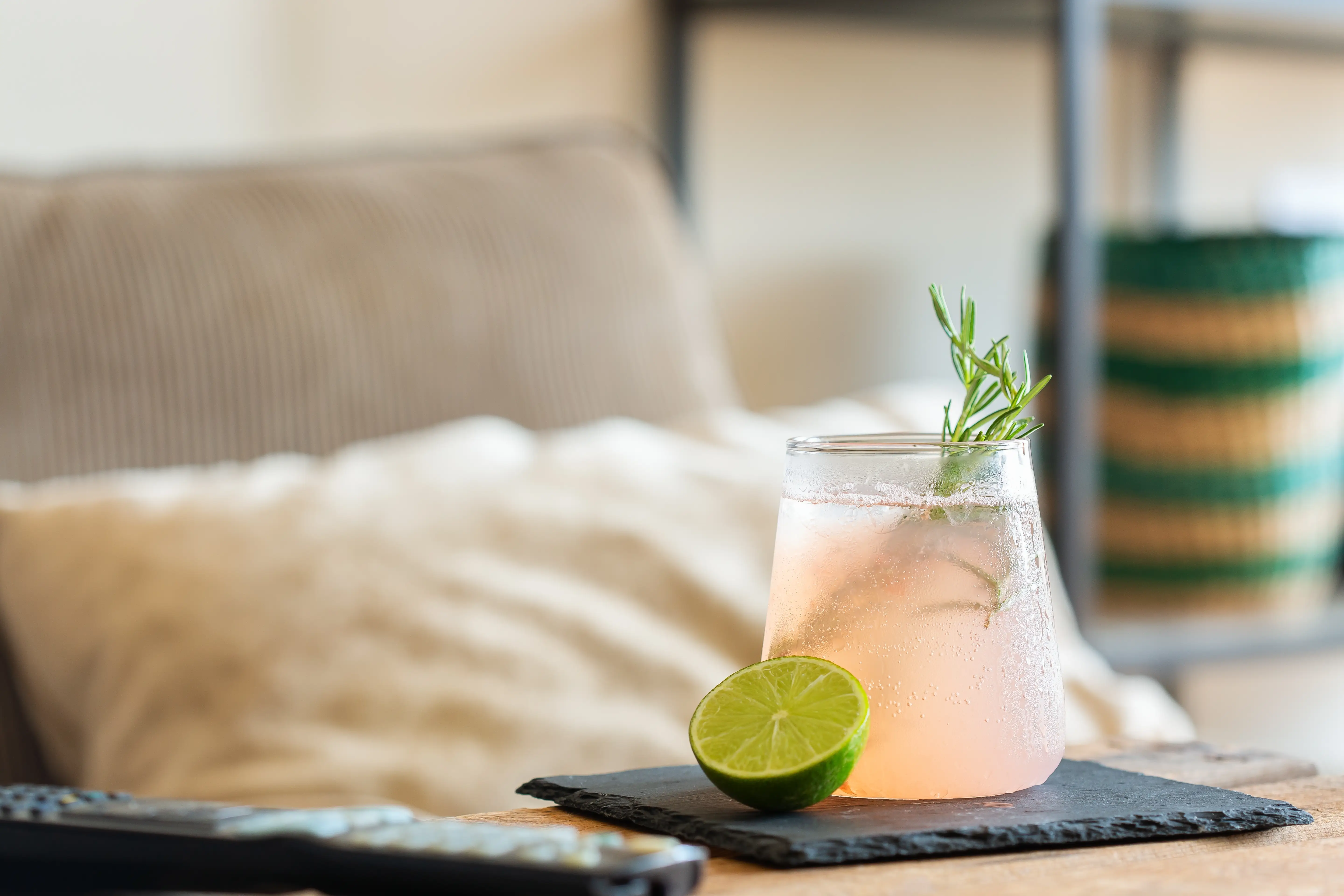
A bedtime mocktail can be a pleasant cue that the active part of the day is ending. The drink does not need a special powder or a long ingredient list to serve that purpose. A familiar caffeine-free drink, prepared the same calm way each evening, may fit into a wind-down routine.
That behavioral value is separate from an ingredient treating insomnia. Research on tart cherry, chamomile, magnesium, and milk is limited, mixed, or tied to products and doses that are not equivalent to a homemade drink. A mocktail may support a routine, but it should not replace evaluation or evidence-based care for persistent sleep trouble.
The routine may matter more than the recipe
A useful evening routine lowers stimulation and repeats a manageable set of cues before bed. Making a warm drink, dimming the lights, and reading for a few minutes may feel settling even if the drink itself has no direct sleep effect.
The National Heart, Lung, and Blood Institute includes a consistent wind-down routine among healthy bedtime habits. It also advises avoiding caffeine and alcohol near bedtime and limiting fluids close to bed if bathroom trips are a problem 1.
This does not mean everyone needs a drink at a fixed time. Choose the volume and place in your routine based on thirst, reflux, medication instructions, and whether fluids wake you to urinate. The goal is a cue you enjoy, not a clock-based dose.
What the common ingredients can and cannot do
Tart cherry juice
Tart cherry is the most recognizable ingredient in the viral “sleepy girl mocktail.” Human research is interesting but not conclusive. A 2025 systematic review found seven intervention studies with large differences in products, doses, treatment length, and participants. Three reported improvement in at least one sleep measure, while the review concluded that the evidence remained limited and heterogeneous 2.
Several trials used measured juice twice daily, a diluted concentrate, or a multi-ingredient supplement. Their results do not establish that a splash of juice at night has the same effect. The presence of melatonin or related compounds in a food also does not make the food equivalent to a melatonin supplement or prove that its trace content changes sleep.
Tart cherry juice can still be used for flavor. Choose a product by its nutrition label, note whether it is 100 percent juice or a sweetened drink, and count the full serving if you track carbohydrate or calories. See our detailed guide to tart cherry juice and sleep for a closer look at the studies.
Chamomile and other herbs
Chamomile tea can be a warm, caffeine-free part of a routine, but it is not a proven insomnia treatment. The National Center for Complementary and Integrative Health says clinical trials have not produced conclusive evidence that chamomile helps insomnia 3.
Amounts commonly found in tea and food are likely safe for many people. Chamomile can still cause allergic reactions, particularly in people allergic to ragweed or related plants. Reported or theoretical interactions include warfarin, some medicines processed by the liver, and sedatives, and pregnancy and breastfeeding safety is not well known 4. Our guide to chamomile tea and sleep covers those limits in more detail.
Adding stronger herbs does not turn tea into a more reliable remedy. Valerian trials have produced inconsistent results, and its value for insomnia has not been demonstrated. Kava has been linked to serious liver injury 3. Neither belongs in a casual bedtime recipe.
Culinary lavender may add aroma, but that is not evidence of a sleep effect. Do not add an aromatherapy or essential-oil product to a drink unless it is explicitly made and labeled for that food use. Essential oils can cause poisoning when swallowed or otherwise misused 5.
Magnesium powders
Magnesium is a nutrient and also a dietary-supplement ingredient. Those roles should not be blurred. The evidence for magnesium supplements and insomnia is sparse. NCCIH cites a review of three low-quality studies in 151 older adults and says the research was inadequate for making well-informed treatment decisions 3. That evidence does not establish that magnesium glycinate, citrate, or another particular form works in a mocktail.
Supplemental magnesium can cause diarrhea, nausea, and abdominal cramping. It can also interfere with some antibiotics and bisphosphonates. The adult upper limit of 350 milligrams per day applies to magnesium from supplements and medications, not magnesium naturally present in food 6. A product may list both the compound weight and the amount of elemental magnesium, so use the Supplement Facts amount when reviewing your total.
Do not scoop magnesium into a drink by taste, combine several products without totaling them, or add it to a shared pitcher. If a clinician has recommended magnesium for a deficiency or another reason, take the exact product and amount as directed rather than turning the mocktail recipe into the dose.
Milk and plant-based alternatives
Warm milk can be comforting because it is familiar, warm, and easy to include in a routine. That does not show that plain milk causes sleep. A systematic review found mixed results across 14 human studies that differed in population and method. Several tested fermented, fortified, or combined products rather than ordinary warm milk 7.
If you enjoy milk, use a type you tolerate. Lactose intolerance, milk allergy, carbohydrate goals, and personal reflux triggers may affect the choice. Plant-based drinks differ in protein, added sugar, fortification, and allergens, so compare their labels rather than treating every alternative as nutritionally interchangeable. Read more about warm milk and sleep.
Sweeteners and carbonation
Honey, maple syrup, flavored syrups, juice concentrates, and sweetened sodas add sweetness, not a proven sleep effect. Check the serving size and added sugar on packaged ingredients. A drink still contributes calories and carbohydrate when it contains no alcohol.
Sparkling water adds texture but has no established sleep benefit. Carbonation may also feel uncomfortable for some people with bloating or reflux. If it causes symptoms, use still water. NIDDK advises people with reflux to avoid their own food and drink triggers and notes that leaving time between eating and lying down may help nighttime symptoms 8.
The sleepy girl mocktail, without the claims
The usual social-media formula combines tart cherry juice, magnesium powder, and a carbonated mixer. Each part raises a separate question:
- Is the tart cherry product juice, concentrate, or a sweetened drink? * How much elemental magnesium is in the powder, and what other supplements or medicines already contain magnesium?
- Does the mixer contain caffeine, alcohol, added sugar, herbs, or a large volume of fluid?
- Do acidity or carbonation worsen reflux?
For an ordinary adult drink, make the tart-cherry spritzer below and leave out the magnesium. Anyone using a magnesium supplement can review it separately with a pharmacist or clinician.
Three simple evening drinks
These recipes are flavor ideas for adults, not treatment doses. Make a smaller portion or move the drink earlier in your routine if fluid close to bed leads to bathroom trips.
Diluted tart-cherry spritzer
Ingredients
- 2 fluid ounces of 100 percent tart cherry juice * 4 fluid ounces of still or plain sparkling water * a strip of lime peel, optional
Method
Pour the juice over ice or serve it at room temperature, add the water, and stir. Use still water and omit the citrus if fizz or acidity bothers your stomach. This serving is intentionally smaller than quantities used in several trials and should not be expected to reproduce their results.
Plain chamomile tea
Ingredients
- 1 chamomile tea bag or the package's stated amount of loose tea * 6 fluid ounces of hot water * 1 teaspoon of honey or maple syrup, optional
Method
Steep according to the package directions and remove the tea before drinking. Skip this recipe if you have reacted to chamomile or related plants. Check with a pharmacist or clinician first if you take warfarin, sedatives, or other medicines that may interact, or if you are pregnant or breastfeeding.
Warm cinnamon milk
Ingredients
- 6 fluid ounces of milk or an unsweetened plant-based drink you tolerate * a pinch of ground cinnamon * a few drops of vanilla extract, optional
Method
Warm gently in a small saucepan or microwave-safe cup without boiling, then stir. Choose ingredients that fit your allergy, lactose, and carbohydrate needs. Cinnamon and vanilla are included for flavor, not because they have been shown to treat insomnia.
Check the whole label, not just “alcohol-free”
A drink without alcohol can still work against the routine you want. Before buying a canned mocktail, botanical soda, tea blend, or mixer, check for:
- caffeine: tea extracts, coffee, cacao, cola, guarana, yerba mate, and energy blends may provide it
- alcohol: read the actual alcohol statement, especially on products sold as nonalcoholic alternatives or made with bitters
- added sugar and serving size: the can may contain more than one labeled serving
- supplements and herbs: look for magnesium, melatonin, valerian, kava, CBD, L-theanine, and multi-herb blends rather than assuming “botanical” means gentle
- fluid volume and carbonation: a large, fizzy drink may be a poor fit if nocturia, bloating, or reflux already interrupts the night
Caffeine and alcohol deserve separate attention because removing one does not remove the other. See our guides to caffeine and sleep and alcohol and sleep for their timing and sleep effects.
When supplements need a separate safety check
A powder sold for stirring into water is still a dietary supplement if its label says so. NCCIH notes that supplements may differ from the products used in studies, can interact with medicines, and generally are not reviewed by the FDA for safety and effectiveness before marketing. It also notes that many have not been tested in pregnant people, nursing parents, or children. Terms such as “standardized,” “verified,” and “certified” do not guarantee quality or consistency by themselves 9.
Before using a magnesium or herbal powder:
- read the Supplement Facts panel and full ingredient list * check the serving's elemental amount, not just the front-label claim * find out what an independent testing mark actually verifies * ask a pharmacist about prescription, over-the-counter, and supplement interactions
- avoid combining several “sleep” products with overlapping ingredients * keep all powders, gummies, drops, and concentrates out of children's reach
Pregnancy, breastfeeding, kidney disease, medication use, and preparation for surgery are reasons to review supplements with a clinician. Do not serve a supplement-containing mocktail to a child unless the child's clinician has approved the exact ingredient and amount. An ordinary food or beverage can also be unsuitable because of an allergy, age, medical diet, or choking risk.
If the drink is not solving the sleep problem
A mocktail cannot diagnose why sleep is difficult. Repeated trouble falling asleep, long periods awake during the night, daytime impairment, loud snoring or gasping, restless legs, pain, reflux, hot flashes, mood symptoms, and medication effects need their own assessment.
For chronic insomnia, cognitive behavioral therapy for insomnia is the best-supported first-line treatment, not a food or supplement. Our guide to insomnia treatments explains the available options 3.
Keep the drink if you enjoy it and it fits your body and routine. Judge it as a beverage first, with sleep claims held to the same evidence standard as any other treatment claim.