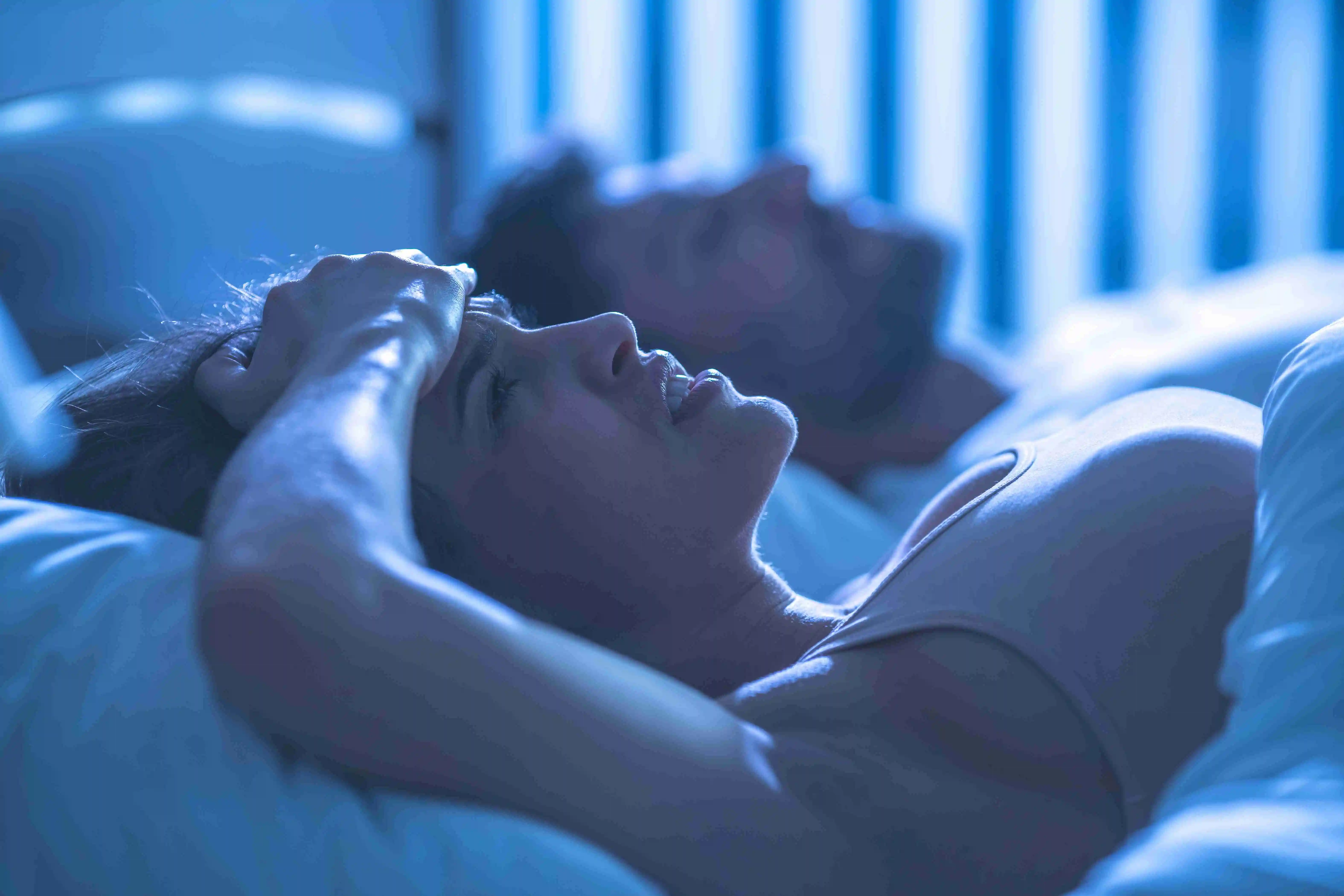

Depression and sleep talking can occur together, but research has not established that depression directly causes sleep talking. A large study of people referred to sleep centers found that frequent parasomnias, including sleep talking, were more common alongside depression symptoms. Because the study measured both at the same time, it could not show which came first or whether another factor explained the connection 1.
Isolated sleep talking is usually a benign sleep behavior rather than evidence of a psychiatric disorder. If it begins or changes around the same time as depression, the useful question is not “What hidden feeling is coming out?” It is “What else changed in mood, sleep, medication, alcohol or substance use, or nighttime behavior?”
What counts as sleep talking?
Sleep talking, also called somniloquy, means producing speech while asleep without being aware of it. It may be a whisper, a few words, a conversation-like sentence, or a shout. It can happen during rapid eye movement (REM) or non-REM sleep 2.
The International Classification of Sleep Disorders places sleep talking among isolated symptoms and normal variants. It can occur on its own or as part of another sleep disorder. The person usually learns about it from a partner, family member, roommate, or recording because they do not remember the episode 2.
Sleep talking is different from:
- answering someone after you have fully awakened
- snoring, choking, coughing, or groaning without speech
- waking hallucinations or hearing voices while awake
- shouting while punching, kicking, or acting out a dream
- talking during a confused sleepwalking or sleep-terror episode
These distinctions matter because isolated speech rarely needs treatment, while some lookalikes warrant a sleep or medical evaluation.
What does the depression research show?
The best direct evidence is observational. In a 2024 analysis, researchers reviewed questionnaires and sleep-study data from 371,889 patients evaluated at 240 sleep centers in the United States. About 8.8% reported sleep talking “often” or “always.” Frequent parasomnias were associated with diagnosed depression, and each measured parasomnia was associated with depression symptoms 1.
That is a meaningful association, but it is not proof that depression caused the sleep talking. The study was retrospective, relied partly on self-report, and involved people already referred for sleep concerns. Depression, anxiety, insomnia, fatigue, pain, medication use, and other sleep problems often overlapped. The authors concluded that more research is needed to determine causality 1.
Depression clearly can affect sleep. Common symptoms include trouble falling asleep, waking early, oversleeping, fatigue, and difficulty concentrating 3. Sleep talking is not one of the symptoms used to diagnose depression.
A reasonable conclusion is:
- depression and sleep talking may share contributing factors
- depression-related insomnia or irregular sleep may create a setting in which talking is noticed more often
- treatment or substance changes may affect nighttime behavior
- sleep talking by itself does not indicate depression
Do the words reveal hidden depression?
No reliable clinical method can diagnose depression or uncover a person's true beliefs from what they say while asleep.
In one laboratory study, researchers analyzed 883 speech episodes from 232 adults. Most participants had REM sleep behavior disorder, sleepwalking, or sleep terrors, and only 15 were healthy controls. Fifty-nine percent of the recorded episodes were nonverbal sounds such as mumbling, shouting, whispering, or laughing. Understandable speech could follow normal grammar and conversational timing, but negations and profanities were also common 4.
The study helps explain why sleep speech can sound coherent or emotional. It does not show that the words are truthful disclosures, accurate memories, or signs of depression. The sample was also dominated by people with diagnosed parasomnias, so its findings should not be applied uncritically to every occasional sleep talker.
Avoid confronting someone about a phrase as if they chose to say it. If you are concerned about depression, ask how they feel while awake and look for established symptoms such as persistent low mood, loss of interest, hopelessness, impaired functioning, sleep or appetite changes, and thoughts of death or suicide 3.
Could an antidepressant be involved?
Possibly, but the pattern matters. Antidepressants are better documented as potential contributors to REM sleep behavior disorder than to ordinary isolated sleep talking.
In REM sleep behavior disorder, a person loses the usual muscle quietness of REM sleep and acts out dreams. Talking, laughing, shouting, or cursing may occur with punching, kicking, reaching, jumping from bed, or other movements. The person may remember a vivid dream when awakened. The American Academy of Sleep Medicine notes that drug-induced or drug-exacerbated REM sleep behavior disorder is most often associated with serotonergic antidepressants, including selective serotonin reuptake inhibitors 5.
Contact the prescriber when:
- sleep talking began soon after starting an antidepressant or increasing its dose
- episodes changed from quiet speech to shouting or dream enactment
- there are new injuries, falls, or forceful movements
- sleep worsened substantially after a medication change
Do not stop, skip, or reduce an antidepressant on your own. Abrupt changes can worsen the condition being treated and may cause withdrawal symptoms. Medication decisions should account for the severity of depression, the likely sleep behavior, and available alternatives 5 6.
Also review sleep medicines, antipsychotics, opioids, alcohol, cannabis, and other substances with the clinician. A timeline is more useful than assuming every nighttime symptom comes from the antidepressant.
Other explanations to consider
Isolated sleep talking
The person speaks but otherwise remains still, has no injury, and feels normal during the day. Episodes may be occasional and are usually reported by somebody else. This is often a normal variant that does not require a sleep study or medication 2.
Non-REM arousal parasomnia
Sleep talking may occur with confusional arousals, sleepwalking, or sleep terrors. Clues include sitting up, walking, appearing confused, being difficult to awaken, or having little memory afterward. These episodes are often noticed earlier in the night 7.
REM sleep behavior disorder
Speech accompanied by forceful dream enactment, especially punching, kicking, grabbing, or jumping from bed, is not ordinary sleep talking. It needs clinical assessment because of injury risk and possible medication, sleep, or neurologic contributors 5.
Obstructive sleep apnea
Repeated snoring, gasping, choking, witnessed breathing pauses, morning headaches, or excessive daytime sleepiness point toward a breathing disorder rather than depression as the main sleep concern. Sleep talking can coexist with obstructive sleep apnea, but it cannot diagnose it. Suspected apnea requires a comprehensive sleep evaluation and, when indicated, polysomnography or a technically adequate home sleep apnea test 2 8.
Seizures or another neurologic event
Repeated episodes that look almost identical each time, involve stiffening or rhythmic jerking, cause injury, or leave prolonged confusion deserve medical assessment. These features can help raise suspicion, but no single behavior settles the diagnosis. A clinician may use the history, video, neurologic examination, and appropriate testing to distinguish seizures from parasomnias 7.
Short-term triggers
The sleep-talking literature describes sleep deprivation, emotional stress, fever, alcohol, and some medications as possible precipitating factors. The evidence is limited and does not allow a precise prediction for one person 2. A recent illness, all-nighter, or substance change may explain a temporary cluster better than depression itself.
Keep a short, factual record
If episodes are new, frequent, or changing, record the pattern for two weeks. Ask a partner to note:
- the approximate clock time and frequency
- words only versus shouting, sitting, walking, or limb movements
- whether the person was easy to awaken
- dream recall, confusion, or amnesia afterward
- snoring, gasping, breathing pauses, or unusual breathing
- injuries, falls, or objects knocked over
- bedtime, wake time, and recent sleep loss
- medication starts, dose changes, alcohol, cannabis, or other substance use
- changes in mood, anxiety, daytime sleepiness, or functioning
A brief audio or video can help a clinician understand an unusual event if everyone recorded consents and recording is safe. Do not stay in harm's way to capture an episode.
What can help?
Occasional isolated sleep talking usually needs reassurance rather than treatment. There is no established medicine specifically for ordinary sleep talking 2.
Practical steps include:
- protect enough time for sleep and keep the schedule reasonably regular
- avoid using alcohol as a sleep aid
- discuss new episodes after a medication or substance change with the prescriber
- treat depression based on waking symptoms and clinical guidance, not as a guaranteed cure for sleep talking
- evaluate another sleep disorder when its signs are present
- use temporary separate sleeping arrangements if a partner's sleep is repeatedly disrupted
These steps address plausible contributors and household impact. They cannot guarantee that an occasional benign behavior will stop.
If there is punching, kicking, falling, or other dream enactment, make the area safer while arranging assessment. Remove sharp or breakable bedside objects, pad furniture edges, place a mat beside the bed, and consider sleeping separately until the behavior is controlled. These are core safety measures in the AASM guideline for REM sleep behavior disorder 5.
When to seek help
Arrange a medical or sleep evaluation when sleep talking:
- begins suddenly in adulthood or changes markedly
- happens frequently and disrupts either person's sleep
- occurs with walking, eating, dream enactment, injury, or dangerous behavior
- follows a medication start or dose change
- comes with loud snoring, breathing pauses, gasping, or significant daytime sleepiness
- resembles a seizure or causes prolonged confusion
- appears with new neurologic symptoms
Seek urgent medical help for a serious injury, a prolonged breathing problem, a suspected seizure that does not stop, or behavior that puts the sleeper or another person in immediate danger.
Sleep talking is not a valid suicide-risk screen. However, waking statements about wanting to die, a suicide plan, self-harm, severe hopelessness, or an inability to stay safe require immediate help through local emergency services or an emergency department 3. Do not dismiss a waking concern because the person also talks in sleep.
Questions people ask
Is sleep talking a symptom of depression?
It is not a diagnostic symptom of depression. Frequent sleep talking and other parasomnias have been associated with depression in sleep-clinic data, but the evidence does not establish that depression causes them 1.
Can anxiety or stress cause sleep talking?
Emotional stress is described as a possible precipitating factor, but the evidence is limited and individual patterns vary 2. Anxiety, sleep loss, medication use, and other sleep disorders may overlap, so a timing record is more useful than assigning one cause immediately.
Is sleep talking dangerous?
Speech alone is usually harmless, although it can disturb a partner. The concern changes when talking occurs with violent movement, leaving the bed, injury, breathing pauses, or seizure-like behavior.
Should I wake someone who is talking in their sleep?
Ordinary quiet speech does not require waking. If the person appears to be in danger, prioritize safety and use a calm voice. Do not argue about the content or try to extract information from them.
Will treating depression stop sleep talking?
It may improve overall sleep if depression or related insomnia is contributing, but it is not a proven treatment for isolated sleep talking. Depression should be treated because of its waking symptoms and effect on life, whether or not the nighttime speech changes.