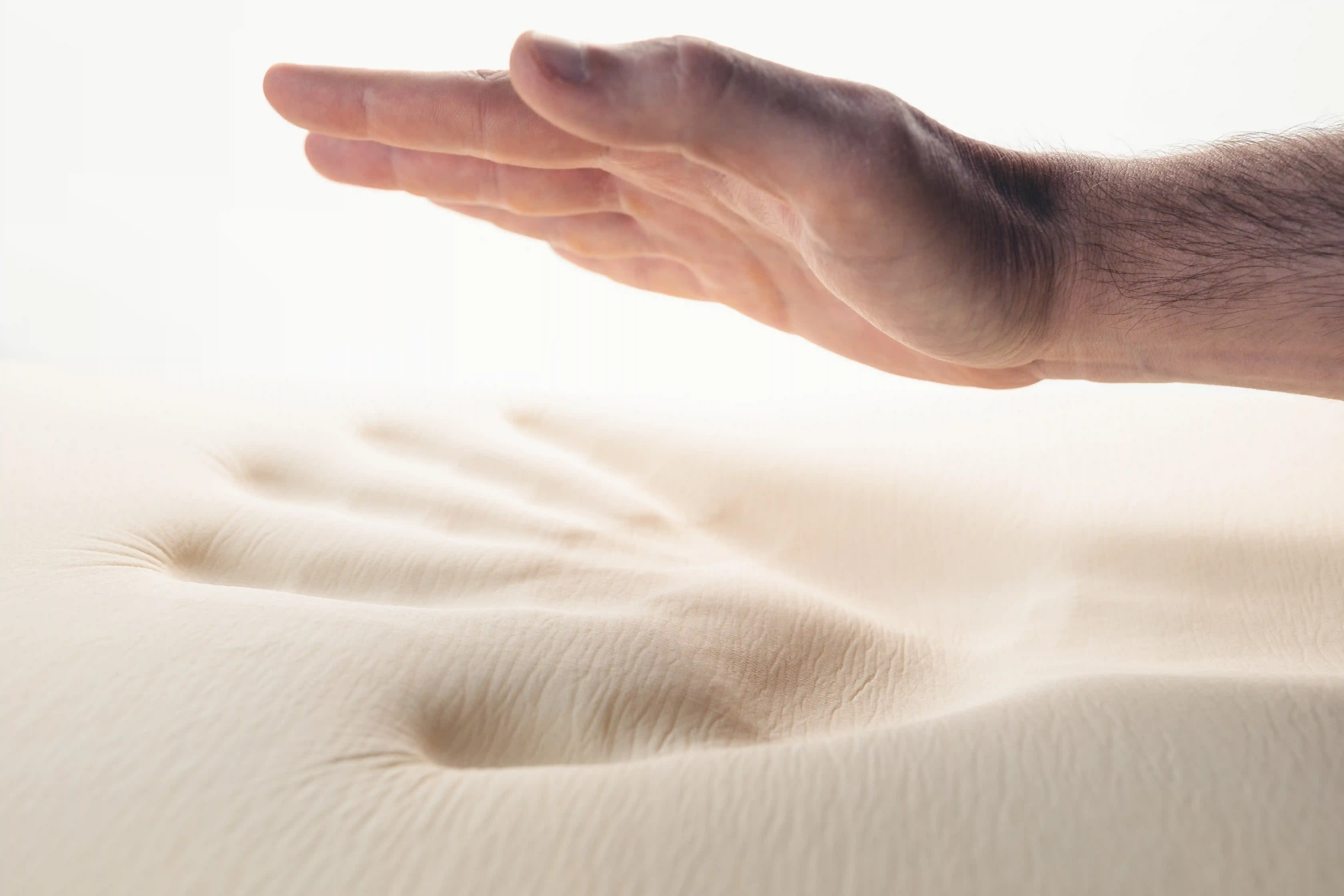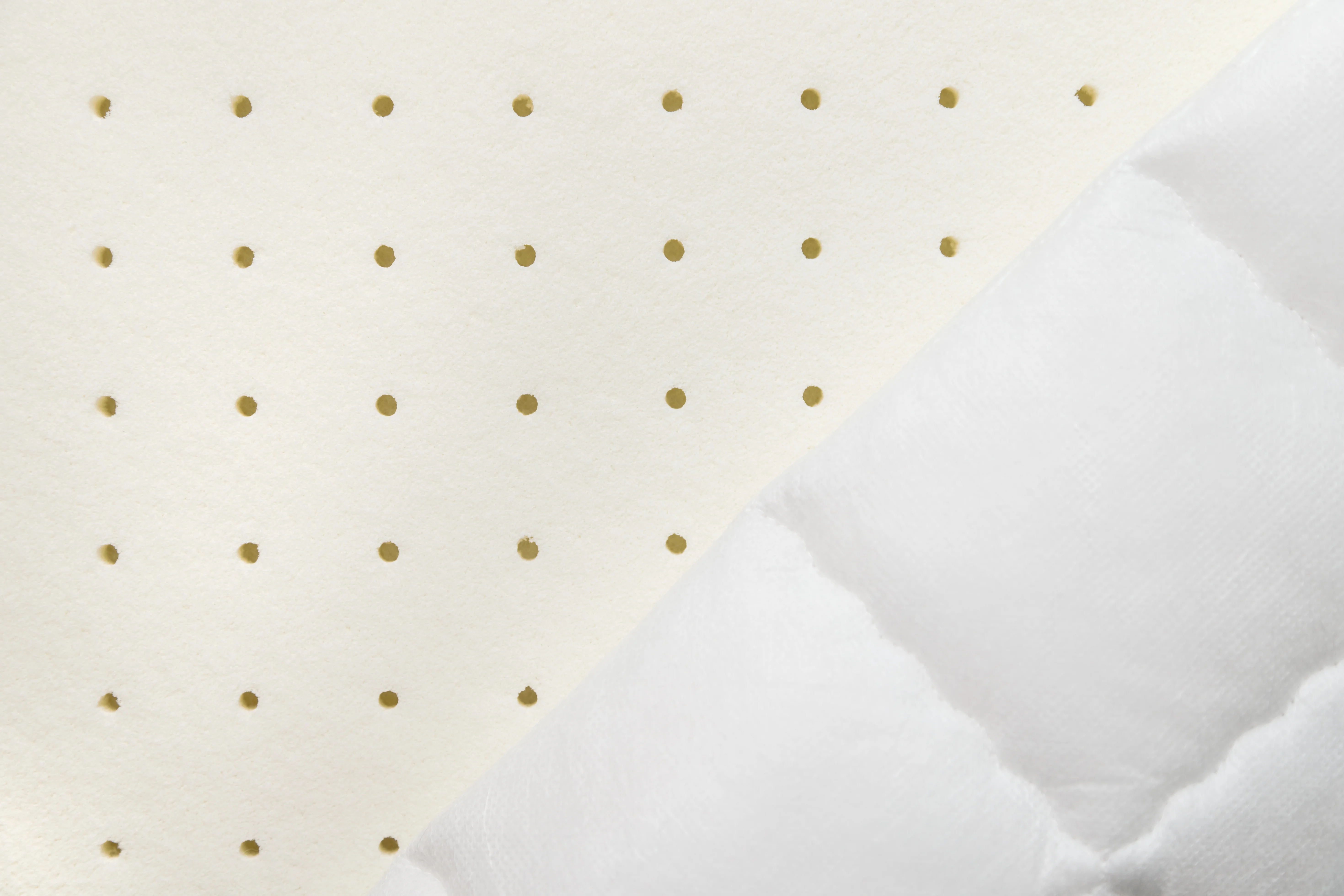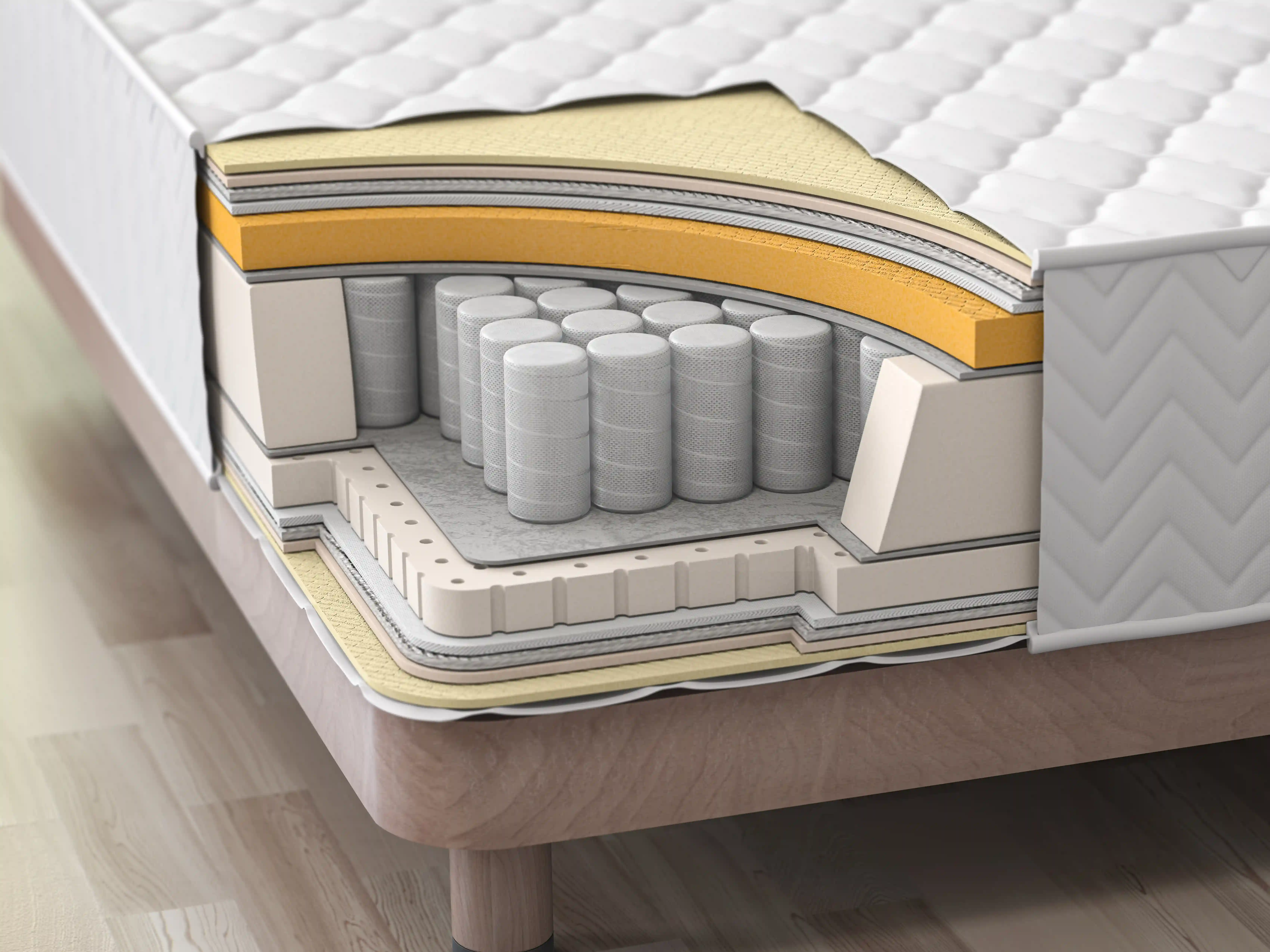


Gel memory foam can feel cooler or warm more slowly than another foam, but “gel” is not a reliable verdict on the finished mattress. A gel additive, a solid gel layer, and a phase-change treatment are different constructions. Each can behave differently once it sits beneath a cover, protector, sheet, and sleeper.
The most defensible answer is product-specific: gel may change local heat transfer, yet the label alone does not establish that a mattress will remain comfortable through a full night. The evidence on cooling bedding as a broad category is limited and does not support a universal gel-memory-foam advantage 1.
“Cooler” can describe four different results
Cooling claims are easier to assess when they name the outcome and the time period.
-
Cool to the touch describes the first seconds after skin contacts the surface. Materials that exchange heat with skin quickly can feel cooler even if that sensation is temporary 2.
-
Slower surface warming means the contact area stays at a lower temperature during a short bench or lying test. This is useful information, but it is not an overnight result.
-
Better overnight thermal comfort means the sleeper feels neither too warm nor clammy across changing positions and sleep stages. This depends on both heat and moisture.
-
Better sleep requires a measured sleep outcome, such as fewer awakenings or improved sleep efficiency. A lower surface temperature does not establish this by itself.
A showroom touch can answer the first question. It cannot answer the other three.
What gel can change inside memory foam
Heat behavior involves several properties. Thermal conductivity describes how readily heat moves through a material. Heat capacity describes how much heat a material can take in before its temperature rises. Thermal effusivity helps determine how quickly a surface draws heat from skin at first contact.
A gel component may change one or more of these properties. It may absorb some heat, spread it across a wider area, or alter the initial surface sensation. That is not the same as actively removing heat from the bed. A passive layer can store or redistribute heat only within the limits of its construction and surroundings.
Some products use phase-change material, or PCM. A PCM takes in heat over a designed temperature range as its physical state changes, then releases that stored heat when conditions reverse. Not every gel is a PCM, and the words “cooling gel” do not identify the transition temperature, amount of material, or location in the mattress.
Foam matters as much as the additive. Flexible polyurethane foams can differ in chemical formulation, density, porosity, cell structure, water vapor permeability, resilience, and response to compression 3. Two products can both say “gel memory foam” while using different layer thicknesses, perforations, geometries, and supporting materials.
What comparative human studies show
The research is more specific and less conclusive than many retail claims suggest.
A short PCM test measured temperature, not overnight sleep
In a study of 20 adults, participants lay for 20 minutes on a mattress containing phase-change material and on a conventional mattress. The PCM mattress produced a smaller increase in back skin temperature and a greater increase in sheet temperature, consistent with more heat moving into the bed. Participants did not report a difference in thermal sensation or comfort 4.
This supports a material-level thermal effect under those test conditions. It does not show that ordinary gel-infused memory foam stays cooler for eight hours, improves sleep, or works the same way in a warm, humid bedroom.
A specialized gel surface is not the same as gel-infused foam
A 2024 analysis combined controlled laboratory data from 72 adults of different ages, sexes, and body sizes. Its high-heat-capacity mattress had a foam core covered by a dense 2-centimeter polyurethane gel material, while the comparison mattress was regular memory foam. On the high-heat-capacity mattress, core temperature declined more, heart rate was lower, and participants averaged about 7.5 additional minutes of N3 sleep during a 7.5-hour sleep period 5.
The result is relevant to conductive cooling, but it is product-specific. A continuous, high-heat-capacity gel surface cannot be treated as evidence for every foam with gel beads or a gel swirl. One paper author was affiliated with the gel manufacturer, Technogel, although the paper declared no competing interests. The size of the N3 difference and the controlled laboratory setting also matter when deciding how much the finding predicts an ordinary bedroom.
The broader evidence remains uncertain
A 2025 systematic review identified nine randomized trials of mattresses, toppers, pillows, and other bedding intended to cool the body. Across the pooled sleep data, the reviewers found no clear differences in sleep onset, total sleep time, sleep efficiency, awakenings, or the proportion of individual sleep stages. Some interventions lowered core temperature over one or two nights, but certainty ranged from very low to low and results varied substantially 1.
This does not prove that cooling construction never helps a particular sleeper. It shows why an isolated material measurement or a study of one proprietary mattress should not become a category-wide promise.
Why the finished mattress may feel different
The layers above the gel
A cool surface underneath thick quilting or a waterproof protector may not feel the same once the bed is made. The cover, protector, fitted sheet, sleepwear, and duvet influence heat, air, and moisture in the small climate around the body. A systematic review of sleepwear and bedding fibers found some condition-specific differences, but the studies were diverse and difficult to compare. The review also disclosed wool-industry funding for two authors, another reason not to turn one fiber into a universal ranking 6.
Moisture control is separate from a cool initial touch. A conductive gel may move heat without moving sweat vapor. A sleeper can therefore find a surface cool at bedtime but clammy later.
Foam thickness, density, and geometry
The thickness and position of the gel-containing layer affect how directly it interacts with the sleeper. Foam density cannot rank cooling on its own. Cell structure, formulation, pore geometry, perforations, compression, and the surrounding layers all influence heat transfer and water vapor movement 37.
Deep contouring can increase the area of the body touching foam and reduce open space around that area. How much a person sinks depends on the mattress firmness, body size, body shape, and sleep position. Temperature at the human-mattress interface also varies by body region, mattress material, and room temperature 8.
Airflow through the rest of the bed
A perforated comfort layer, channels, a more open support structure, and space for air movement may help heat and moisture leave the contact area. A thick stack of conforming foam can behave differently. A coil core creates internal air space, but a thick foam comfort system and an enclosed cover can still limit exchange. Construction details are more useful than assuming that every hybrid, latex, or all-foam bed belongs in a fixed cooling order.
Room, bedding, partner, and sleeper
The mattress is one part of a thermal system. Room temperature, humidity, air movement, bedding insulation, sleepwear, a bed partner, and changes in weather can outweigh a modest material difference. Heat exposure tends to disrupt sleep, but research does not establish one ideal bedroom temperature for every climate, age, body, and bedding setup 9.
Someone who produces more heat, sweats more, shares a bed, or sinks more deeply may experience the same mattress differently from a lighter or less conforming sleeper. Back, side, and stomach positions also change which body regions remain in close contact with the surface.
How to evaluate a gel memory foam mattress
1. Get the exact construction
Ask for more than “cooling gel.” Look for:
-
the form of the gel, such as dispersed beads, a swirl, a continuous layer, or a true phase-change treatment
-
the thickness and location of the gel-containing layer
-
the thickness, density, and perforation or channel pattern of each comfort layer
-
the cover and any temperature-control treatment applied to it
-
the materials beneath the comfort system and whether the design provides an airflow path
Missing specifications do not prove that a mattress will sleep warm. They do make its cooling claim harder to evaluate.
2. Compare like with like
A temperature number is meaningful only with its method. Check whether a test:
-
measured a loose foam sample or the complete mattress
-
used a human sleeper, heated plate, water bottle, or another heat source
-
reported starting room temperature and humidity
-
included a sheet, protector, or cover
-
ran for minutes or an entire night
-
measured surface temperature, heat flow, interface humidity, subjective comfort, or sleep
-
compared the gel model with the same mattress construction without gel or with a substantially different bed
Thermal images from different rooms, durations, and heat loads are not a fair ranking. Give more weight to a repeated method applied to complete mattresses under the same conditions.
3. Match the test to your problem
If the problem is a warm first touch, a surface-temperature or effusivity result is relevant. If you wake hot after several hours, prioritize overnight testing, moisture handling, airflow, and reports from sleepers with a similar body size and preferred position. If you like memory foam's contouring, judge cooling and pressure comfort together rather than buying the coolest-feeling surface that is uncomfortable to sleep on.
4. Read the return terms before buying
Confirm the at-home trial period, required break-in period, return or pickup fees, exchange rules, geographic limits, protector requirements, and what condition the mattress must be in. Save the terms that applied when you ordered. A useful trial is worth more than a cooling claim that cannot be tested in your bedroom.
5. Run a one-variable home trial
Keep the room setting, protector, sheets, duvet, sleepwear, and usual side of the bed as consistent as practical for several comparable nights. Note:
- room temperature and humidity near bedtime
- whether warmth occurred at first contact or after several hours
- where heat or clamminess developed
- awakenings that were clearly related to temperature
- unusual factors such as illness, alcohol, exercise, or a weather change
Then change one item, such as the protector or duvet, and repeat under similar conditions. If you change the mattress, thermostat, sheets, and bedding at once, you will not know which change mattered. This is a practical comparison, not a medical experiment or a substitute for the seller's return deadline.
If your current gel mattress still feels hot
Start with the least disruptive parts of the setup. Use lighter bedding when conditions allow, improve room air movement, and check whether a thick protector or topper is creating the warm or clammy layer. Changing to another gel topper can add more conforming foam, so it should be trialed rather than assumed to cool.
Separate room heat from bed heat. If the whole room is warm and humid, passive mattress materials have less opportunity to release stored heat or moisture. If only the contact area feels hot, the cover, protector, foam contour, and airflow deserve closer attention.
Warm sleep is not always a mattress problem
Feeling warm under heavy covers or in a hot room is common and does not by itself indicate a medical problem. Night sweats usually refers to repeated sweating that soaks sleepwear or bedding even though the room is cool. The NHS advises seeking medical assessment when this happens regularly, wakes or worries you, or occurs with symptoms such as fever or chills, cough, diarrhea, or unexplained weight loss 10.
A cooler mattress may improve comfort, but it cannot treat hot flashes, a medication effect, fever, low blood sugar, hyperhidrosis, or another cause of persistent sweating. When the pattern continues after reasonable room and bedding changes, discuss the symptom itself with a clinician rather than continuing to replace cooling products.