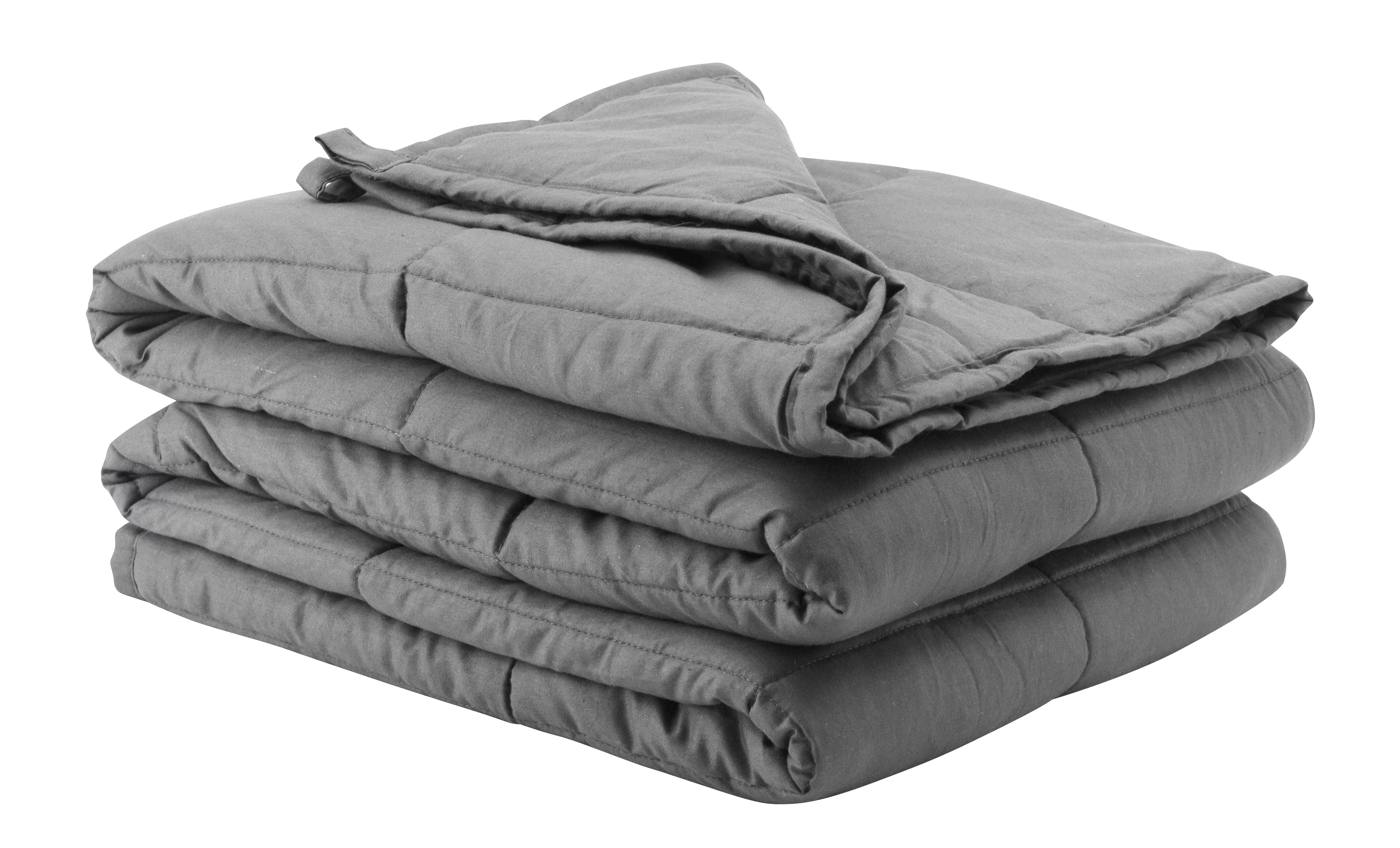


Start with the parts of a duvet that can make it unusable: its exact dimensions, whether it needs a separate cover, and whether that cover is included. Then choose an appropriate warmth level. Only after those decisions should you compare fill names, construction details, care claims, certifications, and price.
This order prevents a common buying mistake. A premium fill cannot correct poor coverage, a mismatched cover, excessive warmth, or care instructions you cannot follow.
First, confirm what the seller means by duvet
"Duvet," "duvet insert," and "comforter" are not used consistently by every seller or in every market. One retailer may use duvet for the filled insert that goes inside a removable cover. Another may use duvet for the complete covered assembly. A comforter is often designed for use without a separate cover, but the name alone does not guarantee that.
Treat the product name as a starting point. Before comparing materials, confirm:
- whether the listing is for the filled insert, a removable cover, or both
- whether the seller expects the filled item to be used with a cover
- the finished dimensions of every included piece
- whether the insert and cover have compatible corner or side loops and ties
- what closure the cover uses
- whether pillow shams or other pictured pieces are actually included
The product description, package contents, care label, and return terms are more useful than the category name.
1. Measure the bed and choose the coverage
Record the mattress width, length, and depth. Include a topper if it will remain on the bed. Then decide how far you want the duvet to hang down each side and over the foot.
You can estimate the centered side drop with:
(duvet width - mattress width) / 2
If a 90-inch duvet is centered on a 60-inch-wide mattress, it provides about 15 inches of coverage on each side before accounting for how two sleepers, a thick mattress, or movement changes the drape.
For foot coverage, subtract the mattress length from the duvet length if their top edges will be aligned. If you fold the duvet down below the pillows, allow for that fold when estimating the usable length.
Compare actual inch or centimeter measurements, not just names such as queen, king, double, or super king. The same size name can represent different dimensions across brands and countries. Check any stated manufacturing tolerance and, for a washable cover, whether the seller warns of shrinkage.
Bigger is not automatically better. Extra width can help two people share the duvet, but too much fabric can drag on the floor, feel awkward, or sit unevenly inside the cover. Choose the dimensions that produce the coverage you measured.
Match the insert and cover by dimensions
An insert and cover with the same size name are not necessarily a match. Compare their stated finished dimensions and follow the manufacturer's compatibility guidance when it is available.
A large difference can leave an insert loose and mobile inside the cover or force it to buckle. Also check the number and position of the insert's loops against the cover's ties. A perfect measurement match does not help if the attachment points cannot meet.
2. Choose warmth for the actual sleep setting
Think about the bedroom, not just the season printed on the package:
- What temperature is the room typically kept overnight?
- Do you tend to feel warm or cold compared with your bed partner?
- Will you use pajamas, a top sheet, a blanket, or another layer?
- Does the room temperature change substantially across the year?
- Would two separate duvets work better for partners with different warmth preferences?
A modular set of two connectable duvets can provide more combinations, but verify the dimensions, attachment system, and care requirements for both pieces. Layering also adds weight, so a combined setting may feel different from a single duvet with similar claimed warmth.
What a tog rating can tell you
A tog rating is a thermal-resistance rating used on some bedding labels. Thermal resistance describes how strongly a textile assembly resists heat flow under stated test conditions. ISO 11092 sets out methods for measuring the thermal and water-vapor resistance of textile materials, including multilayer assemblies such as quilts 1.
A higher tog generally indicates greater thermal resistance when products are labeled using a comparable method. It is not a universal temperature prescription. Room conditions, sleepwear, other layers, body size, and individual preference still affect how warm the bed feels.
Do not combine tog charts from unrelated retailers into one rule. If two labels do not identify a comparable method or market convention, their numbers may not support a precise head-to-head conclusion. When no tog is supplied, use the brand's warmth categories only within that brand or range, and compare the rest of the specification, including fill amount, total weight, construction, and return policy.
3. Compare fill without assuming one material is best
A material name describes only one part of the duvet. Products with the same fill family can differ in composition, amount of fill, total weight, shell, construction, care, and quality control.
| Fill family | What can differ | What to verify on the product |
|---|---|---|
| Down | Species, down content, cluster quality, loft, and sourcing can differ. Down can provide substantial loft at a relatively low fill weight. | Down and feather percentages, fill power and test method, fill weight, finished weight, construction, leakage policy, and any animal-welfare certification. |
| Feather and down blends | Feather content can add weight and a different feel. The blend name does not reveal the proportion of each component. | Exact percentages, species if disclosed, fill power where relevant, fill weight, finished weight, shell, and return terms. |
| Wool | Wool type, fiber preparation, fill amount, construction, and care method can produce very different products. | Fiber composition, fill weight, finished weight, wash or professional-care instructions, and whether the product can be returned after opening. |
| Silk | Silk-filled products can differ in grade, layering, attachment, weight, shell, and cleaning requirements. | Fiber composition, fill weight, internal construction, shell fabric, care label, and repair or return policy. |
| Cotton or other cellulosic fill | Plant origin alone does not establish warmth, moisture handling, environmental impact, or durability. | The generic fiber name and percentage, fill weight, total weight, construction, shrinkage guidance, and care instructions. |
| Polyester or down alternative | Fiber shape, fineness, amount, batting structure, and finish vary widely. "Down alternative" does not identify one standardized material. | Generic fiber content, fill weight, finished weight, construction, wash and dry instructions, and warranty or return terms. |
Use the table to generate questions, not to rank every duvet made from one fill above every duvet made from another.
Fill power, fill weight, and total weight are different
Fill power applies to down and feather materials. It measures the volume occupied by a specified mass of conditioned fill under a named test method. The International Down and Feather Bureau publishes testing methods for fill power as well as composition and cleanliness, and notes that labeling requirements differ by country 2. Textile Exchange similarly describes down fill rating as the volume occupied by one ounce of down 3.
A higher fill power means more loft per unit weight under that method. It does not, on its own, tell you:
- how much fill is inside the duvet
- how warm the finished duvet will be
- the down-to-feather ratio
- the total weight on the body
- whether the fill stays evenly distributed
- whether the shell leaks fibers
- how well the duvet will tolerate care
Fill weight is the mass of filling in the product. Finished weight includes the fill, shell, stitching, closures, and other components. Fill ratio describes the stated down and feather percentages in a blend. Read all of these separately. Do not compare the fill-power number of a down duvet with a synthetic, wool, or silk specification as though they were the same test.
4. Read the shell and construction as separate specifications
The shell's fiber content, weave, finish, and thread count do not mean the same thing.
- Fiber content tells you which generic fibers make up the shell and in what proportions. In the United States, the Federal Trade Commission's Textile Fiber Products Identification Act and rules require covered textile products to disclose fiber content, country of origin, and the identity of the responsible business 4.
- Weave describes how yarns interlace. It can affect feel, air movement, strength, and how well the shell contains fine fill, but the weave name is not a complete performance score.
- Finish is a treatment applied to the fabric. Ask what a claimed finish is intended to do and how long the claim is expected to last.
- Thread count reports a count of threads within an area under a stated convention. It does not reveal fiber quality, yarn construction, finish, sewing quality, or finished durability. There is no universal thread-count threshold that identifies the right duvet.
Be precise about bamboo claims
In the United States, a textile can be labeled "bamboo" only when it is made directly with actual bamboo fiber. Material regenerated from processed bamboo must be identified with an appropriate generic name, such as rayon or viscose made from bamboo 5.
The FTC also warns that sellers need evidence for environmental claims and that there is no evidence rayon made from processed bamboo retains bamboo's claimed natural antibacterial properties 6. Do not treat the word bamboo as proof that a duvet is antibacterial, low impact, moisture managing, or better for allergies. Read the generic fiber disclosure and evaluate any added claim on its own evidence.
How the fill is held in place
Construction influences loft distribution and movement, but no design is universally premium.
- Baffle boxes use internal fabric walls between compartments. They can allow more depth than a seam sewn directly through both shells, but performance still depends on baffle height, box size, fill amount, seam quality, and edge design.
- Sewn-through boxes join the top and bottom shells along the dividing lines. They limit movement between boxes and can make a lower-profile product, but the stitched lines may have less fill than the center of each box.
- Channels let fill spread along a longer compartment. Some sleepers value the ability to redistribute it; others may find that movement creates uneven areas.
Inspect the product or close-up images for empty-looking compartments, loose threads, damaged seams, and fill escaping at the shell or edges. Read reviews for repeated reports of shifting or cold spots, but distinguish a pattern across verified purchasers from one person's warmth preference.
Also verify:
- whether edge seams look secure
- whether the fill distribution appears reasonably even
- how many cover loops or tabs are present and where they sit
- whether the seller covers leakage, shifting, or failed stitching under warranty
5. Treat allergy claims as a separate question
"Hypoallergenic" on a package does not identify the allergen, test method, or level of protection. A synthetic fill label also does not prove that a complete duvet controls dust-mite exposure.
Dust mites and their allergens can accumulate in bedding and other bedroom reservoirs. A joint allergy practice parameter recommends a combined approach for people with confirmed dust-mite allergy, including sustained humidity control, allergen-impermeable encasements for mattresses and pillows, and regular bedding washing rather than reliance on a single material claim 7.
If dust-mite control is important, ask whether the exact duvet and cover can be washed and fully dried as often as your allergy plan requires. If they cannot, discuss suitable bedding or an allergen-barrier product with the clinician managing the allergy. A person with a known feather, wool, contact, or occupational allergy needs advice specific to that trigger rather than a generic "natural versus synthetic" rule.
6. Understand what a certification does and does not cover
A certification can answer a defined sourcing, processing, content, or chemical-testing question. It does not certify that a duvet has the right warmth, feel, dimensions, construction, or lifespan for you.
| Certification or claim | What its scope can address | What it does not establish |
|---|---|---|
| Responsible Down Standard (RDS) | Animal-welfare requirements for ducks and geese, including prohibitions on live plucking and force-feeding, plus third-party certification and chain of custody for certified material 8. | Warmth, fill power, comfort, leakage, sewing quality, or durability. |
| Global Organic Textile Standard (GOTS) | Within the scope certified under the applicable version, organic-fiber requirements plus criteria for textile processing, chemical inputs, environmental management, human rights, and labeling 9. | Warmth, comfort, finished weight, care convenience, or product lifespan. |
| OEKO-TEX STANDARD 100 | Testing of a certified textile article and its components against the standard's list and limits for harmful substances, with requirements based partly on intended skin contact 10. | Organic content, recycled content, animal welfare, warmth, comfort, or durability. |
| Recycled Claim Standard (RCS) or Global Recycled Standard (GRS) | Verification and chain-of-custody tracking of qualifying recycled material. GRS adds social, chemical, and environmental processing requirements 11. | The duvet's warmth, comfort, service life, or overall environmental footprint. |
GOTS is in a transition period in 2026. Version 8.0 was released in March 2026 and becomes effective for all certified entities and approved chemical inputs on March 1, 2027. Early adoption is allowed before then, so a product certified during the transition may have been assessed under Version 8.0 or an earlier permitted version 9.
Check the exact certification name and version, label number or license information, certified product or component, scope, and claimed percentage where applicable. Do not assume that every current GOTS-certified product has already been assessed under Version 8.0. A seller saying it "uses certified suppliers" is not necessarily the same as the finished product carrying a valid certified-product claim.
7. Check care, returns, and total cost before buying
Read the exact sewn-in care instructions or request a clear copy before ordering. Do not infer care from the fill family. Two wool, down, or polyester duvets can have different instructions because the shell, internal structure, finishes, and manufacturing differ.
Ask:
- Can your machine hold the wet duvet without crowding it?
- Does the label permit machine washing and tumble drying?
- Can you complete the drying method the manufacturer requires?
- If professional care is required, what will it cost locally?
- Is a removable cover required, recommended, or included?
- Can the opened product be returned after you assess warmth and feel?
- Are return shipping, restocking, or hygiene restrictions involved?
- What defects are covered, for how long, and who pays transport?
Complete drying matters, but there is no universal drying temperature, cycle, dryer-ball rule, or cleaning interval for every duvet. Follow the product label. If the item is too large for your machine, use a suitable large-capacity machine or the professional method specified by the manufacturer rather than forcing it into the drum.
Calculate the total cost of the insert, required cover, cleaning, possible laundromat use, and return shipping. A lower purchase price can be poor value if routine care is impractical.
Infant and weighted-product safety
Keep duvets, comforters, quilts, blankets, pillows, and other soft or loose bedding out of an infant's sleep space. The Centers for Disease Control and Prevention recommends a firm, flat sleep surface covered only by a fitted sheet and says weighted sleepers, swaddles, sleep sacks, and blankets are not safe for infants 12.
The U.S. Consumer Product Safety Commission also says not to add blankets or use weighted blankets or weighted swaddles in an infant sleep space 13.
This guide covers conventional, unweighted adult bedding. A weighted duvet or blanket is a separate product category, not a warmth upgrade. Do not apply ordinary duvet sizing or fill advice to decide whether a weighted product is suitable for a child. For a young child, use age-appropriate bedding guidance and product-specific safety information, and ask the child's healthcare professional when medical, developmental, mobility, or breathing concerns are involved.
A concise duvet checklist
Before paying, verify:
- Package: Insert, cover, or both? What else is included?
- Dimensions: Exact bed, insert, and cover measurements, including desired side and foot coverage.
- Attachment: Compatible loops, ties, and closure.
- Warmth: Suitable for the room, season, sleepwear, layers, and sleeper. Comparable tog method if using tog.
- Feel: Desired finished weight, loft, drape, and noise.
- Fill: Generic fibers and percentages, fill weight, and down fill power only where relevant.
- Construction: Compartment design, edge seams, distribution, leakage reports, and repair or warranty terms.
- Shell: Fiber content, weave, finish, and thread count considered separately.
- Care: Exact wash and dry instructions that fit your equipment and budget.
- Claims: Certification scope and label details, without assuming unrelated benefits.
- Trial: Return window, opened-item restrictions, fees, and shipping cost.
- Total cost: Insert, cover, care, and foreseeable return or replacement expenses.
Common questions
What tog duvet should I buy?
There is no universal tog that fits a season or sleeper. Use a tog rating to compare thermal resistance when the labels use a comparable method, then account for room temperature, sleepwear, other layers, and personal preference. A workable return policy is especially valuable when you cannot feel the duvet before buying.
Should a duvet be larger than the mattress?
It normally needs to be wider than the mattress to provide side coverage, but that does not mean you should automatically move up one named size. Measure the side and foot drop you want and choose actual dimensions that provide it.
Is a duvet cover included?
Never assume it is. Product photos often show a complete dressed bed even when the listing includes only the insert or only the cover. Confirm the package contents in writing.
Which duvet fill is best?
No fill is best for everyone. Compare the complete products by warmth, total weight, disclosed composition, construction, care, return terms, certification scope, and cost. A material name alone cannot settle those tradeoffs.