
The Multiple Sleep Latency Test (MSLT) is an all-day laboratory test that measures physiological sleep propensity. In plain terms, it records how quickly you fall asleep when given several quiet nap opportunities and whether rapid eye movement (REM) sleep begins soon after sleep starts.
Sleep specialists use the pattern as one part of an evaluation for central disorders of hypersomnolence, especially narcolepsy and idiopathic hypersomnia. The numbers are not a diagnosis by themselves. A valid interpretation also depends on symptoms, sleep schedule, the overnight study, medicines and substances, other sleep disorders, and whether the protocol was followed 12.
What the MSLT measures
The test produces two main findings:
- Sleep latency: the time from lights out to the first scored epoch of any sleep stage. The report averages this across the nap trials. If no sleep occurs in a trial, 20 minutes is used in the calculation.
- Sleep-onset REM periods (SOREMPs): episodes in which REM sleep begins within 15 minutes of sleep onset. The report records the number during the daytime trials and whether one occurred during the preceding overnight polysomnogram.
A shorter mean sleep latency indicates a greater tendency to fall asleep under these standardized conditions. SOREMPs provide information about REM timing. Neither finding identifies the cause on its own. Insufficient sleep, circadian timing, untreated sleep disorders, medicines, substance use, and withdrawal can produce misleading patterns 1.
The MSLT measures sleep propensity, not every dimension of daytime impairment. Someone may report severe fogginess, fatigue, or difficulty sustaining attention without falling asleep quickly in the laboratory. Another person may fall asleep quickly during the test but report less subjective sleepiness. The clinical history and the laboratory test provide different but related information.
Who may be referred for an MSLT
An adult sleep specialist may order an MSLT when persistent, irrepressible daytime sleepiness raises concern for narcolepsy or idiopathic hypersomnia. It may also be considered when sleepiness remains after another sleep disorder has been effectively treated.
The MSLT is not usually the first step for common causes of tiredness. Before using it to classify a central hypersomnolence disorder, clinicians look for insufficient sleep, shift work or circadian misalignment, obstructive sleep apnea, other sleep disruption, medical or mental health conditions, and medication or substance effects. If a person has sleep apnea, the AASM protocol says testing should occur when treatment is established and effective. Positive airway pressure data should be reviewed when applicable, and the usual treatment should be used during the overnight study and MSLT 1.
An MSLT is also not a test of current driving safety. It asks you to try to sleep in a dark, quiet room. It does not reproduce traffic, decision-making, motivation to stay awake, or the changing demands of a work shift.
The overnight study comes first
A standard adult MSLT follows an attended overnight polysomnogram in the same laboratory. The overnight recording monitors sleep stages and other signals that can reveal sleep apnea, limb movements, disrupted sleep, and unusual REM timing. It also documents whether there was enough sleep to interpret the next day's nap results.
Current AASM guidance calls for at least seven hours of time in bed and at least six hours of recorded sleep. The study should correspond to the person's major sleep period rather than forcing a delayed sleeper or shift worker into an artificial schedule. The MSLT should not follow a split-night study or a night when positive airway pressure was being adjusted 1.
Six hours is the protocol minimum for the overnight recording, not an ideal sleep target for the preceding weeks. The sleep diary and, when available, actigraphy help show whether the person was habitually getting adequate sleep before arriving at the laboratory.
What happens during the nap day
The first nap trial begins 1.5 to 3 hours after the overnight recording ends. The standard test has five trials, with each one beginning two hours after the previous trial began 1.
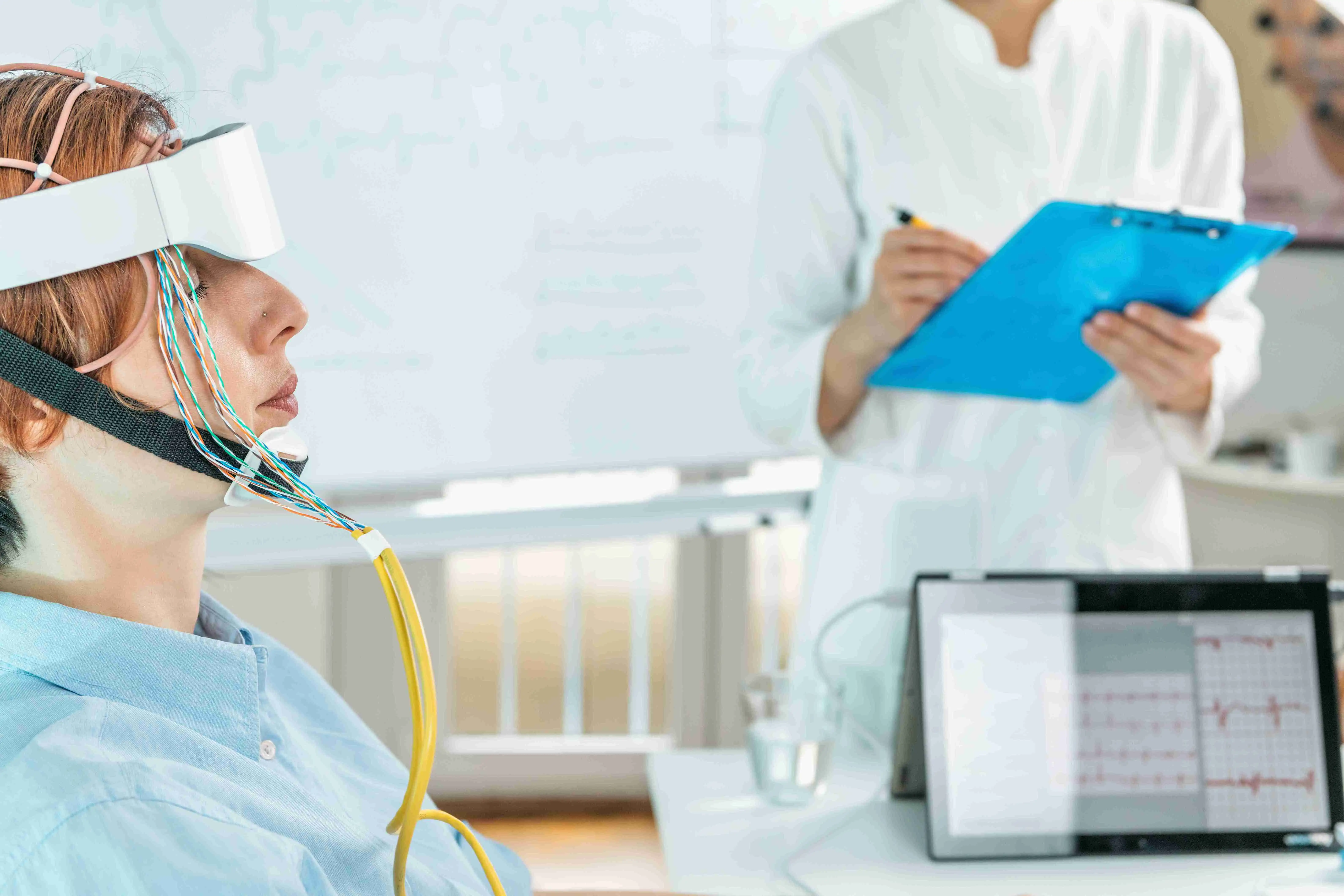
Before each trial, a technologist checks the recording signals and comfort needs. The room is dark, quiet, and kept at a comfortable temperature. You lie in bed, close your eyes, and are instructed to allow yourself to fall asleep.
If you do not fall asleep, the trial ends after 20 minutes. If sleep begins, recording continues for 15 more minutes so the technologist can determine whether REM sleep appears soon after sleep onset. Brain activity, eye movements, chin muscle activity, heart rhythm, and audiovisual monitoring support accurate scoring.
A four-nap test is a restricted exception. It is appropriate only when the result is already clearly consistent with the narcolepsy sleep-study pattern after four trials: mean sleep latency is 8 minutes or less and at least two SOREMPs have occurred, counting an eligible SOREMP from the preceding polysomnogram. Otherwise, the fifth nap is required 1.
Between trials, you remain out of bed and staff make sure you stay awake. Electronic devices and other stimulating activities should stop at least 30 minutes before each nap. Vigorous activity and prolonged bright-light exposure are avoided during the day. The protocol recommends a light breakfast at least one hour before the first trial and a light lunch after the second 1.
Preparation starts before the laboratory visit
Document sleep for two weeks
AASM guidance recommends a sleep diary for two weeks before the test and actigraphy when it is available. These records help the clinician assess sleep duration, consistency, shift work, delayed sleep timing, and weekend catch-up sleep. The clinician and patient should agree on an adequate schedule in advance. The guidance describes seven or more hours per night as the ideal target for most adults before testing, while recognizing that the plan must fit the individual 1.
Do not intentionally sleep less because you are worried you will not nap in the laboratory. That can create a result driven by sleep debt rather than the condition being investigated.
Make a clinician-led medication and substance plan
Prescription medicines, over-the-counter products, supplements, caffeine, nicotine, alcohol, and cannabis can all matter. Some medicines suppress REM sleep and may conceal SOREMPs. Alerting medicines and caffeine may lengthen sleep latency. Sedating medicines or substances may shorten it. Stopping a REM-suppressing medicine too close to testing can produce REM rebound and create extra SOREMPs.
There is no single safe washout schedule for everyone. AASM guidance says that medicines with alerting, sedating, or REM-modulating effects are generally stopped at least two weeks beforehand, but the decision and timing depend on half-life, dose, withdrawal risk, mental and physical health, and the question being tested. Longer washouts may be considered for long-acting medicines. In some cases, stopping a medicine is unsafe or impractical, and the clinician may keep it in place and interpret the study with that limitation 1.
Do not stop an antidepressant, stimulant, sedative, or any other prescribed medicine on your own. Ask the sleep specialist and prescribing clinician for a written plan. The final report should document medicines used in the preceding 24 hours and relevant changes during the prior two weeks.
The goal for caffeine on test day is abstinence, but a planned taper may be needed to avoid withdrawal. On the test day, the protocol calls for avoiding caffeine, alcohol, cannabis, and other sedating or alerting agents. Nicotine is discouraged; if it cannot be avoided, it should stop at least 30 minutes before each nap 1.
A urine drug screen is not automatic for every patient. The AASM recommends it when indicated, such as when an undisclosed, accidental, or illicit exposure could confound the result 1.
How sleep specialists interpret the result
The often-quoted thresholds of a mean sleep latency of 8 minutes or less and a particular SOREMP count come from diagnostic classifications. They must be read as part of complete criteria, not as a pass-or-fail result.
Narcolepsy type 1
Current ICSD-3-TR criteria require daily irrepressible sleepiness or daytime lapses for at least three months and one of the accepted biological or sleep-study routes, with other causes excluded. Narcolepsy type 1 may be supported by typical cataplexy plus a standard MSLT showing a mean latency of 8 minutes or less and at least two SOREMPs. It can also be diagnosed through a low cerebrospinal fluid hypocretin-1 concentration 3.
The 2023 text revision added another route: typical cataplexy plus a SOREMP within 15 minutes of sleep onset on the overnight polysomnogram can satisfy the objective criterion without a qualifying MSLT. For a person with clear cataplexy and an overnight SOREMP, a daytime MSLT that misses the usual thresholds therefore does not automatically exclude narcolepsy type 1 32.
Narcolepsy type 2
Narcolepsy type 2 requires at least three months of daily irrepressible sleepiness or daytime lapses, no cataplexy, and a standard MSLT with a mean latency of 8 minutes or less and at least two SOREMPs. An eligible SOREMP on the preceding polysomnogram may replace one daytime SOREMP. Cerebrospinal fluid hypocretin is not low when measured, and the symptoms and test pattern must not be better explained by insufficient sleep, circadian misalignment, another sleep or medical disorder, mental disorder, or medication or substance use or withdrawal 2.
Idiopathic hypersomnia
Idiopathic hypersomnia also requires at least three months of persistent daily sleepiness, no cataplexy, exclusion of insufficient sleep and other explanations, and findings that are not consistent with narcolepsy type 1 or 2. The combined overnight and daytime studies contain fewer than two eligible SOREMPs. Objective support can come from a mean MSLT sleep latency of 8 minutes or less or from prolonged total sleep time: at least 660 minutes in 24 hours on extended polysomnography after sleep deprivation has been corrected, or an average of at least 660 minutes across at least seven days of unrestricted actigraphy with a sleep log 32.
This means a person with suspected idiopathic hypersomnia is not ruled out simply because the MSLT mean is longer than eight minutes. Long-sleep assessment is a separate diagnostic route. Likewise, a short mean latency with fewer than two SOREMPs does not establish idiopathic hypersomnia until the history and exclusions fit.
What can cause a misleading result
A technically polished report can still describe an unrepresentative day. Clinicians should look for factors that could create a false-positive pattern, conceal a real abnormality, or make the result too uncertain to classify.
- Insufficient sleep: chronic restriction or a short night can shorten nap latencies and may increase SOREMPs.
- Shift work and circadian timing: testing during a person's usual biological sleep period can shorten latency and change REM timing. A delayed sleeper who is awakened early may lose late-night REM sleep and arrive with an artificial sleep debt.
- Untreated or undertreated sleep disorders: sleep apnea, periodic limb movements, and other causes of fragmented sleep may produce daytime sleepiness. Their treatment and stability need to be assessed before the MSLT is used to classify another disorder.
- Medicines and substances: stimulants, sedatives, REM-suppressing drugs, caffeine, nicotine, alcohol, cannabis, and other exposures can shift sleep latency or REM expression. Withdrawal and REM rebound can be as important as continued use.
- Anxiety, discomfort, and the laboratory setting: difficulty settling in an unfamiliar room can lengthen latency. Standardized instructions and room conditions reduce this problem but cannot eliminate every personal response.
- Age: adult MSLT findings vary with age. A 2024 clinical study found associations between age, mean sleep latency, and the likelihood of a SOREMP, although current diagnostic cutoffs do not formally adjust for age 4.
- Protocol deviations: sleeping between trials, bright light, vigorous activity, electronics close to a nap, an incorrectly timed schedule, too little overnight sleep, or a missing fifth trial can alter interpretation.
Ask whether each deviation appears in the technologist's report. AASM guidance specifically calls for documentation of caffeine or nicotine use, unintended naps, stimulating activities, timing problems, and other departures from ideal conditions 1.
MSLT compared with other sleepiness tests
| Tool | What it tells the clinician | What it does not do |
|---|---|---|
| Epworth Sleepiness Scale | Your reported chance of dozing in eight everyday situations | It does not record sleep stages or diagnose narcolepsy |
| MSLT | How quickly you fall asleep when instructed to nap and whether sleep-onset REM appears | It does not measure every form of fatigue, real-world performance, or current fitness to drive |
| Maintenance of Wakefulness Test | How well you remain awake when instructed to do so under standardized conditions | It does not identify the cause of sleepiness or serve as a standalone safety clearance |
| Overnight polysomnography | Sleep stages, breathing, limb movements, arousals, and other physiology during one laboratory night | It does not show habitual sleep duration across weeks |
| Actigraphy with a sleep log | Estimated sleep timing and duration across many days in the person's usual setting | It does not directly score sleep stages or diagnose narcolepsy by itself |
These tools complement one another. A high Epworth score does not guarantee a short MSLT latency, and a low score does not prove normal alertness. The Maintenance of Wakefulness Test may be used when the clinical question is ability to stay awake or response to treatment, but its result still requires clinical context 1.
When repeat or different testing may help
MSLT patterns are generally more stable in narcolepsy type 1 than in narcolepsy type 2 or idiopathic hypersomnia. Clinical studies have found that mean sleep latency and SOREMP counts can cross diagnostic thresholds when people with non-cataplectic hypersomnolence are retested. This does not mean every result is unreliable. It means a borderline or contradictory result should not outweigh a strong history without first examining test conditions and alternatives 56.
A specialist may consider repeating the overnight study and MSLT when the schedule, medication plan, sleep duration, untreated sleep disorder, or protocol deviation probably distorted the first test. Depending on the suspected condition, a better next step may be extended polysomnography, at least seven days of unrestricted actigraphy with a sleep log, cerebrospinal fluid hypocretin testing, or further evaluation for another medical, sleep, or circadian cause.
Useful questions for the results visit include:
- Did the overnight study provide at least seven hours in bed and six hours of sleep?
- Did my two-week sleep record show adequate, consistent sleep at my usual circadian time?
- Were my other sleep disorders effectively treated?
- Which medicines, substances, tapers, or withdrawal effects could have changed the result?
- What were my latency and SOREMP result for each trial, and did the overnight study contain a SOREMP?
- If only four naps were performed, had the strict stopping condition already been met?
- Were there protocol deviations or environmental problems?
- Does the complete pattern meet all criteria for the proposed diagnosis, including exclusions?
- If the result and symptoms disagree, would repeating the test or using a long-sleep or hypocretin route answer the question better?
Do not use an MSLT result as permission to drive
A normal or borderline MSLT does not prove that you can safely drive or perform hazardous work today. A clearly abnormal result does not quantify risk in every real-world situation. Current safety decisions should be based on actual unintended dozing, near misses, symptom severity, medicines, sleep duration, job demands, and a clinician's assessment, not one laboratory number.
If you are fighting sleep, having unplanned lapses, crossing lane markings, missing exits, or struggling to remain awake during safety-sensitive work, stop the activity. Do not drive yourself to “test” whether you can push through it. Arrange another driver or transportation and contact a clinician promptly. The National Highway Traffic Safety Administration advises drivers who become sleepy on the road to pull over in a safe place rather than relying on willpower, music, or caffeine alone 7.
The MSLT is most useful when its conditions are carefully prepared and its findings are treated as one piece of a larger diagnostic evaluation. The right question is not simply whether the mean latency crossed eight minutes. It is whether the recorded pattern is valid, fits the symptoms, and remains persuasive after other explanations have been addressed.