If you cannot sleep normally during a sleep study, the test is not automatically ruined. An attended polysomnogram records whether you are awake or asleep and what happens during the sleep you do get. The interpreting clinician can sometimes answer the clinical question from a shorter or more fragmented recording.
That does not mean any amount of sleep is always enough. A study can be limited when it misses the sleep stage, body position, breathing event, movement or treatment response needed to answer the question. Poor signal quality can also make otherwise useful sleep difficult to interpret. There is no single minimum number of hours that makes every overnight study valid.
The most useful question after the test is not, “Did I sleep a normal night?” It is, “Did the study capture enough relevant, reliable data to answer the reason it was ordered?”
Why sleep in the lab can feel unusually difficult
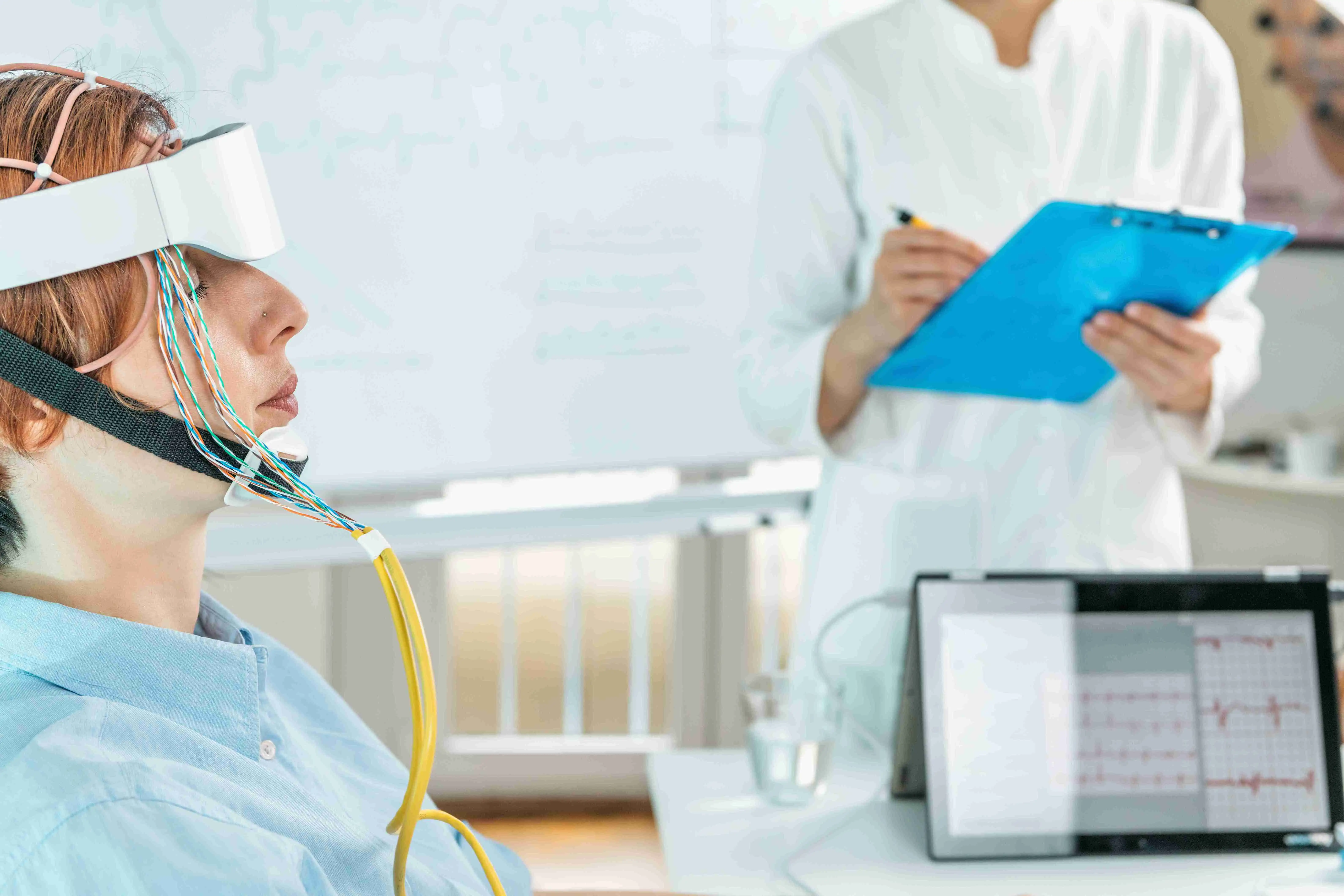
A different room, sensors, wires, noise, temperature, discomfort and awareness of being observed can all change sleep. Worrying about having to fall asleep can add another layer of alertness.
Researchers call the change that can occur on the first laboratory night the first-night effect. A meta-analysis in healthy participants found that the first night was associated, on average, with taking longer to fall asleep, more time awake, less total sleep and less REM sleep than a later laboratory night 1. These are average differences, not a rule that every person sleeps poorly or that every first study is unrepresentative.
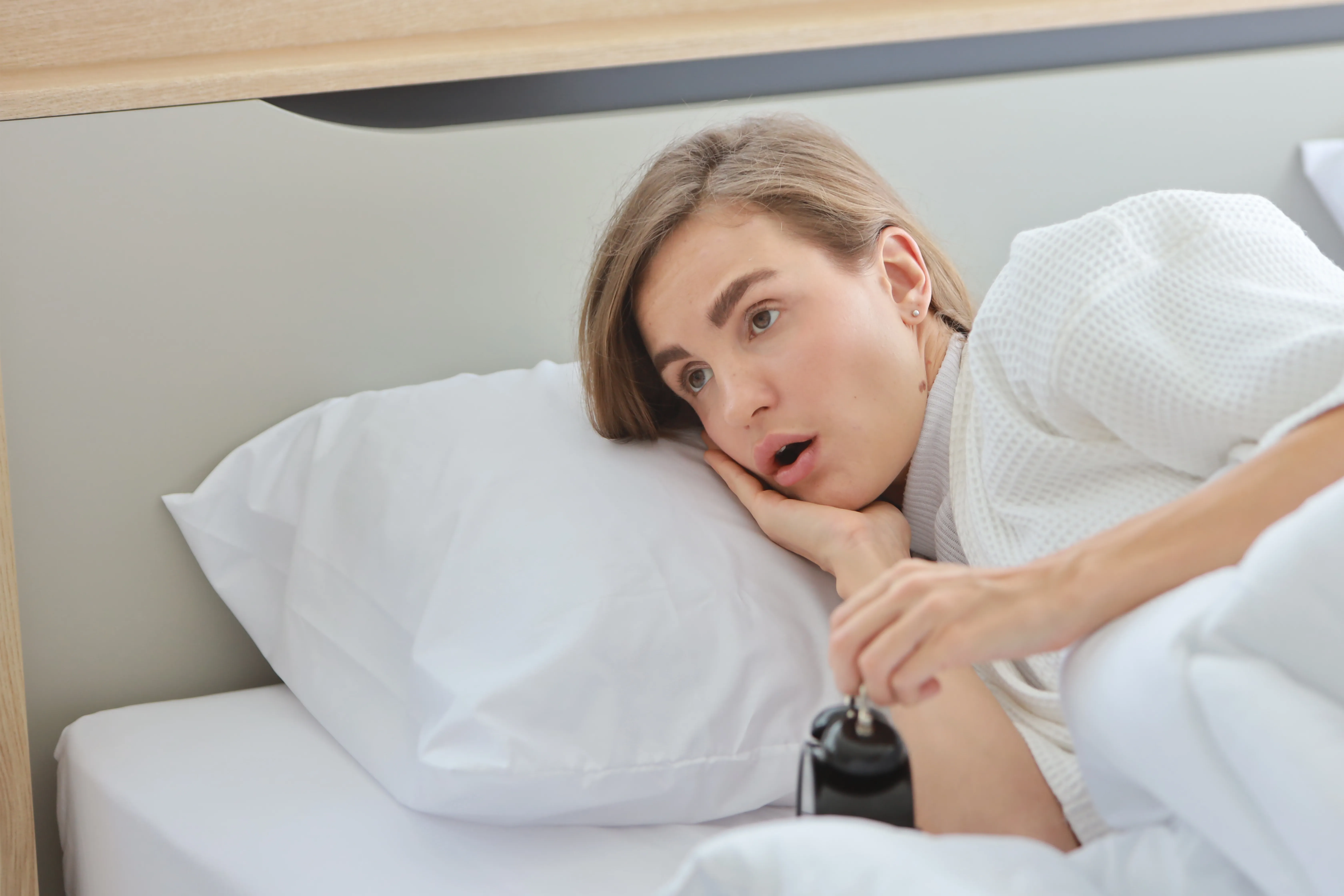
Your estimate may not match the recording, either. Brief sleep and frequent awakenings can feel like being awake all night. In an attended study, brain-wave, eye-movement and muscle signals allow the team to score sleep and wake rather than relying on how the night felt.
What makes an overnight study usable
The answer depends on why the test was ordered. The interpreting clinician considers:
- how much sleep was recorded and how fragmented it was
- which sleep stages occurred, including whether REM sleep was captured
- which body positions occurred, especially when breathing events may be position-dependent
- whether the relevant breathing, oxygen, heart, movement or behavior signals remained reliable
- whether enough examples of the suspected problem appeared
- whether a treatment such as positive airway pressure was tested long enough, under useful conditions, to judge its effect
A clear abnormality may be visible despite limited sleep. The opposite conclusion requires more care. If no abnormality appeared, the clinician must consider whether the study gave the suspected problem a fair chance to appear.
This matters in obstructive sleep apnea. In one analysis of diagnostic sleep studies, breathing-event rates were often substantially higher during REM sleep or while sleeping on the back. The authors found that the mix of stages and positions could lead to underestimation of severity in a single-night result 2. Missing REM or back-sleeping does not invalidate every study, but it can change how confidently a negative or mild result is interpreted.
The answer changes with the type of test
“Sleep study” can refer to tests with different goals and adequacy rules. Difficulty sleeping affects them differently.
Attended diagnostic polysomnography
An attended in-lab sleep study records sleep stages along with breathing, oxygen, heart rhythm, muscle activity, limb movement and body position. Depending on the clinical question, video and additional signals may also be used. A trained technologist monitors the recording and addresses signal problems according to the laboratory’s protocol 3.
Fragmented sleep can still contain useful evidence. However, very little sleep, missing stages or positions, or prolonged signal loss may leave the study unable to exclude a suspected disorder. For adults being evaluated for obstructive sleep apnea, the American Academy of Sleep Medicine says a second polysomnogram may be considered when the first is negative but clinical suspicion remains 4. That is a clinician-directed decision, not proof that every short or restless study needs repeating.
Split-night study
A split-night study begins as a diagnostic polysomnogram and changes to positive airway pressure treatment if the early recording shows enough evidence to justify doing so. The study must both establish the breathing problem and leave enough useful sleep to adjust and assess treatment 45.
If you take a long time to fall asleep or the early evidence is not clear enough, the team may continue the diagnostic recording rather than start pressure treatment. If treatment starts late, there may not be enough time to find and confirm an effective setting. Either situation can lead to a separate titration or another clinician-selected treatment plan. It does not mean that the diagnostic portion contained no useful information.
PAP titration study
During a PAP titration study, the technologist adjusts prescribed positive airway pressure under a clinical protocol while watching breathing events, oxygen, arousals, leak and sleep.
A strong titration shows that the selected setting controls breathing across relevant conditions. AASM guidance places particular value on observing the chosen pressure during back-sleeping REM sleep. A titration that otherwise performs well but lacks that period may be graded as adequate rather than optimal or good, and a repeat titration may be considered when the first study does not reach the needed quality 5.
This is why “I slept for a while” does not by itself show that titration was complete. The report must show what pressure was tested, under which stages and positions, with what mask leak and treatment response.
Home sleep apnea test
A home sleep apnea test is not simply a laboratory study moved into your bedroom. Many commonly used devices do not record the brain signals needed to identify sleep stages. Their respiratory event index may use monitoring or recording time rather than confirmed sleep time.
If you lie awake for long periods, that extra time can dilute the calculated event rate and make obstructive sleep apnea look less severe. Research comparing home-test calculations found that including periods likely to be wakefulness increased the risk of underestimating severity 6. Device designs differ, so the report should identify what the device measured and how the index was calculated.
The AASM recommends in-lab polysomnography after a single home test that is negative, inconclusive or technically inadequate when obstructive sleep apnea is still being evaluated 4. Repeating the same home test is not always the right next step, especially when severe insomnia or another condition makes home testing a poor fit.
Multiple Sleep Latency Test
A multiple sleep latency test is a series of daytime nap opportunities used in the assessment of disorders such as narcolepsy and idiopathic hypersomnia. It is normally performed after an attended overnight polysomnogram. That prior night is part of the test preparation, not a separate inconvenience.
Too little sleep before the daytime test, an unstable schedule, untreated sleep-disordered breathing, medicines or substances can change how quickly someone falls asleep or enters REM sleep. The AASM protocol therefore calls for advance planning, documentation of the recent sleep schedule and a clinician-directed plan for medicines and substances. It also sets specific requirements for the preceding overnight study 7.
If the overnight recording does not meet those requirements, the lab or interpreting clinician may decide that proceeding would produce a misleading result. Do not try to create sleepiness by depriving yourself of sleep unless the testing team explicitly instructs you to do so.
What the technologist can do during the night
Tell the technologist when something is keeping you awake. Depending on the setup and laboratory protocol, the technologist may be able to:
- reattach or troubleshoot a loose sensor
- reduce avoidable wire pulling or correct equipment pressure
- help you get to the bathroom safely
- address room temperature, light, noise or bedding when the facility allows
- help refit a PAP mask or address leak during a titration
- document pain, anxiety, unusual symptoms, sleep position and anything that changed the recording
Technologists monitor and help preserve recording quality, carry out the ordered procedure and respond under the medical director’s protocols 3. They cannot force sleep, rewrite the clinician’s order, improvise a different diagnostic test or give an unapproved medicine. They also do not provide the final interpretation or diagnosis. AASM accreditation guidance assigns interpretation and diagnosis to appropriately licensed clinical staff, not the technologist running the night 8.
How to prepare without distorting the test
Follow the instructions from your own sleep center. Preparation differs by test, your usual schedule, health conditions and medicines. A person having an overnight diagnostic study may receive different instructions from someone preparing for an MSLT.
Before test day, ask the lab:
- whether to keep your usual bedtime and wake time
- whether naps, caffeine, nicotine or alcohol need to be limited, and from what time
- whether to take each prescription, over-the-counter medicine and supplement as usual
- whether to bring your PAP device, mask, oral appliance or other equipment
- what personal items, pillows, sleepwear or toiletries you may bring
- how the lab handles mobility needs, skin sensitivities, hair products, caregiving needs or anxiety about the setup
- whether you will need someone to drive you home
Do not stop a prescribed medicine, change its timing or deliberately restrict sleep on your own. Those changes can affect both your safety and the meaning of the result. For an MSLT in particular, medication and caffeine plans may need to begin well before test day and should be settled with the clinician 7.
During the study, report pain, panic, mask leak, breathing discomfort, a detached sensor or an urgent need to change position. Quietly enduring a fixable problem does not make the study more accurate.
Can you take a sleep aid?
Only take a sleep aid if the ordering clinician or sleep center has approved the specific medicine, dose and timing for this test. A medicine can change sleepiness, sleep timing and sleep stages, and may interfere with daytime MSLT interpretation 7.
Do not bring and take an unreported prescription, over-the-counter sleep aid, antihistamine, alcohol or cannabis simply because you are worried about sleeping. Contact the lab before the appointment if you regularly use something for sleep or believe you will need medication. The team can tell you whether to continue it, adjust the testing plan or arrange another approach.
What to ask when you get the result
The final report and clinical follow-up matter more than the technologist’s morning impression. Ask:
- How much confirmed sleep was recorded in the lab, or how much usable monitoring time was captured at home?
- Which sleep stages and body positions occurred?
- Were the signals technically reliable?
- Did the study answer the clinical question it was ordered to answer?
- Could limited REM sleep, back-sleeping or total sleep have underestimated the suspected problem?
- If this was a split-night or titration study, was the treatment portion complete enough to guide care?
- Does the result fit my symptoms and pretest likelihood?
- Would repeating the study or using a different test materially change the next decision?
A repeat study is not an automatic consequence of a bad night. It is useful when the missing information matters. Depending on the question, the clinician may recommend another polysomnogram, an in-lab study after an inconclusive home test, a separate PAP titration, a properly prepared MSLT on another date or a different evaluation.
Frequently asked questions
How many hours of sleep are enough for a sleep study?
There is no universal number for all sleep studies. Adequacy depends on the clinical question, the test type, signal quality, stages and positions captured, and whether the relevant events or treatment responses occurred. A shorter recording may show a clear disorder, while a longer one can still be inconclusive if it misses the condition needed to assess it.
What if I only slept lightly or kept waking up?
Light and fragmented sleep can still provide interpretable data. In an attended polysomnogram, the recording shows when you were asleep and which stage you reached. The clinician should also consider whether fragmentation prevented the study from capturing enough REM sleep, relevant positions, events or treatment time.
Can a bad night rule out sleep apnea?
Not by itself. A negative result must be interpreted alongside symptoms, risk, sleep time, stage and position exposure, and technical quality. AASM guidance supports considering repeat polysomnography when an initial study is negative but clinical suspicion remains, and recommends polysomnography after a negative, inconclusive or technically inadequate home sleep apnea test 4.
Will the technologist tell me whether I have a sleep disorder?
Usually not. The technologist runs and monitors the test, documents events and protects signal quality. The recorded data must then be scored, interpreted and combined with your clinical history by qualified clinical staff 8.
Difficulty sleeping in a laboratory is information the team can work with, not a personal failure. Let the technologist know what is happening, then let the report show what the night actually captured. The right next step depends on whether those data answered the question, not on whether the night looked like sleep at home.