

Orthopnea means feeling short of breath when you lie flat, with breathing becoming easier when you sit or stand. It may begin within minutes of lying down or appear as a clear worsening of breathlessness that is already present. Orthopnea is a symptom pattern, not a disease and not a diagnosis on its own 12.
Sitting upright can provide temporary relief, but that response does not reveal the cause or show that the problem is harmless. New, persistent, or worsening orthopnea deserves medical evaluation even if a wedge, adjustable bed, or recliner makes the breathing feel better.
Get emergency help for dangerous breathing symptoms
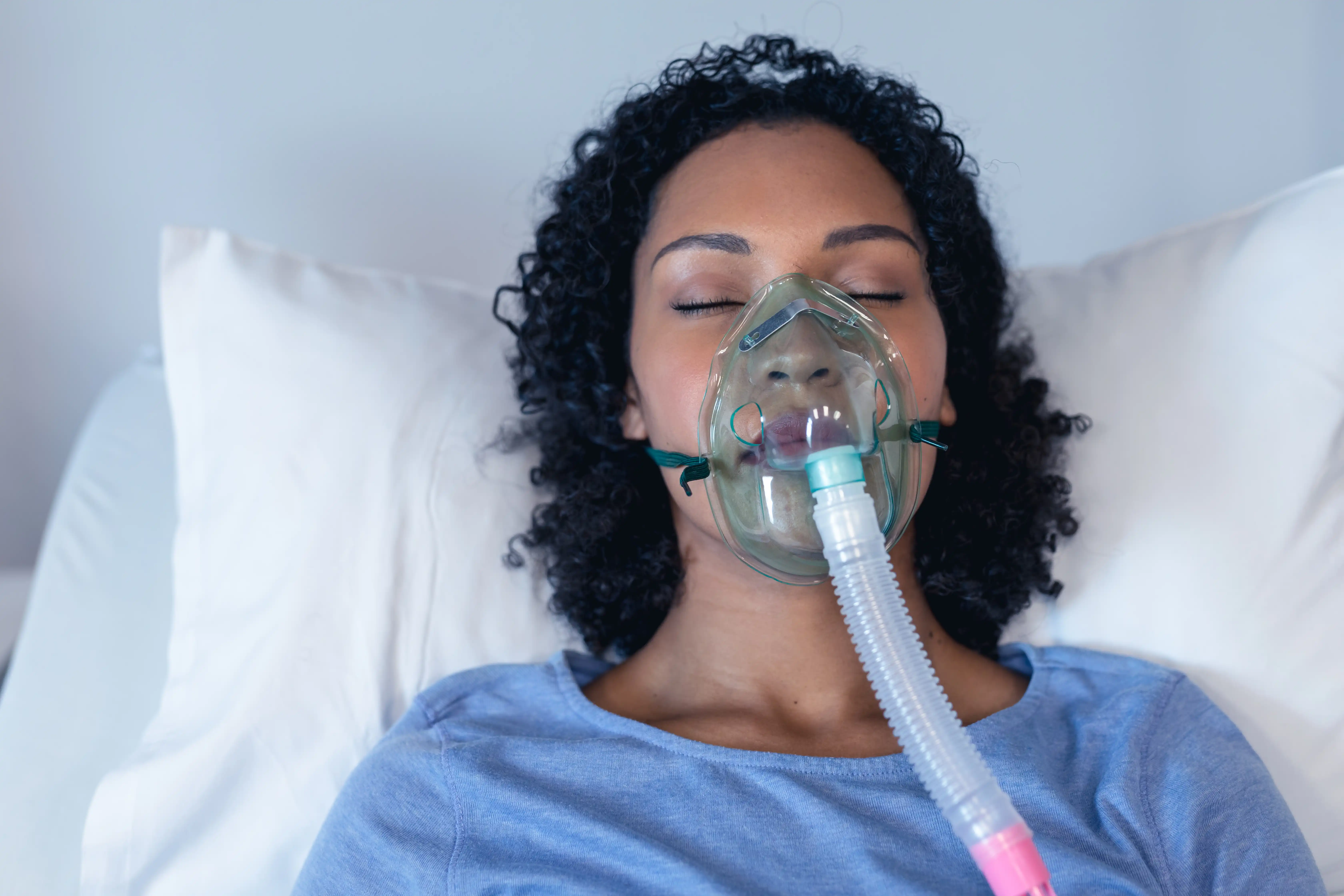
Call your local emergency number if breathing difficulty is severe or rapidly worsening, you are gasping or cannot speak normally, your chest feels tight or heavy, pain spreads to the arm, back, neck, or jaw, your skin or lips become very pale, blue, or gray, or you become suddenly confused. Collapse, loss of consciousness, or not breathing normally also requires an immediate emergency response 34.
Do not lie flat to test severe symptoms again. Sit in the position that makes breathing easiest while help is arranged, and do not drive yourself to emergency care.
How orthopnea differs from similar symptoms
The timing and position matter, but they do not diagnose the cause. These patterns can overlap:
- Paroxysmal nocturnal dyspnea: PND wakes a person from sleep with breathlessness, classically after some time asleep, and improves after sitting or standing. Orthopnea starts or worsens because of lying flat and can happen before sleep. PND and orthopnea can occur together, but they are not interchangeable terms 2.
- Obstructive sleep apnea: OSA involves repeated upper-airway blockage during sleep. Loud snoring, witnessed pauses, choking, or gasping during sleep point toward a sleep-breathing evaluation. Orthopnea is the conscious sensation of breathlessness in a flat position, including while awake. A person can have both conditions 5.
- Reflux: Acid reflux often causes burning behind the breastbone, sour-tasting regurgitation, cough, or hoarseness. It can worsen when lying down, but those symptoms are not the same as positional breathlessness. Chest pain or breathing difficulty should not be assumed to be reflux without assessment 6.
- Anxiety or panic: Anxiety can intensify the distress of breathlessness, and breathlessness can provoke anxiety. A repeated positional pattern still needs a physical evaluation rather than being assigned to anxiety by default 7.
- Bendopnea and trepopnea: Bendopnea is breathlessness when bending forward. Trepopnea is breathlessness when lying on one side rather than the other. These details can help a clinician narrow the possibilities, but neither is a home diagnosis 1.
What can cause orthopnea?
Orthopnea occurs when lying flat changes circulation, lung volume, airway mechanics, or the workload placed on the diaphragm and other breathing muscles. More than one factor may be present.
Heart and circulation problems
Heart failure is the best-known cause, but orthopnea alone does not prove that heart failure is present. In some people with impaired heart filling or pumping, lying flat shifts more blood toward the chest. Pressure can then rise in the lung circulation and make breathing uncomfortable. Swollen legs or abdomen, reduced exercise tolerance, rapid weight change, cough, palpitations, or breathlessness that wakes you from sleep can add useful context 81.
Heart-valve disease, abnormal heart rhythms, and other conditions that raise pressure in or around the heart can produce a similar pattern. Symptoms and a pillow preference cannot distinguish among them 2.
Lung, airway, and chest conditions
COPD, asthma, a large pleural effusion, pulmonary edema, or another condition that reduces lung capacity can make the flat position less tolerable. Cough, wheeze, fever, sputum, chest pain, smoking or exposure history, and whether breathlessness also occurs during activity help guide the evaluation. The absence of wheezing does not rule out a lung or heart cause 17.
Body position affects pulmonary function across people with heart disease, lung disease, neuromuscular disease, and obesity, but the size and direction of that effect vary. Feeling better upright is therefore a clue, not proof of one particular mechanism 9.
Diaphragm or neuromuscular weakness
A weak or poorly moving diaphragm may become more apparent when abdominal contents press upward in a flat position. Orthopnea can be an early respiratory symptom in some neuromuscular conditions, especially when it occurs with a weak cough, morning headaches, daytime sleepiness, swallowing trouble, voice change, or progressive limb weakness. NICE treats orthopnea as a sign that warrants respiratory assessment in motor neurone disease, not as a symptom to manage with pillows alone 10.
Abdominal pressure, obesity, and pregnancy
Central obesity, tense abdominal fluid, or another source of pressure beneath the diaphragm can reduce the room available for the lungs when lying down. Obesity may contribute to the mechanics, but it should not be assumed to be the only cause or used to delay a heart, lung, or neuromuscular evaluation 19.
During pregnancy and for a year after delivery, trouble breathing while lying flat is an urgent maternal warning sign. The CDC advises getting medical care immediately rather than treating it as an expected pregnancy discomfort, particularly when there is chest pain, a fast or irregular heartbeat, dizziness, fainting, or difficulty talking and breathing 11.
How clinicians evaluate orthopnea
A useful evaluation begins with the pattern. A clinician may ask:
- when the symptom began and whether it is stable, episodic, or worsening
- how quickly it appears after lying flat and how quickly it improves upright
- whether it also occurs with exertion, bending, side-lying, or during sleep
- whether there is chest discomfort, palpitations, cough, wheeze, fever, leg or abdominal swelling, fainting, weakness, or recent weight change
- about pregnancy or recent delivery, heart and lung history, neuromuscular symptoms, smoking or other exposures, recent illness, surgery, and current medicines
The exam may include breathing rate, blood pressure, heart rate, oxygen level, heart and lung sounds, neck veins, swelling, muscle strength, and the way the chest and abdomen move while breathing. The next tests depend on what that history and exam suggest 71.
If heart failure is a possibility, clinicians may use an ECG, chest X-ray, blood tests including BNP or NT-proBNP, and an echocardiogram. These pieces answer different questions; no single symptom or test should be interpreted in isolation 8. Pulmonary-function testing, blood counts, kidney and thyroid tests, imaging for fluid or other chest disease, or focused diaphragm and neuromuscular testing may be selected instead or added when the clinical pattern points that way 8110.
A sleep study is not a routine test for orthopnea itself. It becomes relevant when snoring, witnessed breathing pauses, sleep-related gasping, or other findings raise a separate concern for sleep apnea 12.
Why a home oxygen reading cannot settle the question
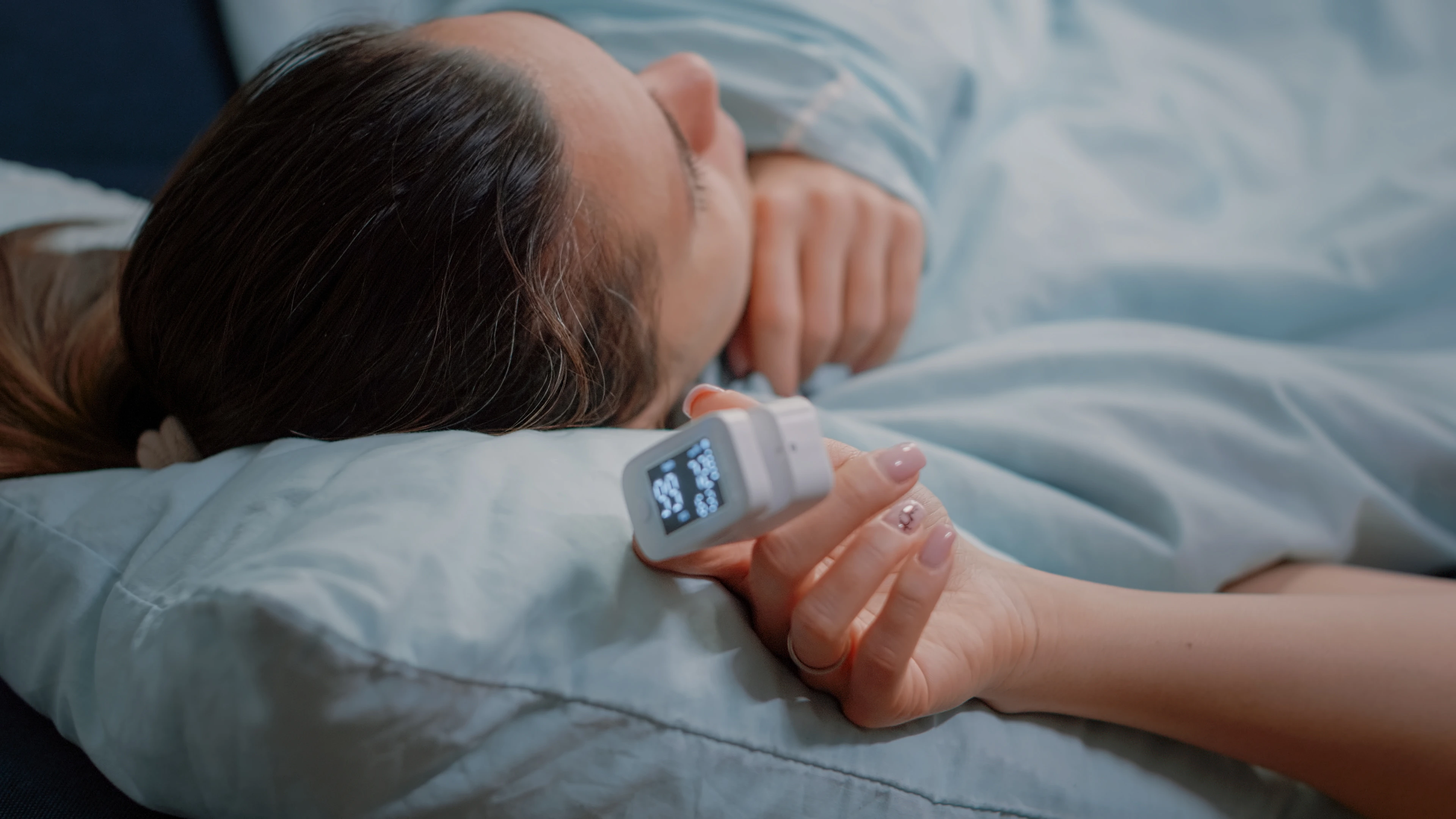
A pulse oximeter estimates blood oxygen; it does not identify why breathing feels difficult. Readings can also be inaccurate because of circulation, skin pigmentation, temperature, movement, nail products, and other factors. The FDA advises tracking symptoms and not relying on the device alone. A seemingly normal number is not a reason to ignore new or worsening orthopnea 13.
What to do while the cause is being assessed
If symptoms are mild and stable enough to wait for medical advice, use a secure upright or partly upright position that lets you breathe most comfortably. An adjustable bed, firm wedge, or stable recliner may be more supportive than a loose stack of pillows. There is no diagnostic pillow count or universally correct angle 2.
Positioning is temporary symptom relief, not treatment of the underlying cause. Do not take extra diuretic, start oxygen, alter a prescribed breathing-device setting, or stop a medicine based on orthopnea alone. Follow an existing clinician-provided action plan, and contact the care team promptly if you need to sleep more upright than usual or the symptom is becoming easier to trigger.
Treatment depends on the diagnosis. It may involve treatment for heart congestion or rhythm problems, targeted therapy for airway or lung disease, management of pleural or abdominal fluid, or respiratory support for diaphragm or neuromuscular weakness. CPAP treats obstructive sleep apnea and some prescribed ventilation plans; it is not a general treatment for unexplained orthopnea 81014.
If breathlessness is new, worsening, or repeatedly appears when you lie down, arrange a medical assessment even when sitting up relieves it. Seek urgent advice sooner if it occurs with swollen ankles, palpitations, coughing blood, or one-sided leg pain or swelling. Use emergency services for the danger signs listed at the start of this article 3.