
The safest way to stop mouth breathing while you sleep is to find out why your nose is not carrying enough airflow, or why your mouth is opening despite a clear nose. A cold may cause it for a few nights. Persistent symptoms can come from allergic or nonallergic rhinitis, a structural blockage, enlarged tonsils or adenoids in a child, air leaking through the mouth during positive airway pressure (PAP) therapy, or a sleep-related breathing disorder 123.
Do not start by sealing your lips. Mouth breathing is an observation, not a diagnosis, and forcing the mouth closed can remove a backup route for airflow without treating the cause 1.
Start with the pattern
A few details can point you toward the right next step:
- Only during a cold or a short allergy flare: temporary nasal swelling is the likely driver. The mouth breathing should ease as the congestion settles.
- With sneezing, itching, clear discharge, or watery eyes: allergic rhinitis is possible. These features, together with a clinical history and examination, are used to make the diagnosis 4.
- With ongoing blockage, especially on one side: a deviated septum, nasal polyp, enlarged turbinate, or another structural problem may need an examination. A strip or spray cannot tell these causes apart 1.
- After repeated use of a decongestant spray: the spray itself may be prolonging the stuffiness. Nasal decongestant sprays and drops should not be used longer than the label allows because overuse can make congestion worse 5.
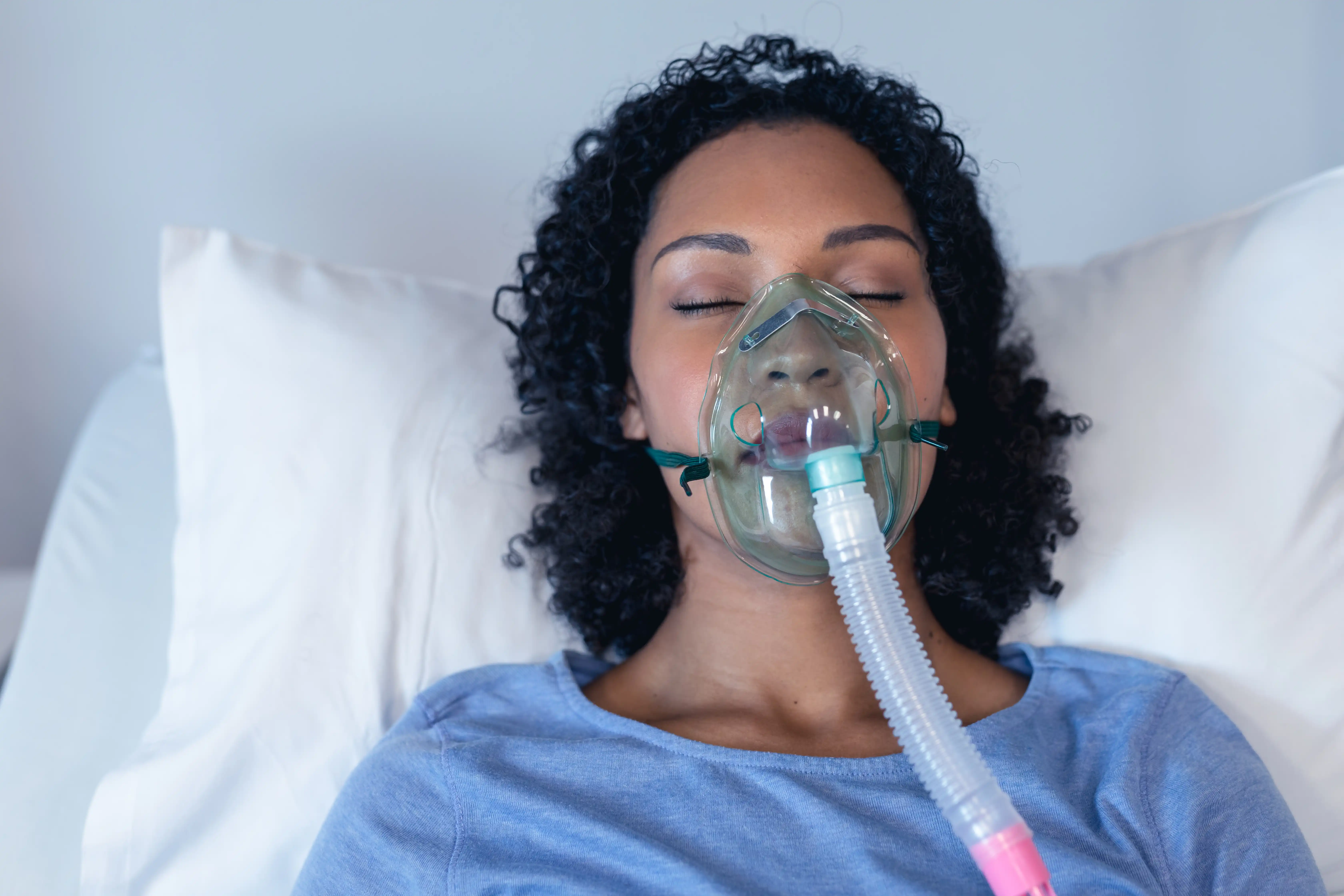
- While using a nasal PAP mask or nasal pillows: morning dryness or a high leak reading can point to air escaping through the mouth. Nasal congestion can also make mouth leak more likely 2.
- With loud snoring, gasping, witnessed breathing pauses, or marked daytime sleepiness: obstructive sleep apnea is a concern. Dry mouth can occur with sleep apnea, but dry mouth or mouth breathing alone cannot diagnose it 6.
A comprehensive sleep evaluation, followed by a home sleep apnea test or an in-laboratory sleep study when appropriate, is the route to an adult diagnosis. A questionnaire, phone recording, or mouth-breathing symptom is not a substitute for diagnostic testing 7.
What you can do tonight
Treat known congestion as directed
If you already know the cause and have a treatment plan, use it as prescribed or according to the product label. For example, an evidence-based allergic rhinitis guideline recommends intranasal corticosteroids when diagnosed allergy symptoms affect quality of life. It recommends less-sedating oral antihistamines mainly when sneezing and itching are the primary symptoms 4.
Do not assume that every blocked nose is an allergy or add several cold and allergy medicines at once. Check active ingredients and ask a pharmacist when you are unsure. Do not stop a prescription because you suspect it contributes to dryness or congestion. A prescriber or pharmacist can review the timing, dose, and alternatives.
If you choose to use saline, a ready-made nasal spray avoids the water preparation required for irrigation. If you use a squeeze bottle, neti pot, or another device that sends water through the nose, use water labeled distilled or sterile, or tap water that has been brought to a rolling boil and allowed to cool. Follow the device's cleaning instructions. Tap water that is safe to drink is not necessarily safe for nasal rinsing 8.
Troubleshoot PAP leak with your sleep team
If PAP therapy is involved, keep treating the diagnosed sleep apnea and contact the sleep clinic or equipment provider about mouth leak, mask fit, nasal symptoms, or dryness. The American Thoracic Society lists humidifier adjustments, saline spray or gel, refitting the interface, a full-face mask, and, for selected nasal-mask users, a chin strap among possible troubleshooting options 9.
Which option fits depends on the source of the leak and your equipment. Do not change prescribed pressure settings or replace PAP with a chin strap or mouth tape on your own.
Relieve dryness without mistaking it for treatment
Water at the bedside may relieve the sensation of dryness, but drinking more water does not open a structurally blocked nose or treat sleep apnea. If PAP airflow is drying your nose or mouth, heated humidification may help as part of PAP troubleshooting 9.
Persistent dry mouth deserves attention even if the breathing cause is still being worked out. Medicines, dehydration, autoimmune disease, diabetes, infection, and nerve damage can also contribute. Reduced saliva raises the risk of tooth decay, demineralization, and oral infection 10. Brush twice daily with fluoride toothpaste, and ask a dentist about saliva substitutes or other dry-mouth care if the problem continues 10.
Why routine mouth taping is not a safe shortcut
The research does not establish mouth taping as a general treatment for mouth breathing, snoring, or obstructive sleep apnea. A 2025 systematic review found only ten eligible studies. The studies were small and clinically varied, and the review judged all of them to be poor quality. A few reported improvements in selected sleep measures, while others found no meaningful difference 1.
The people most likely to be harmed are also poorly represented in the positive studies. Several trials excluded participants with nasal obstruction. The review found explicit concern about asphyxiation when the nose is obstructed or regurgitation occurs, and it concluded that indiscriminate mouth taping carries a potentially serious risk 1.
Do not seal your mouth if you cannot breathe freely through your nose while awake, feel nauseated or may vomit, have an active respiratory flare, or have symptoms that suggest sleep apnea. Do not use mouth tape on a child. The available studies do not establish safety for children or for people who may be less able to wake and remove the tape because of alcohol, sedating medicines, neurological impairment, or illness 1.
A clinician may occasionally use a mouth-sealing strategy in a carefully selected and monitored PAP case, but that is different from treating yourself based on a social media claim.
What about strips, chin straps, sleep position, and exercises?
These options answer different problems. None can be assumed to cure nighttime mouth breathing or sleep apnea.
- Nasal strips and internal nasal dilators may make nasal breathing feel easier for some people. A systematic review found no significant improvement in the apnea-hypopnea index, lowest oxygen level, or snoring index in people with obstructive sleep apnea 11. They do not treat inflammation, polyps, a severely deviated septum, or throat collapse.
- A chin strap may be part of clinician-guided PAP leak management, but it does not open a blocked nose or provide the airway pressure that treats sleep apnea. Evidence for chin strapping or other mouth-occluding devices outside a selected treatment plan remains uncertain 19.
- Side sleeping or raising the head does not identify why you are mouth breathing. Use a comfortable position if it helps, without treating it as proof that the underlying problem is resolved.
- Orofacial myofunctional therapy is a structured program, not the same as mewing, holding the tongue in a chosen position, or doing generic breathing drills. A 2024 systematic review found that formal therapy may help some adults with obstructive sleep apnea, but long-term evidence is limited and established treatments remain the starting point 12. It is not a same-night fix for nasal blockage.
- Humidifiers and extra water can ease dryness in the right setting. They cannot shrink tonsils, correct a deviated septum, or prevent airway collapse 910.
When adults should arrange an assessment
Make an appointment with a primary care clinician, dentist, ear, nose, and throat specialist, or sleep clinician when the symptoms point to that area. Assessment is reasonable when:
- mouth breathing or nasal blockage persists after a cold has cleared
- one nostril stays blocked, symptoms follow a facial injury, or you have recurrent nosebleeds, facial pain, or swelling
- you wake with dry mouth repeatedly despite addressing obvious causes
- PAP data show persistent leak, PAP feels ineffective, or dryness prevents regular use
- a bed partner notices loud habitual snoring, gasping, choking, or pauses in breathing
- daytime sleepiness affects driving, work, concentration, or safety
The snoring and breathing pattern matters more than whether you can make yourself keep your lips closed. See our guides to sleep apnea symptoms, snoring, a blocked nose at night, and PAP-related dry mouth for those specific next steps.
Mouth breathing in children needs its own evaluation
Persistent mouth breathing in a child should not be treated with tape, a strap, or adult breathing exercises. Enlarged tonsils or adenoids, rhinitis, and craniofacial or neurological conditions can affect the airway. A pediatric clinician may involve an ear, nose, and throat specialist or a pediatric sleep specialist.
Frequent snoring, breathing difficulty at night, daytime sleepiness, attention problems, and behavior changes are recognized signs of pediatric sleep apnea. Untreated pediatric sleep apnea can affect learning, behavior, and growth, but mouth breathing by itself does not prove that a child has apnea 3. Tell the child's pediatrician about ongoing mouth breathing, snoring, gasping, pauses, restless sleep, bed-wetting, school or behavior changes, or growth concerns.
Get urgent help for breathing or neurological warning signs
Call your local emergency number for severe trouble breathing, blue, gray, or very pale lips or tongue, sudden throat or tongue swelling, choking or gasping for air, sudden confusion, or a person who cannot be woken normally 13.
Sudden facial drooping, arm weakness, trouble speaking, loss of balance, or a severe unexplained headache can be signs of stroke and need immediate emergency care 14.
After a head or facial injury, emergency assessment is needed for a nosebleed that will not stop, clear watery fluid from the nose, a severe headache with vision changes, vomiting, collapse, or difficulty speaking. A painful purple swelling inside the nose that blocks breathing also needs emergency assessment 15.
The practical goal is not to make the mouth stay closed at any cost. It is to restore a safe, comfortable route for airflow and treat any sleep, nasal, PAP, or oral-health problem that is keeping the mouth open.