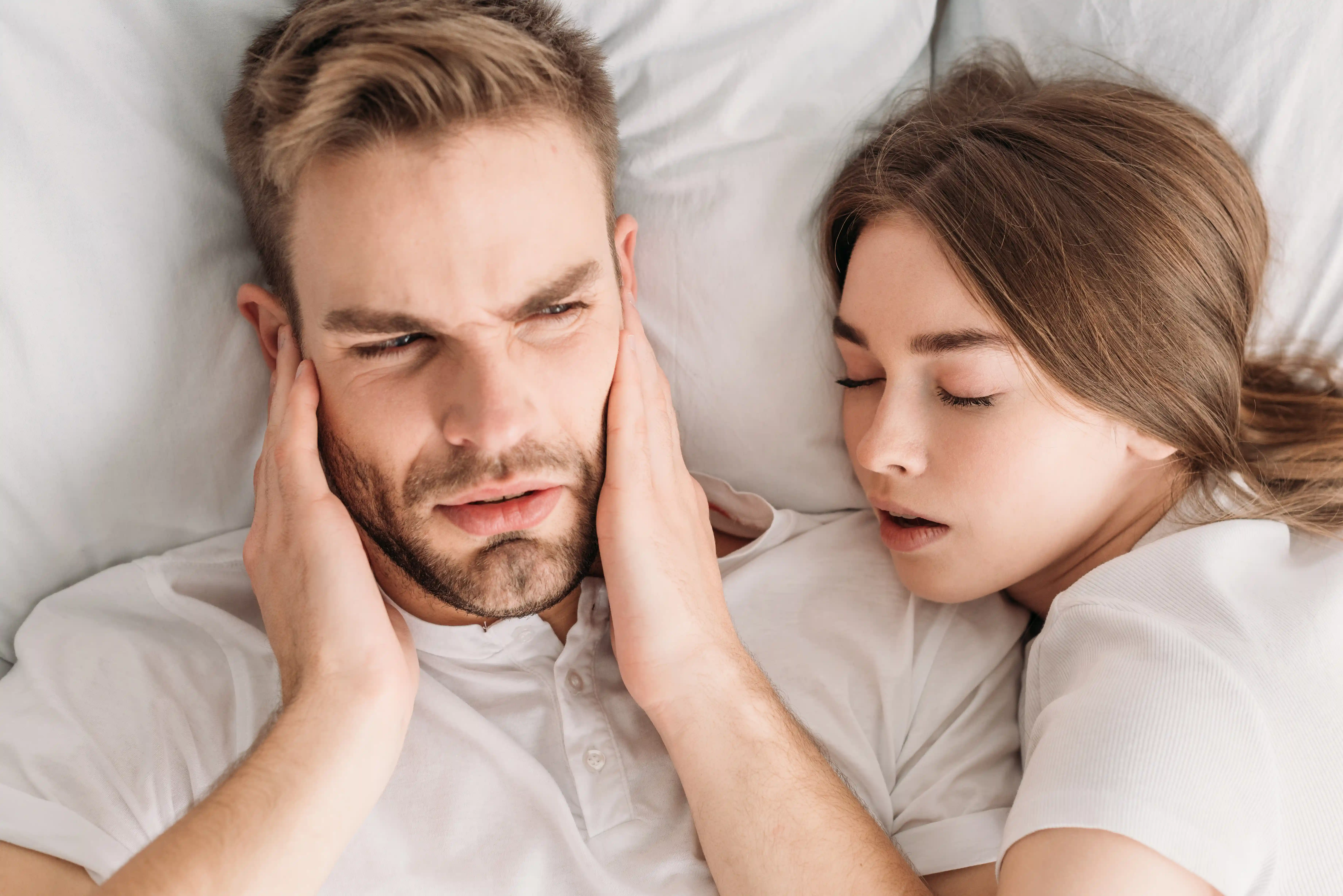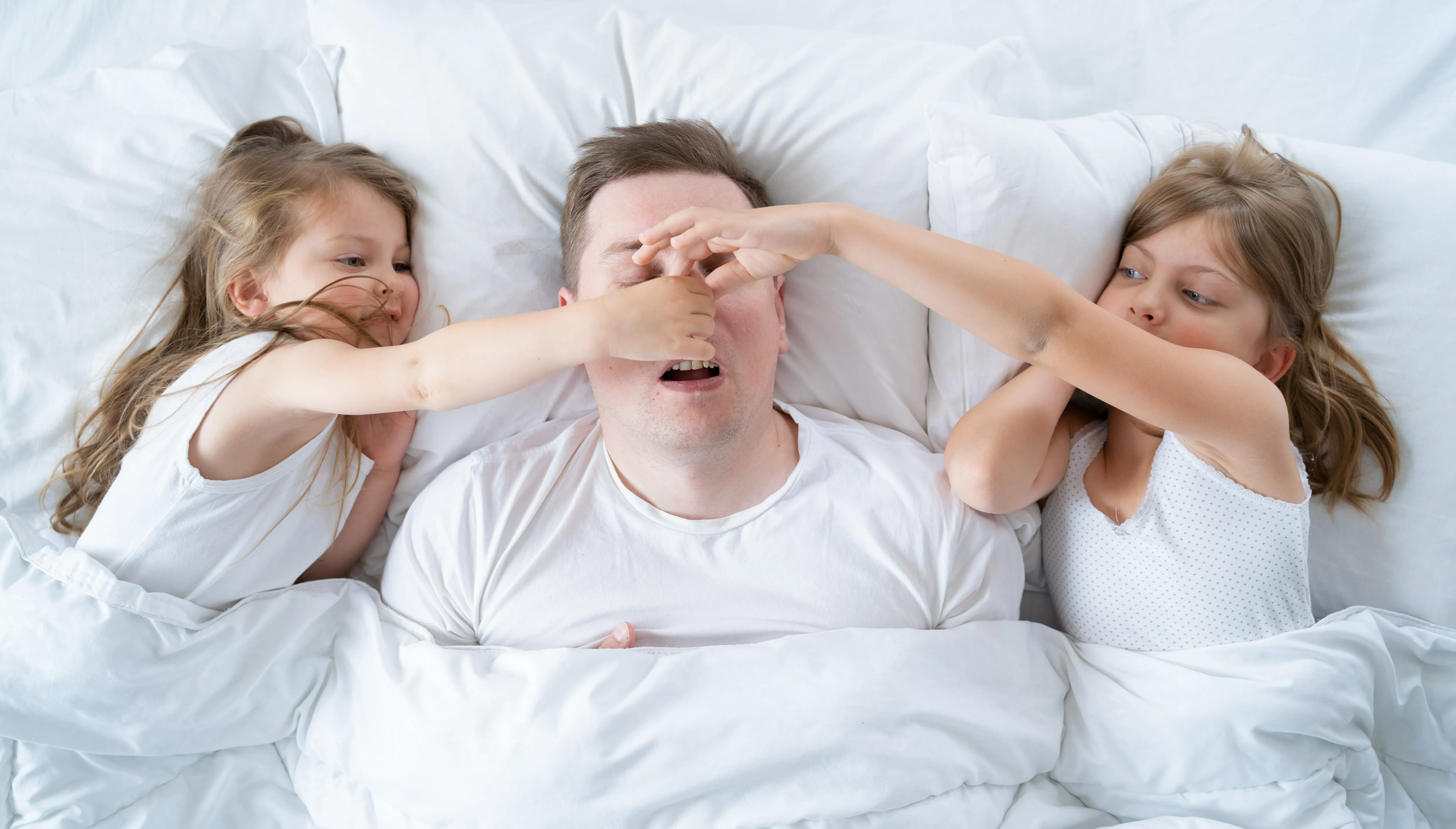
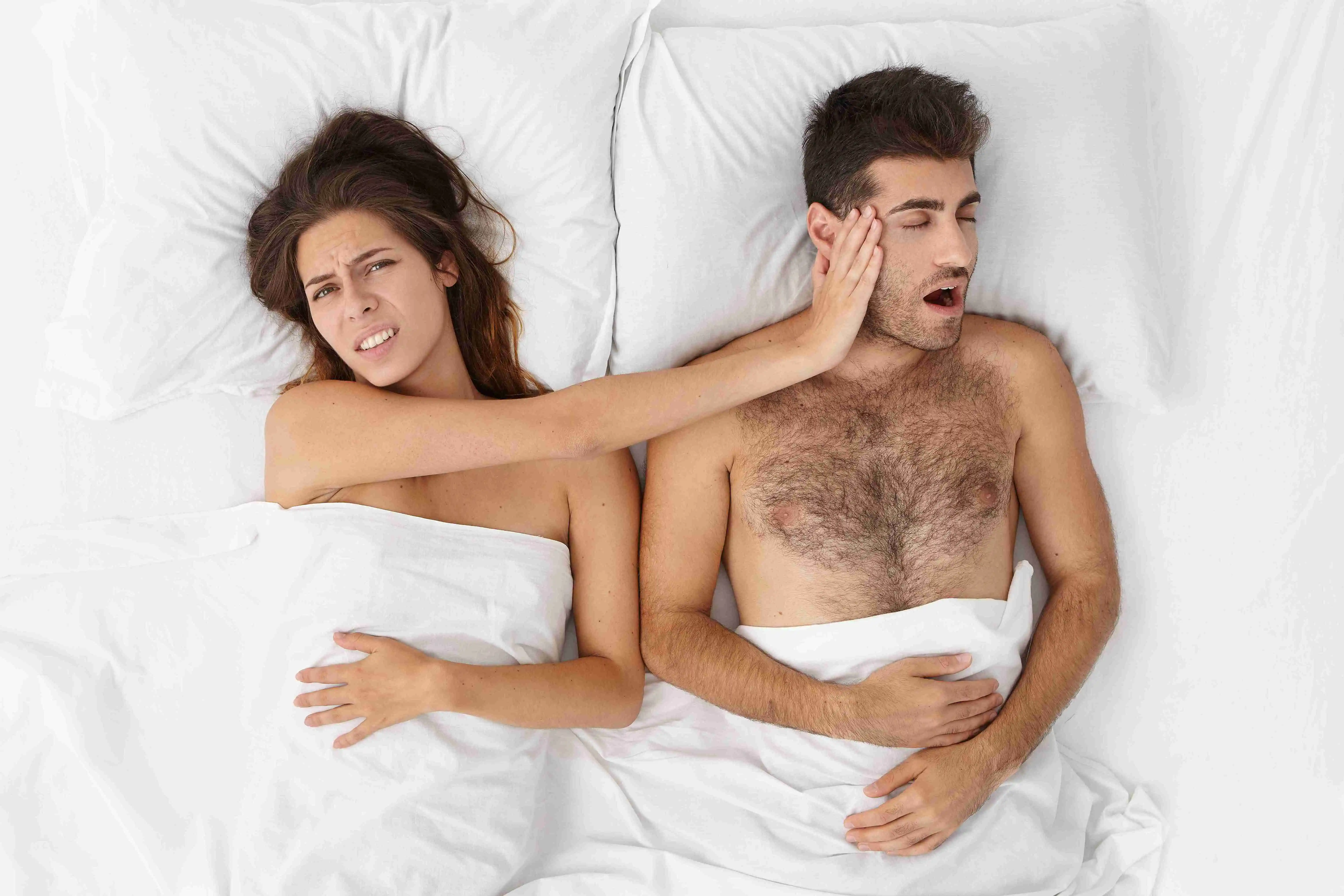
Snoring is the sound produced when air moving through a narrowed upper airway makes soft tissue vibrate during sleep. It is a sign that tissue is vibrating, not a diagnosis by itself.
Some adults have primary snoring without obstructive sleep apnea (OSA). Others snore while the airway repeatedly narrows or closes enough to reduce breathing. Listening cannot reliably separate the two. Loudness, rhythm, or a quiet night does not reveal the number of breathing events, sleep arousals, or oxygen changes 12.
This guide covers adult snoring broadly. For a closer look at whether the sound can be low concern, see is snoring harmless?. For a step-by-step comparison, see snoring or sleep apnea. Habitual snoring in a child needs a pediatric pathway rather than the adult approach below.
What happens in the upper airway
During sleep, muscle tone around the airway changes. If the space behind the nose, soft palate, tongue, or throat becomes narrow enough, passing air can make nearby tissue vibrate. The sound may come from more than one site and can change during the same night.
OSA is different from the sound. It involves repeated partial or complete upper-airway obstruction that causes defined reductions or pauses in breathing. A person may snore between obstructive events, during some events, or not loudly enough for anyone to notice. A person can also snore without meeting OSA criteria 3.
Primary snoring means snoring without clinically important sleep-disordered breathing on the evaluation chosen for that person. It cannot be diagnosed from a phone recording, the absence of witnessed pauses, or how rested someone feels 1.
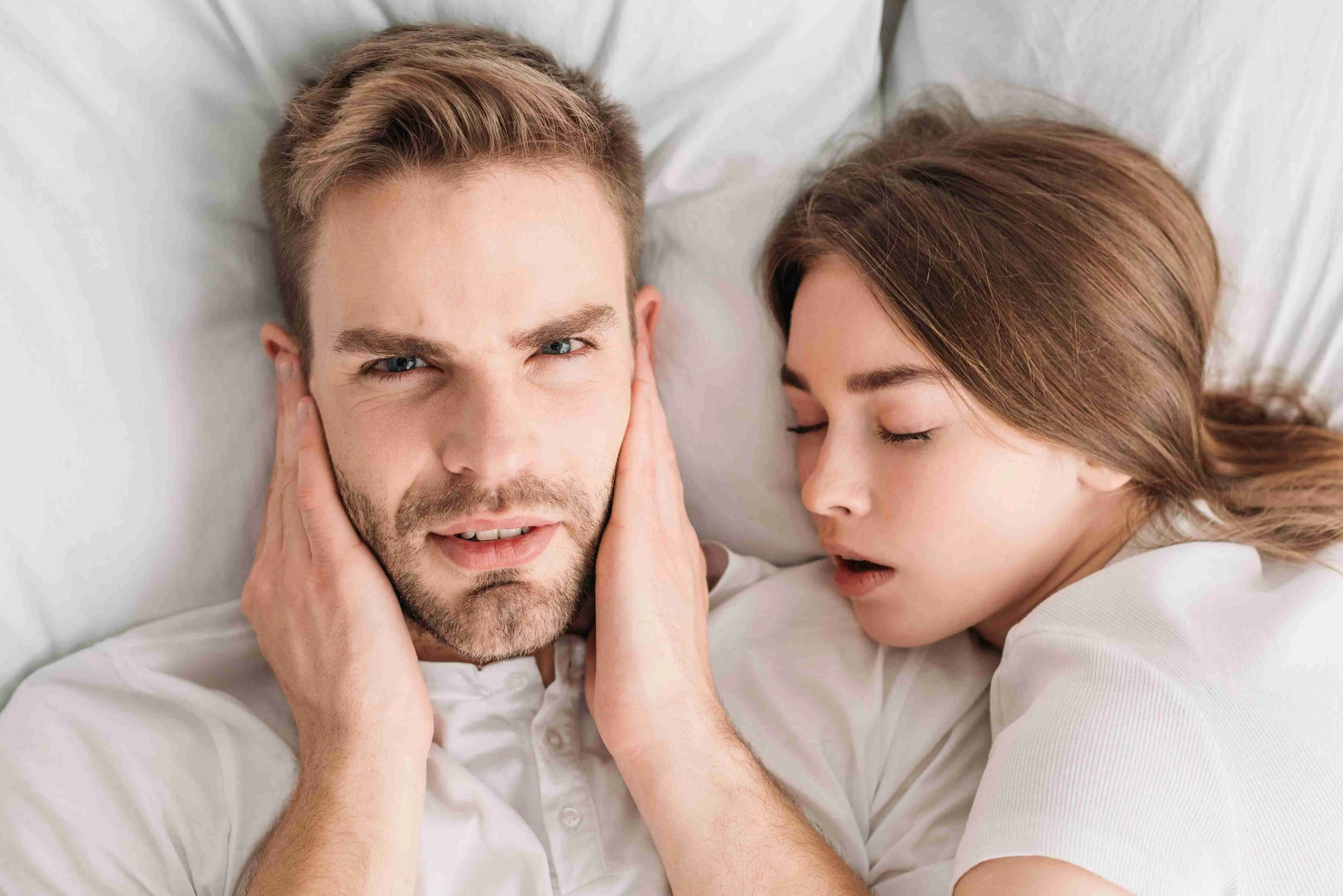
Snoring can still matter when OSA is excluded. The noise may repeatedly wake a partner, affect both people's sleep arrangements, or create relationship strain. Those are legitimate reasons to seek help without treating the person who snores as being at fault.
What can contribute to snoring
Snoring often reflects several contributors rather than one simple cause. A useful evaluation looks for factors that are present in this person and could actually change the plan.
Nasal and upper-airway factors
A cold, allergic rhinitis, persistent nasal inflammation, a deviated septum, or narrowing at the nasal valve can increase resistance through the nose. Enlarged tonsils, a crowded throat, jaw shape, tongue size or position, and soft-palate anatomy can affect the space farther back 3.
Mouth breathing or waking with a dry mouth can be a clue to nasal blockage, but it does not locate the source of snoring. Opening the nose may improve nasal airflow while vibration or collapse remains behind the palate or tongue.
Alcohol and sedating medicines
Alcohol can worsen snoring and obstructive breathing in susceptible adults. A systematic review and meta-analysis of 13 small polysomnography studies found worse snoring and breathing measures after alcohol, but the amount and timing varied across studies. The result supports treating alcohol as a possible individual trigger, not a universal bedtime cutoff 4.
Benzodiazepines, opioids, sleep medicines, muscle relaxants, and other sedating drugs raise different questions about airway tone, breathing drive, and next-day alertness. Evidence is not the same for every drug or person. If snoring began or changed after a medicine change, take that timeline to the prescriber. Do not stop or reduce a prescribed medicine abruptly on your own 1.
Body position
Snoring may be worse while lying on the back because position changes the tongue, soft tissues, and airway. This pattern is not universal. A 2024 systematic review found that studies of positional approaches differed in the people enrolled, methods used, and outcomes measured, so the evidence could not be pooled into one reliable effect estimate 5.
Less snoring on the side suggests that position affects the sound. It does not prove that breathing is normal in that position. Positional OSA is established from a sleep study that records both breathing events and body position, not from sound alone 6.
Body weight and aging
Snoring and OSA become more common across groups as age and body weight increase, but neither is a diagnosis or a complete explanation. Fat distribution, upper-airway anatomy, menopause, muscle responsiveness, medicines, health conditions, and sleep position can also matter. Adults of any body size can snore or have OSA 3.
Discuss weight without blame. If weight management is medically appropriate and wanted, it can be one part of care. It should not delay sleep testing or be promised as a cure, and a quieter night after weight change does not prove that OSA has resolved 1.
What to notice before an evaluation
A person who snores usually cannot observe the full pattern while asleep. With consent, a bed partner can provide useful history without trying to diagnose it.
Note:
- how many nights per week the sound occurs and whether it is changing;
- whether it is steady, intermittent, or interrupted by silence;
- witnessed pauses, gasps, choking, snorts, or labored breathing;
- whether the pattern changes on the back versus the side;
- nasal blockage, mouth breathing, or a recent cold or allergy flare;
- alcohol and sedating medicine use on the relevant nights;
- repeated awakenings, insomnia, morning headaches, dry mouth, or nighttime urination;
- unrefreshing sleep, sleepiness, unintended dozing, concentration problems, or mood changes; and
- recent changes in weight, health, pregnancy status, menopause, or medication.
A short audio or video sample may document the concern, but it captures only part of one night. Consumer apps, watches, microphones, and stand-alone oxygen devices differ in what they measure and how they have been validated. The AASM advises that consumer technology should not replace a comprehensive assessment and validated testing when OSA is a concern 7.
When snoring deserves evaluation
Arrange a routine clinical assessment when snoring is persistent, frequent, worsening, or disruptive. Raise the priority when it occurs with:
- witnessed pauses, gasping, choking, snorting, or difficult breathing;
- excessive sleepiness, unintended dozing, or unrefreshing sleep;
- morning headaches, frequent nighttime urination, repeated awakenings, or insomnia;
- impaired concentration, memory, mood, work, or daily function;
- hard-to-control high blood pressure, atrial fibrillation, stroke, heart failure, or another condition in which OSA would affect care;
- chronic opioid use, possible respiratory-muscle weakness, or concern about under-breathing; or
- a safety-sensitive job, driving concern, or near miss related to sleepiness.
No single symptom confirms OSA, and the absence of dramatic gasping does not rule it out. NICE advises assessing the full sleep history and recognizes a combination of snoring, witnessed apnea, choking, unrefreshing sleep, headaches, sleepiness or fatigue, nocturia, insomnia, and cognitive symptoms as relevant clues 6. The AASM likewise requires diagnostic testing to be interpreted with a comprehensive sleep evaluation 2.
Snoring sound is not a severity scale. A loud snorer may have primary snoring, while someone with clinically important OSA may be quiet, sleep alone, or have no reliable observer.
How snoring is evaluated
A clinician may ask about nighttime breathing, sleep schedule, daytime function, medicines, alcohol, nasal symptoms, other health conditions, and driving or work safety. A partner's account is useful when available. Examination may include blood pressure and the nose, tonsils, palate, tongue, jaw, neck, and other airway features.
Screening questionnaires can organize symptoms and risk factors. They cannot diagnose OSA or establish primary snoring 2.
Not every adult who snores automatically needs the same sleep study. The testing decision depends on the full history, examination, other conditions, and how likely OSA or a different breathing disorder appears.
Home sleep apnea testing
A clinician-directed home sleep apnea test (HSAT) can be appropriate for some uncomplicated adults whose evaluation suggests an increased risk of moderate to severe OSA. A medical HSAT records several breathing-related signals. It is not the same as a phone recording, watch alert, or stand-alone pulse oximeter 2.
A negative, inconclusive, or technically inadequate HSAT does not settle the question when concern remains. The AASM recommends polysomnography after one such home test 2.
Polysomnography
Polysomnography (PSG) is an attended sleep study that measures sleep as well as multiple breathing and body signals. It is the standard diagnostic test when OSA is suspected after a comprehensive evaluation.
The AASM prefers PSG rather than HSAT when there is significant heart or lung disease, possible respiratory-muscle weakness, suspected awake hypoventilation, chronic opioid use, a history of stroke, or severe insomnia. PSG may also be needed when the clinical question extends beyond straightforward OSA 2.
Testing identifies the type and frequency of breathing events, but the clinician still interprets the result in context. A number alone does not describe every symptom, treatment goal, or safety concern.
Treatment follows the diagnosis and likely cause
The first treatment question is what needs to change: disruptive sound, nasal breathing, confirmed OSA, or another sleep-related breathing problem. One intervention may help the sound without accomplishing the medical goal.
If evaluation supports primary snoring
Start with a contributor that is actually present:
- allow a temporary cold or nasal blockage to clear, or treat diagnosed nasal disease appropriately;
- compare ordinary nights without alcohol near bedtime if alcohol reliably worsens the pattern;
- review possible medicine effects with the prescriber;
- try a tolerable side-sleeping approach when snoring is clearly worse on the back; and
- include gradual, supported weight care when it is relevant and wanted.
These approaches have variable evidence and are not universal cures. Change one factor at a time and judge the result across several ordinary nights. For a detailed evidence-based treatment path, see how to stop snoring.
For an adult who wants treatment after OSA has been excluded, AASM and American Academy of Dental Sleep Medicine guidance supports a prescribed oral appliance. It should be custom fitted and monitored by a qualified dentist, with a sleep physician involved in diagnosis. An over-the-counter boil-and-bite mouthpiece is not equivalent to this process 8.
If testing confirms obstructive sleep apnea
Positive airway pressure (PAP), including CPAP or an appropriate auto-adjusting mode, keeps the airway open with pressurized air. AASM guidance recommends PAP for adults with OSA and excessive sleepiness and supports it in other defined clinical settings. Follow-up should check use, symptoms, comfort, and treatment effectiveness 9.
A custom oral appliance can be an alternative for selected adults who prefer it or cannot tolerate CPAP. Positional treatment can be useful when testing confirms a meaningful position-dependent pattern. Weight management may reduce severity for some people with overweight or obesity. Each alternative needs a plan for confirming whether OSA is controlled. Reduced noise is not enough 68.
Do not stop PAP, change its pressure, or replace it with a quieter-sounding remedy without the treating clinician's plan.
Nasal and surgical care
Nasal saline, allergy treatment, or a procedure may improve nasal airflow when the matching nasal problem is present. Nasal care does not automatically correct collapse behind the palate or tongue.
Surgery is not one treatment. An ear, nose, and throat evaluation should identify the relevant anatomy and whether the goal is nasal breathing, primary snoring, OSA, or a combination. Evidence for primary-snoring procedures varies, and benefits can lessen over time. Some procedures have meaningful pain, swallowing, voice, bleeding, or airway risks depending on what is done 1.
For diagnosed OSA, the AASM recommends discussing surgical referral in selected adults who cannot use PAP, have persistent pressure-related side effects, or have a relevant anatomical problem. The choice and risk-benefit balance depend on the person, OSA severity, anatomy, and procedure. Objective follow-up may still be needed after surgery 10.
Do not let a home remedy replace evaluation
Mouth taping, chin straps, essential oils, unselected anti-snoring sprays, specialty pillows or mattresses, throat gadgets, and generic exercise routines do not establish why someone snores. None should be treated as a universal cure for primary snoring or OSA.
Mouth taping is a particular concern because it forces the mouth closed without showing that nasal and upper-airway breathing is safe. A 2025 systematic review found 10 small, poor-quality studies with inconsistent results. Several discussed potentially serious risk when nasal obstruction or regurgitation is present, and the review did not support mouth taping for the general population with sleep-disordered breathing 11.
A nasal treatment can still be appropriate for diagnosed rhinitis or obstruction, and general exercise can support health. The problem is using either as proof that airway collapse has stopped. If OSA is suspected or diagnosed, the treatment outcome must be checked with the clinical measures appropriate to that diagnosis.
When breathing or sleepiness is urgent
A witnessed pause that ends with a gasp and normal breathing is an important reason for prompt assessment, but it is not automatically an emergency.
Call emergency services if a person cannot be awakened, has blue or gray lips or skin, continues to breathe slowly, shallowly, or with great difficulty, or may have taken too much opioid, sedative, alcohol, or another depressant. The FDA identifies extreme sleepiness, inability to respond, and slowed or difficult breathing as signs that require urgent medical attention when opioids or other depressants may be involved 12. Do not assume a dangerous pattern is ordinary snoring.
If you are fighting sleep, drifting across lanes, missing parts of a drive, or struggling to keep your eyes open, do not keep driving. Pull over safely and arrange another way to travel. NHTSA warns that coffee or energy drinks alone may not prevent brief episodes of sleep 13.
The useful next step is not to judge the sound in isolation. Describe the pattern, look for breathing and daytime clues, and let the evaluation determine whether the problem is primary snoring, OSA, nasal obstruction, or something else. Treatment can then target the right outcome.