
Breathing and sleep affect each other, but not in one simple cycle. Cough, wheeze, congestion, breathlessness, airway collapse, or weak breathing muscles can repeatedly interrupt sleep. At the same time, the normal changes in breathing that occur during sleep can expose a respiratory problem that is less obvious while you are awake.
Poor sleep does not cause every lung condition, and sleeping longer does not repair asthma, COPD, respiratory muscle weakness, or sleep apnea. The practical goal is to identify what is happening at night and treat that specific problem.
How sleep changes breathing
Breathing usually becomes a little slower and shallower during sleep. The body's response to changes in oxygen and carbon dioxide is also less forceful, and some muscles that assist breathing contribute less during rapid eye movement, or REM, sleep. Healthy lungs and breathing muscles usually tolerate these changes.
A person with reduced respiratory reserve may not. COPD, severe obesity, a chest-wall disorder, respiratory muscle weakness, or another cause of impaired ventilation can produce a larger fall in oxygen or a rise in carbon dioxide during sleep. In neuromuscular and chest-wall disorders, hypoventilation may appear first during REM sleep before becoming apparent in other sleep stages or while awake 1.
Respiratory symptoms can disrupt sleep by a different route. A blocked nose may make breathing uncomfortable. Asthma may cause nighttime cough or wheeze. COPD can cause cough, sputum, or breathlessness. Reflux, heart failure, pain, anxiety, and medicines may produce similar awakenings. Frequent waking is therefore a clue, not a diagnosis.
Observational research often finds poor sleep alongside worse respiratory symptoms or outcomes. These associations can run in both directions and can be affected by disease severity, mood, medicines, activity, and other conditions. They do not prove that one bad night inflames or damages the lungs.
Start with the nighttime pattern
The details around an awakening are usually more informative than a general sense of “breathing badly.”
Record:
- whether the main symptom is nasal blockage, cough, mucus, wheeze, chest tightness, breathlessness, choking, gasping, or a witnessed pause in breathing;
- whether symptoms occur while falling asleep, during the night, on waking, or when lying flat;
- whether sitting up brings relief and whether there is new ankle swelling;
- fever, sore throat, body aches, a new exposure, or a sudden change in cough or mucus;
- morning headache, confusion, dry mouth, severe sleepiness, or reduced ability to function;
- inhaler, PAP, oxygen, ventilator, medicine, alcohol, or substance use that evening; and
- what a bed partner or household member observes.
If you are struggling to stay awake, do not drive or do safety-sensitive work while waiting for assessment.
Separate the main types of nighttime breathing problem
Respiratory symptoms that interrupt sleep
Cough, wheeze, mucus, chest tightness, or breathlessness can wake a person without causing sleep apnea. The symptom may come from an acute infection, asthma, COPD, another lung condition, reflux, postnasal drainage, heart disease, or a medicine effect.
Timing helps. Several days of new congestion, fever, sore throat, cough, or body aches points toward an acute respiratory illness more than a longstanding sleep disorder. A respiratory virus can still trigger an asthma or COPD flare, so follow the action plan supplied for the chronic condition and contact a clinician if symptoms are worsening 234.
Night waking due to asthma is one of the questions in the Global Initiative for Asthma assessment of symptom control. Recurrent nighttime cough, wheeze, chest tightness, or reliever use should prompt a review of the diagnosis, triggers, inhaler technique, adherence, and treatment plan rather than an improvised bedtime remedy 3.
COPD symptoms may also worsen or become more noticeable at night. The current GOLD strategy emphasizes individual assessment of cough, sputum, breathlessness, exacerbations, exposures, inhaler technique, adherence, and coexisting conditions. New or abruptly worse symptoms need a COPD-specific clinical plan, not treatment as simple insomnia 4.
Breathlessness that begins or worsens when lying flat is called orthopnea. Waking suddenly after a period of sleep with severe breathlessness is sometimes called paroxysmal nocturnal dyspnea. These patterns can occur with heart as well as lung conditions. Raising the torso may provide temporary comfort, but it should not replace assessment of a new or worsening pattern.
Obstructive sleep apnea
Obstructive sleep apnea involves repeated narrowing or closure of the upper airway while breathing effort continues. Loud snoring, witnessed pauses, choking or gasping, morning headache, dry mouth, nocturia, and daytime sleepiness can raise suspicion, but symptoms and questionnaires cannot diagnose it. Objective sleep testing is required 5.
A home sleep apnea test can be appropriate for some uncomplicated adults. The American Academy of Sleep Medicine recommends attended polysomnography instead when significant heart or lung disease, possible respiratory muscle weakness, awake or suspected sleep-related hypoventilation, chronic opioid use, stroke history, or severe insomnia makes a limited home test less suitable 5.
COPD and OSA can coexist. This is sometimes called overlap syndrome. It can produce more substantial nighttime problems with oxygen and carbon dioxide than either diagnosis alone, so worsening snoring, witnessed pauses, sleepiness, or morning headache in a person with COPD deserves a sleep evaluation 14.
Central sleep apnea
In central sleep apnea, pauses occur because breathing effort temporarily decreases or stops, not because the throat simply closes. It can be associated with heart failure, high altitude, certain neurological conditions, and medicines that suppress breathing. The distinction requires clinical testing because a sleeper or bed partner cannot reliably identify the mechanism.
Chronic opioid therapy is associated with central sleep apnea, obstructive sleep apnea, and sleep-related hypoventilation. New snoring, pauses, morning headache, confusion, or daytime sleepiness in someone taking an opioid should be reviewed by the prescriber and a clinician familiar with sleep-disordered breathing 6.
Sleep-related hypoventilation
Hypoventilation means ventilation is too low to remove enough carbon dioxide. It is not the same as a brief obstructive apnea and cannot be ruled out by the absence of snoring. Possible causes include severe obesity, neuromuscular or chest-wall weakness, advanced lung disease, and medicines or substances that suppress breathing.
Morning headache, unrefreshing sleep, excessive sleepiness, breathlessness, reduced exercise tolerance, confusion, or swelling can occur, but none is specific. Oxygen saturation can be normal while carbon dioxide is rising. Evaluation may require an arterial or capillary blood gas and overnight measurement of breathing and carbon dioxide, not only a finger oxygen reading 1.
Obesity hypoventilation syndrome includes daytime carbon dioxide retention and sleep-disordered breathing in a person with obesity after other causes are considered. It is not diagnosed from body size, snoring, or a wearable reading alone.
Respiratory muscle weakness deserves particular attention. The CHEST neuromuscular guideline notes that sleep-disordered breathing can be an early respiratory manifestation and recommends pulmonary-function assessment for people at risk. Depending on the condition and resources, overnight oximetry, polysomnography, carbon dioxide monitoring, and individualized noninvasive ventilation may be used. Much of the evidence is observational and comes from amyotrophic lateral sclerosis, so plans must be individualized 7.
Low oxygen is a finding, not the diagnosis
Hypoxemia means the blood oxygen level is low. It can result from pneumonia, COPD, interstitial lung disease, pulmonary vascular disease, apnea, hypoventilation, or another problem. A low number does not identify the cause, and oxygen does not correct every mechanism.
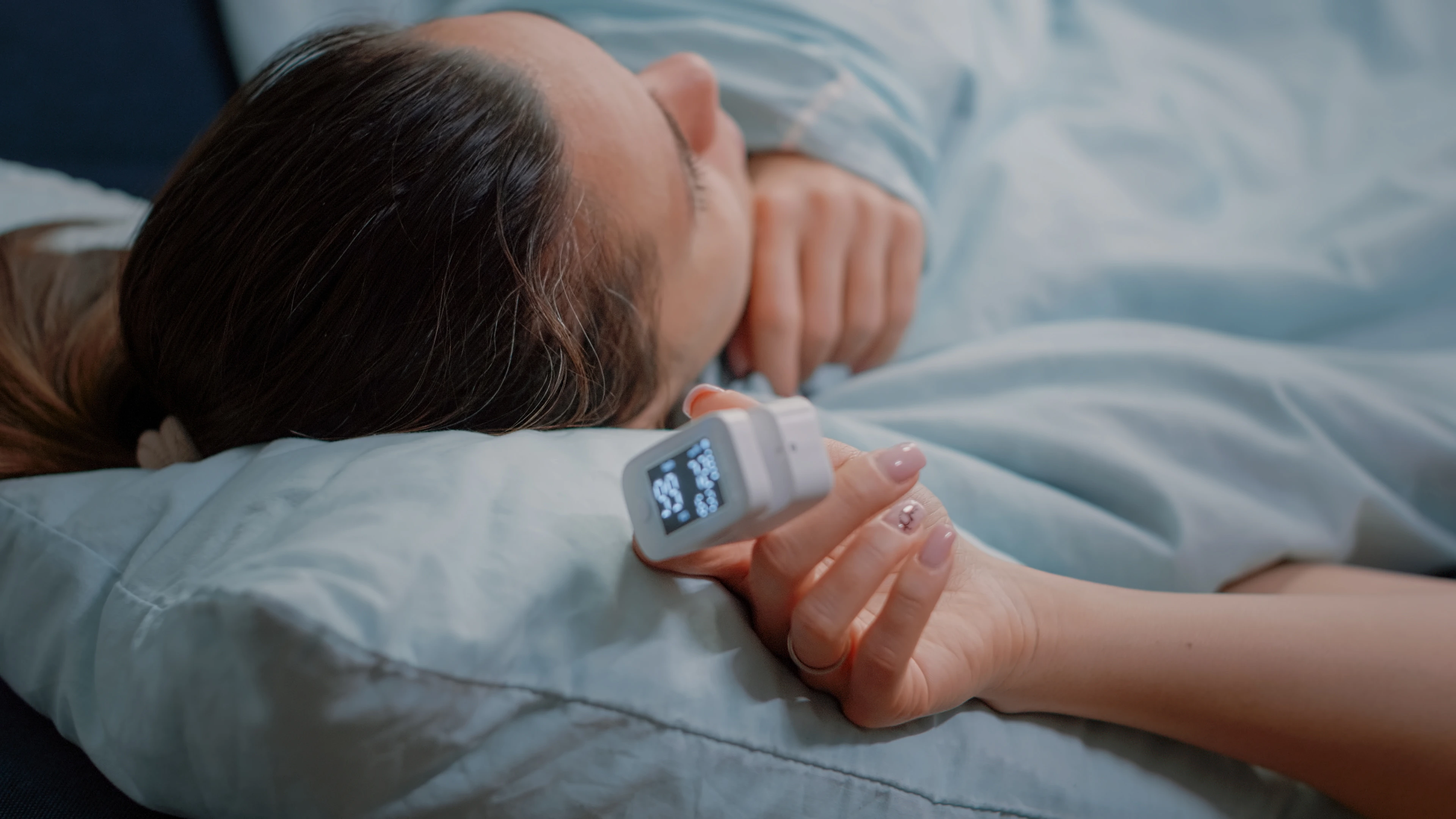
A pulse oximeter estimates oxygen saturation but does not measure carbon dioxide. The FDA advises people not to rely on the device alone because readings can be affected by poor circulation, skin pigmentation, skin temperature, tobacco use, nail polish, and other factors. Symptoms and trends matter, and a concerning reading should be discussed with a clinician 8.
A normal spot reading while awake does not exclude sleep apnea, sleep hypoventilation, or short nighttime drops. A consumer wearable also cannot determine whether a change came from airway obstruction, low ventilation, lung disease, movement, or sensor error.
Use respiratory treatments safely at night
Inhalers and action plans
Keep using controller and reliever inhalers according to the prescribed plan. Do not add extra scheduled doses, stop an inhaled corticosteroid, or substitute an over-the-counter product because symptoms happen at bedtime. CDC guidance for asthma advises following the asthma action plan, taking medicines as prescribed, and discussing treatment changes with the clinician 9.
If a medicine seems to cause tremor, a racing heartbeat, reflux, cough, sedation, or insomnia, record the dose and timing and ask the prescriber or pharmacist about it. Confirm inhaler technique and whether the device can be used effectively during a flare.
PAP and noninvasive ventilation
Positive airway pressure, or PAP, holds the airway open in OSA. Noninvasive ventilation, or NIV, can also support ventilation when breathing muscles or respiratory drive cannot maintain adequate gas exchange. CPAP, auto-adjusting PAP, bilevel PAP, and other ventilator modes are not interchangeable.
Use the prescribed device whenever directed. If mask leak, dryness, congestion, pressure discomfort, aerophagia, or frequent removal interferes with use, contact the sleep or respiratory team for troubleshooting. AASM guidance calls for follow-up that reviews symptoms, objective use, treatment efficacy, and device problems 10. Do not change pressure, backup rate, oxygen connection, or ventilator mode on your own.
The narrower PAP therapy guide covers routine equipment use. Persistent symptoms despite use require data review and clinical reassessment, not an assumption that the device is working because air is flowing.
Supplemental oxygen
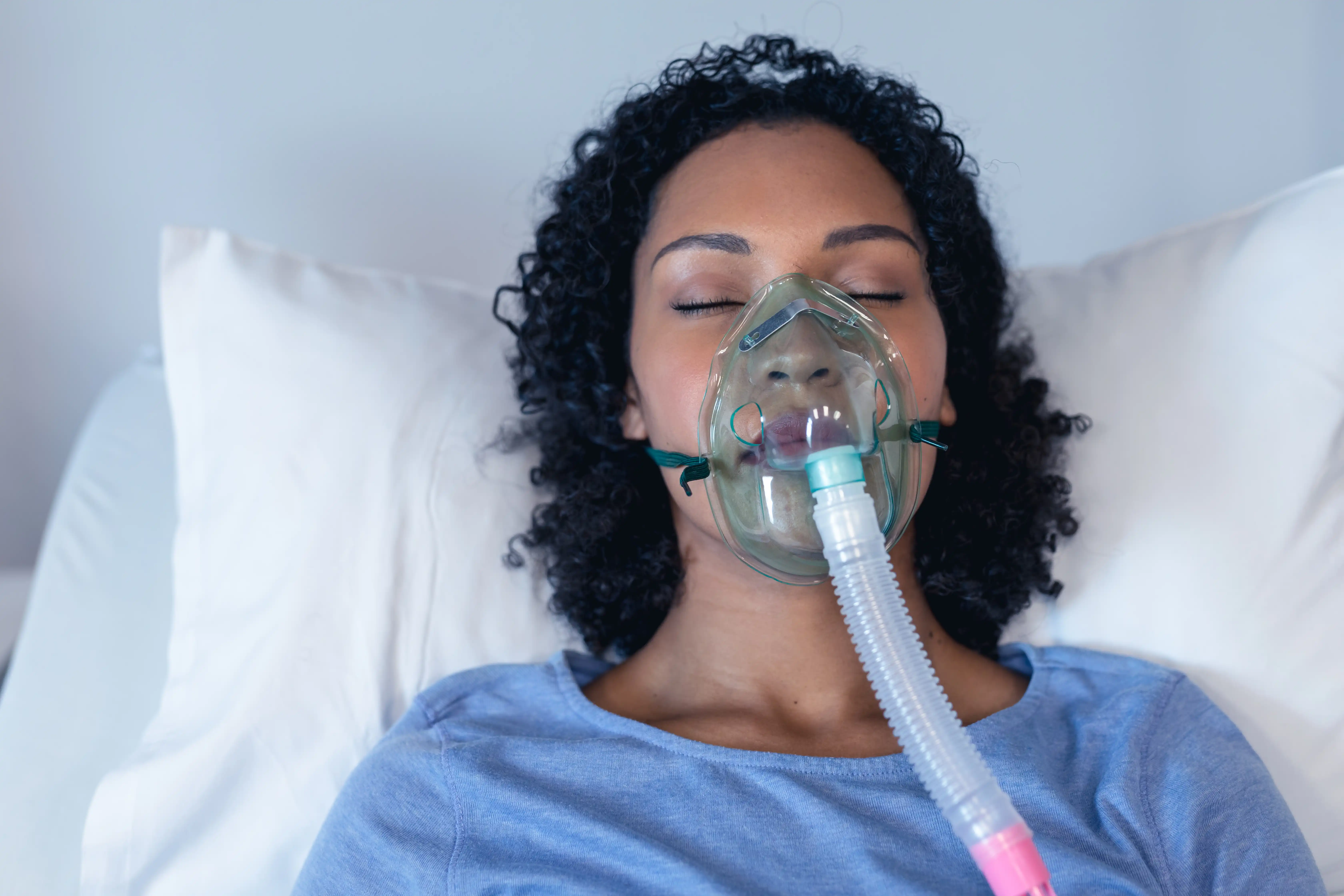
Oxygen is a prescribed treatment for documented low oxygen in selected conditions. The American Thoracic Society guideline bases long-term and ambulatory oxygen recommendations on the lung condition, severity of hypoxemia, and clinical context. It also emphasizes education about equipment and safety 11.
Use the prescribed flow and the prescribed situations, such as rest, activity, or sleep. Never borrow oxygen, start it from an online concentrator, connect it to PAP, or change the flow based only on a consumer oximeter. Too little may leave hypoxemia untreated. Extra oxygen does not remove retained carbon dioxide or substitute for ventilatory support when hypoventilation is the problem. Keep oxygen away from smoking, vaping, flames, and heat sources 111.
Opioids, sedatives, alcohol, and other substances
Opioids and other respiratory depressants can reduce breathing drive. Combining sedating substances may add risk, particularly in a person with OSA, lung disease, obesity hypoventilation, or neuromuscular weakness 6.
Give every prescriber a complete list of prescription medicines, over-the-counter products, supplements, alcohol, cannabis, and other substances. Do not stop a benzodiazepine abruptly. The FDA warns that doing so can cause serious withdrawal reactions 12. For an opioid or another dependence-forming medicine, ask the prescriber how to reduce it safely if a change is needed.
Make the sleep environment easier on the airways
Environmental changes help when they remove a real trigger. They do not cure apnea, hypoventilation, asthma, COPD, or an infection.
Focus on source control:
- keep tobacco and vape smoke out of the home and bedroom;
- repair water leaks and address visible mold rather than trying to filter around it;
- reduce a known allergen exposure when symptoms and clinical history support the link;
- ventilate for cooking, cleaning products, and other indoor pollutants when outdoor air is suitable; and
- use an air cleaner only as an addition to source control, not as treatment.
The Environmental Protection Agency notes that filtration may improve some allergy or asthma symptoms but does not solve mold or moisture problems. It also advises avoiding devices that intentionally produce ozone because ozone irritates the lungs 13.
A humidifier is not a default respiratory treatment. It may ease dryness when the air is genuinely dry, but excess moisture supports mold and dust mites. Some cool-mist devices can disperse microorganisms or minerals if they are not maintained. The EPA recommends using a humidifier only when conditions require it, keeping indoor humidity no higher than 50%, and cleaning and refilling the device as directed 14.
There is no universally best sleep position for respiratory health. If a sleep study shows position-dependent OSA, ask whether a targeted positional treatment belongs in the plan. A position is not a cure for lung disease. Needing to sleep upright because lying flat causes breathlessness is a symptom to assess, not a posture to normalize.
When to seek medical care
Arrange a routine appointment
Discuss the pattern with a clinician when you have:
- repeated night waking from cough, wheeze, chest tightness, mucus, or breathlessness;
- loud habitual snoring, witnessed pauses, choking, or gasping;
- morning headaches, severe unrefreshing sleep, or persistent daytime sleepiness;
- breathlessness when lying flat, new swelling, or declining exercise tolerance;
- repeated low or falling oximeter readings, even if symptoms feel mild;
- PAP, NIV, oxygen, or inhaler problems that prevent prescribed use; or
- a neuromuscular condition plus a weaker cough, trouble clearing mucus, softer voice, recurrent chest infections, or nighttime breathing symptoms.
Contact a clinician promptly
Seek same-day guidance for a clear worsening from your usual asthma, COPD, or respiratory baseline, especially if the action plan is not restoring control. New fever with shortness of breath, worsening cough, increasing or changing mucus, repeated vomiting or poor fluid intake, or a respiratory illness in someone at high risk of complications also warrants timely advice.
Seek emergency care now
Severe respiratory symptoms can deteriorate quickly. Seek emergency help for:
- severe trouble breathing, gasping, or inability to speak normally because of breathlessness;
- blue, gray, or unusually pale lips, face, or nail beds;
- persistent chest pain or pressure;
- new confusion, a seizure, collapse, or inability to wake or stay awake;
- signs of a severe allergic reaction, such as swelling of the tongue or throat with breathing difficulty; or
- an asthma or COPD emergency plan that is not working.
CDC respiratory-illness guidance includes trouble breathing, blue lips or face, chest pain, altered mental status, and seizures among emergency warning signs 2. Respiratory failure can involve low oxygen, high carbon dioxide, or both, and may cause breathlessness, blue color, headache, confusion, extreme sleepiness, or loss of consciousness 15.
Do not delay emergency care to repeat a wearable or pulse-oximeter reading. Treat the person and the severity of the symptoms, not one device number.