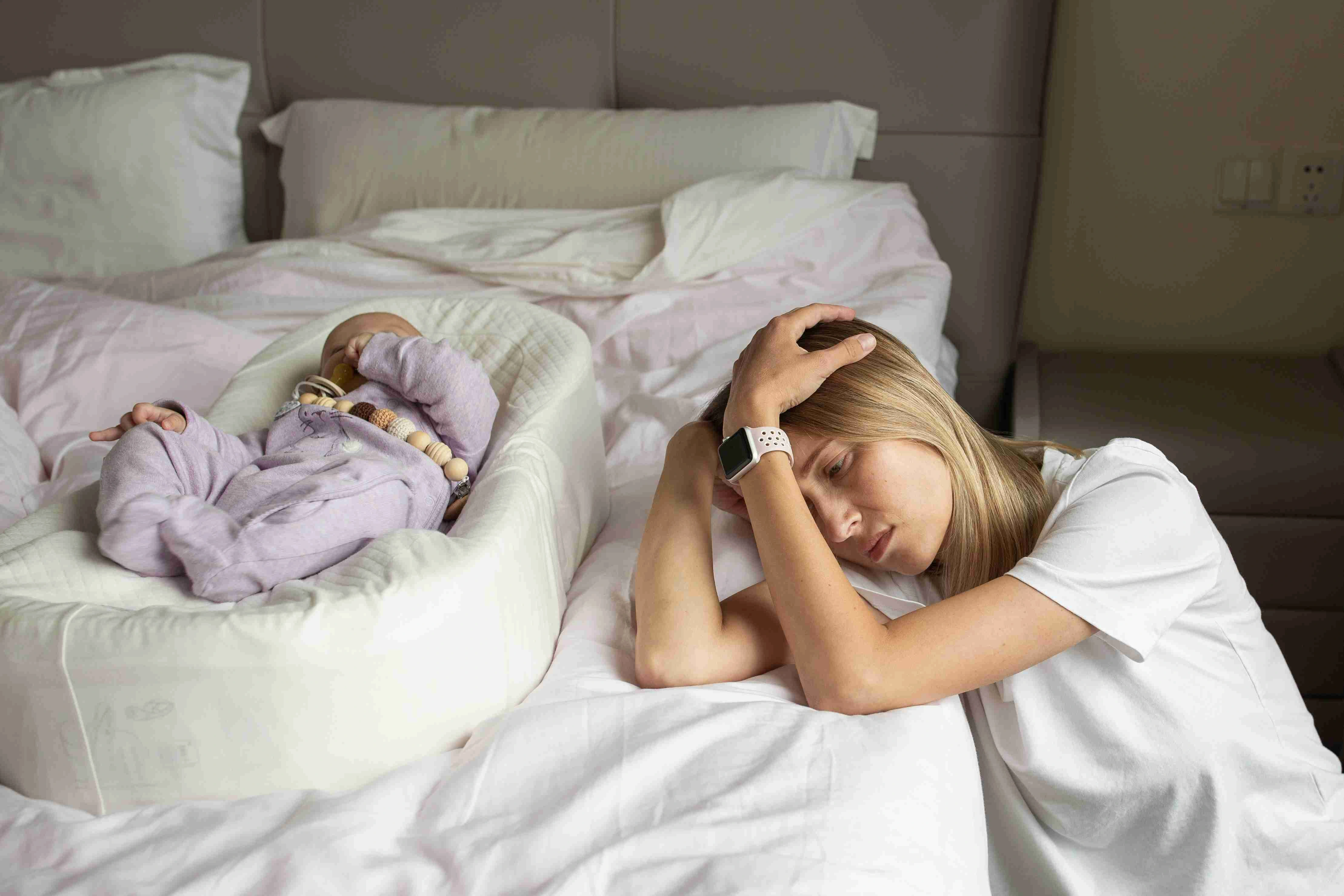

Yes, drenching night sweats can happen after giving birth. Hormone changes and shifts in the fluid retained during pregnancy are reasonable explanations, especially when sweating starts soon after delivery and gradually eases. But “postpartum night sweats” is a symptom description, not a diagnosis. Fever, infection, postpartum thyroiditis, a medicine, or low blood glucose can also cause sweating.
One prospective study followed 429 women during pregnancy and for a year after delivery. Twenty-nine percent reported nighttime hot flashes at some point postpartum. Reports were highest at the first postpartum measurement, two weeks after birth, and declined at later visits 1.
That study helps show that the symptom is not unusual, but it does not create a fixed recovery deadline. It measured self-reported nighttime hot flashes at scheduled visits, not every possible cause of soaking sweats. The study does not establish six weeks, eight weeks, or another single cutoff for deciding whether an individual episode is harmless.
Why night sweats can happen after birth
Hormone and fluid changes
Estrogen and progesterone fall rapidly after the placenta is delivered. These changes may affect temperature regulation. At the same time, fluid that accumulated during pregnancy moves between body compartments and is largely removed through increased urination. Sweating can occur during this early adjustment too 2.
These are physiological changes, not a detox. Sweat is not evidence that the body is “flushing toxins,” and more sweating does not mean recovery is progressing faster.
The expected course varies. Sweats that begin early, occur without a measured fever or other concerning symptoms, and become less frequent or less intense fit the common postpartum pattern. Sweating that begins after a symptom-free interval, is getting worse, or remains drenching without improvement deserves a clinical review even if a calendar says you are still postpartum.
Fever and infection
Feeling hot or waking in damp clothing cannot tell you whether you have a fever. Check your temperature when an episode comes with chills, shivering, body aches, or feeling unwell.
Postpartum infections can involve the uterus, a cesarean or perineal wound, the urinary tract, or the breast. Fever or shivering with worsening abdominal, pelvic, or perineal pain or vaginal discharge with an unpleasant smell needs medical advice without delay 3.
Mastitis often affects one breast and can cause a hot, swollen, painful area, sometimes with a wedge-shaped lump. Aches, fever, chills, and tiredness can occur too 4. Breast engorgement can be uncomfortable, but do not assume a painful red or hot breast with flu-like symptoms is just a normal part of milk coming in.
Postpartum thyroiditis
Postpartum thyroiditis can develop during the first year after delivery. Its early, overactive-thyroid phase may cause heat intolerance, trouble sleeping, a fast heartbeat, tiredness, or irritability. Some people later develop an underactive phase with cold intolerance, dry skin, poor concentration, and fatigue. Either phase may be mild, and not everyone has both 5.
Night sweats alone do not diagnose a thyroid problem. Sweating that persists or starts later, especially with a racing or irregular heartbeat, tremor, unexplained weight change, marked heat intolerance, or new cold intolerance, is a reason to ask about thyroid blood tests.
Medicines and other causes
Some antidepressants, steroids, and pain medicines can cause night sweats. Anxiety, alcohol or drug use, menopause symptoms, hyperhidrosis, infections, and other medical conditions can also contribute 6.
Write down any prescription, over-the-counter medicine, or supplement started, stopped, or changed around the time the sweating began. Ask the prescriber or a pharmacist to review the timing. Do not stop a prescribed medicine abruptly or change a dose on your own.
If sweating remains unexplained, a clinician can use the full pattern to decide what to investigate. New daytime sweating, unexplained weight loss, a persistent cough, diarrhea, or sweating that repeatedly soaks clothes or bedding is worth mentioning rather than automatically attributing it to childbirth 6.
Low blood glucose if you use insulin or certain diabetes medicines
Low blood glucose during sleep can soak pajamas or sheets. Other clues include shaking, hunger, a fast heartbeat, dizziness, headache, irritability, or confusion on waking 7.
This is mainly relevant if you use insulin or another medicine that can lower glucose. People with insulin-treated diabetes have a greater risk of hypoglycemia after birth, especially while breastfeeding, because treatment needs can change rapidly 8.
Follow the glucose-checking and low-glucose treatment plan given by your diabetes team. Make sure your postpartum doses have been reviewed. Do not assume damp sheets are hormonal if your glucose reading or symptoms point to a low. Severe confusion, a seizure, or loss of consciousness is an emergency.
A quick way to assess the pattern
When you wake sweating, note:
-
Temperature: Check it with a thermometer if you feel feverish, chilled, shaky, or unwell.
-
Timing: Record when the sweating began after delivery, whether it happens during the day too, and whether it is improving.
-
Pain or discharge: Note worsening abdominal, pelvic, perineal, or wound pain; a wound that is opening or draining; and vaginal discharge with an unpleasant smell.
-
Breast symptoms: Check for a painful, hot, swollen, or red area and flu-like symptoms.
-
Heart and thyroid clues: Note a racing or irregular heartbeat, tremor, unusual heat or cold intolerance, and unexplained weight change.
-
Medicines and glucose: Record recent medicine changes. If you use glucose-lowering treatment, check your glucose as directed.
-
Other postpartum warning signs: Do not separate the sweat from headache, vision changes, breathing trouble, chest pain, fainting, severe pain, heavy bleeding, or one-sided leg swelling.
This short record is more useful than trying to decide whether the amount of sweat is “normal.” A soaked shirt can occur with a benign hot flash, while a serious postpartum condition may begin with subtler sweating and more important accompanying symptoms.
How to stay more comfortable
Comfort measures will not treat infection, thyroid disease, or low blood glucose, but they can make an expected episode easier to manage:
-
Use light, removable sleep layers so you can adjust without remaking the whole bed. Choose whichever fabric feels comfortable and dries well for you rather than assuming one fiber prevents sweating.
-
Keep a clean top, small towel, and spare pillowcase within reach. A washable mattress protector can reduce the need to clean the mattress.
-
Use a fan or adjust the room temperature to your comfort. There is no medically established bedroom temperature that stops postpartum night sweats.
-
Change damp clothing and dry the skin if moisture is causing irritation. Use gentle skin care rather than deodorizing oils or fragranced “detox” products.
-
Keep water where it is easy to reach and drink enough to satisfy thirst. This is especially practical when feeding a baby overnight 9.
You do not routinely need electrolyte drinks, supplements, herbal teas, or a special postpartum diet because you sweated at night. Follow your clinician's advice if you have a fluid restriction, diabetes, kidney or heart disease, severe vomiting or diarrhea, or another reason your fluid plan needs to be individualized.
When to contact a clinician promptly
Contact your maternity team, midwife, obstetric clinician, or other healthcare professional promptly if:
-
the sweats are worsening, begin after an interval without symptoms, or remain drenching without improvement
-
you feel generally unwell or have recurrent chills even when a single temperature reading is not high
-
you have worsening abdominal, pelvic, perineal, wound, or breast pain
-
vaginal discharge smells unpleasant, a wound is red, draining, or opening, or breast redness and swelling are worsening
-
you develop persistent fast or irregular heartbeat, tremor, unexplained weight change, marked heat or cold intolerance, or other thyroid clues
-
symptoms began after a medicine change, or low-glucose episodes are recurring
-
sweating is repeatedly disrupting sleep or daily function and the cause is unclear
Get urgent medical help
A temperature of 100.4°F (38°C) or higher is an urgent maternal warning sign. Seek immediate medical care rather than waiting to see whether the fever breaks into a sweat 10.
Get urgent or emergency help for:
-
trouble breathing, chest pain, a fast or irregular heartbeat with dizziness or fainting, or difficulty breathing while lying flat 103
-
a severe headache, a headache that will not go away or is worsening, vision changes, severe dizziness, or fainting 103
-
severe or worsening abdominal pain, very heavy vaginal bleeding, or foul-smelling discharge with fever or shivering 103
-
confusion, seizure, or loss of consciousness with suspected low blood glucose 7
Postpartum preeclampsia can develop even in someone whose blood pressure was normal during pregnancy 11. CDC advises watching for urgent maternal warning signs during the year after delivery, although the timing of individual risks differs 10. Do not dismiss a warning sign because sweating also seems to have a routine explanation.