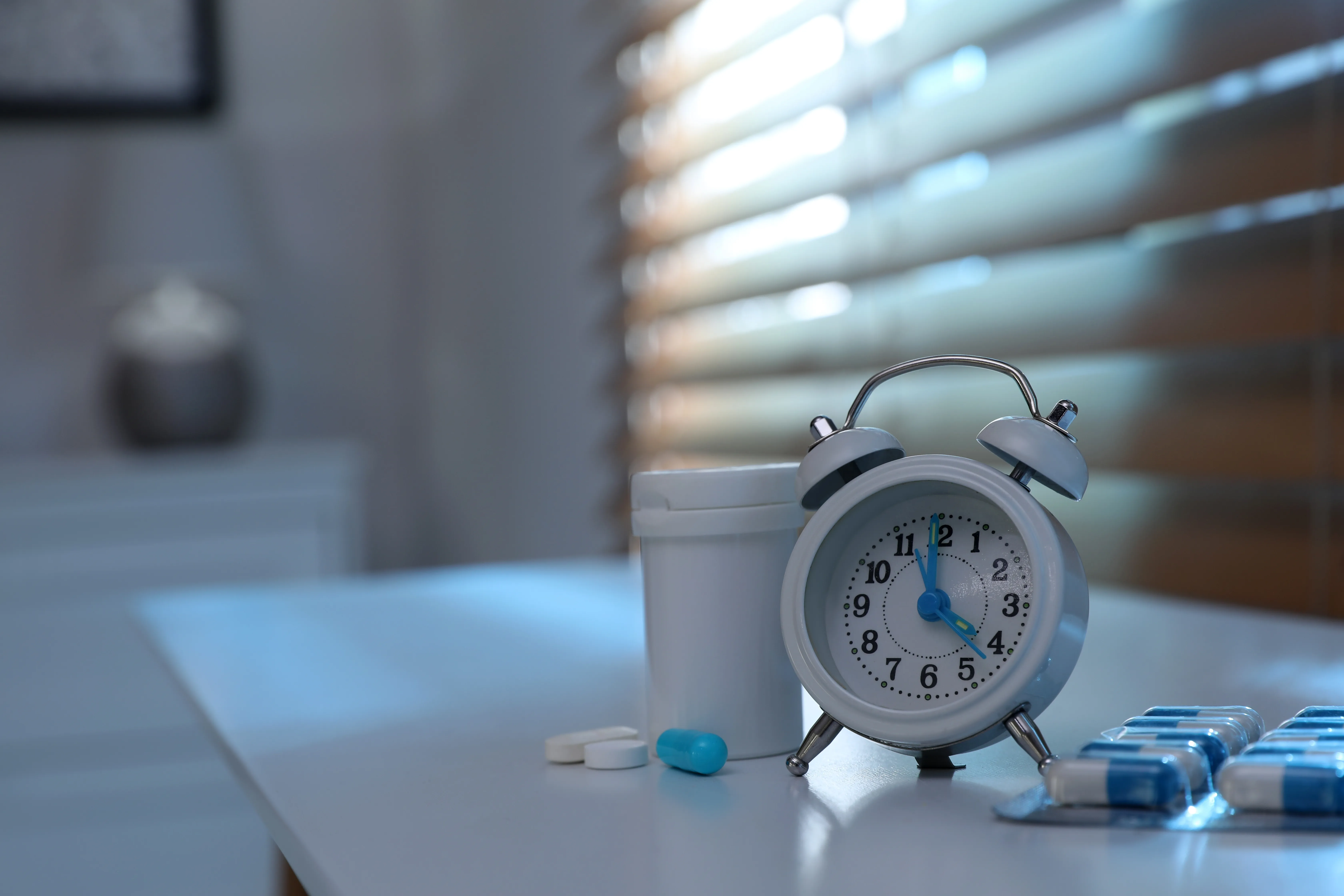

There is no over-the-counter sleep aid that is routinely safe and appropriate for every child. For most children with insomnia, the first steps are to identify what is keeping sleep from happening and to use behavioral care matched to the child's age and situation. The American Academy of Sleep Medicine recommends behavioral interventions first for otherwise healthy children with bedtime resistance or night wakings 1.
Melatonin can help some children, but it is not a general-purpose bedtime vitamin. Its value depends on the sleep problem, timing, formulation, and child. Antihistamines and products marketed as natural sleep remedies are not automatically safer substitutes.
Before choosing a sleep aid, define the problem
Trouble sleeping is a symptom, not a diagnosis. A product that causes drowsiness may leave the reason for the problem untouched.
A useful assessment asks:
- Is there enough opportunity for sleep? Compare the child's actual bedtime and wake time with school, naps, activities, and the amount of sleep they can realistically obtain.
- What is happening at night? Separate resistance at bedtime, needing a caregiver present, a long time to fall asleep, repeated waking, waking too early, and a sleep schedule shifted later than the family needs.
- What happens during sleep? Ask about frequent snoring, gasping, breathing pauses, unusual movements, sleepwalking, nightmares, pain, itching, reflux, and seizures.
- Are the legs uncomfortable? An evening urge to move, unpleasant leg sensations, or repeated restless movement can point toward restless legs syndrome rather than ordinary insomnia.
- What happens during the day? Include sleepiness, irritability, attention or learning changes, anxiety, low mood, and the effect on the whole family.
- What else changed? Review prescription medicines, nonprescription products, supplements, caffeine, nicotine, chronic illness, neurodevelopmental differences, mental health, and recent stress.
- What can the household sustain? Shared rooms, caregiver work hours, disability, housing conditions, culture, school demands, and sibling needs all affect whether a plan is realistic.
The 2025 International Pediatric Sleep Association consensus recommends a detailed sleep history that covers schedule, sleep duration, routines, environment, daytime sleepiness, previous treatments, snoring, and restless legs symptoms. A sleep diary kept across typical school and non-school days can make patterns easier to see 2.
Frequent snoring, gasping, or breathing pauses should be assessed rather than managed with a sedating product. These can be signs of sleep apnea in children 3.
Behavioral treatment comes first
Behavioral care is more than a list of sleep hygiene rules. It identifies what starts or maintains the problem, then changes that pattern in a way the child and caregivers can repeat.
A 2021 scoping review identified 120 behavioral-treatment studies across infancy through adolescence. The overall literature supports behavioral treatment, but the review also found thinner evidence in school-age children, adolescents, diverse populations, and children with medical or psychiatric conditions. That means the plan should be individualized rather than copied from a generic checklist 4.
Depending on age and the sleep problem, care may include:
- For younger children: a predictable bedtime routine, a bedtime that matches when the child can fall asleep, clear limits, positive reinforcement, and a gradual plan for reducing a sleep-onset association such as feeding, rocking, or caregiver presence.
- For school-age children: consistent sleep opportunity, a plan for bedtime fears or repeated requests, reinforcement for the behaviors being practiced, and treatment of anxiety, pain, or another condition that is keeping the child alert.
- For adolescents: a closer look at circadian delay, school timing, naps, caffeine, evening media use, mood, and whether an age-adapted cognitive behavioral therapy for insomnia program is appropriate.
- For children with neurodevelopmental differences: routines, communication, sensory needs, medicines, caregiver capacity, and coexisting medical or mental-health conditions may all need to be addressed together.
A plan that a family cannot carry out is not a useful plan. A pediatrician, behavioral sleep specialist, psychologist, or pediatric sleep clinician can help select an approach without asking caregivers to improvise an adult insomnia protocol for a child.
When might melatonin be considered?
Melatonin is a hormone involved in the timing of sleep and wakefulness. Supplemental melatonin may be useful when the child's body clock is shifted or in some children with developmental conditions, but it should follow a clinical sleep evaluation and usually accompany behavioral care 52.
The evidence is not the same for every child
For otherwise healthy children and adolescents with chronic insomnia of no identified medical, mental-health, medication, or sleep-disorder cause, the evidence is modest. A 2023 review included eight randomized trials with 419 participants ages 5 to 20. On average, melatonin increased sleep-diary total sleep time by about 30 minutes and shortened the time to fall asleep by about 18 minutes. The review found no demonstrated improvement in sleep quality or daytime functioning, and rated important evidence as low or very low certainty 6.
The balance can differ for a child with a neurodevelopmental condition. An American Academy of Neurology guideline for autistic children recommends first checking coexisting conditions and medicines, then using behavioral strategies. It found low to moderate confidence that melatonin improves some sleep outcomes when those steps have not been enough 7.
This is why a child should not be assigned a dose from an age chart on the internet. A clinician should first clarify:
- the specific symptom being treated
- whether the problem is insomnia, circadian delay, or another sleep disorder
- the formulation and product quality
- possible medicine or supplement interactions
- what would count as a meaningful benefit
- which adverse effects should prompt a call
- when the need and response will be reviewed
If melatonin does not help, giving more on your own may miss a timing, formulation, diagnosis, or product-quality problem. Contact the recommending clinician instead.
Short-term tolerance does not settle long-term safety
A 2023 safety review included 22 randomized studies with 1,350 children and adolescents. It did not find an increase in serious adverse events, but nonserious adverse events were more common with melatonin. These included symptoms such as headache, nausea, drowsiness, dizziness, and mood changes across the underlying studies 8.
Long-term evidence is much less certain. Only four observational studies with 105 participants reported on pubertal development. Three found little or no apparent effect after two to four years, while one raised a possible concern after longer use. The studies had important limitations, and the review found no studies of bone health. This evidence neither proves a long-term developmental harm nor establishes that routine long-term use is harmless 8.
The label may not match the product
In the United States, FDA does not approve dietary supplements for safety and effectiveness before they are marketed 9. An FDA-affiliated laboratory survey analyzed 110 melatonin supplements marketed toward children. Measured melatonin ranged from 0% to 667% of the label declaration, and the amount per serving ranged widely 10.
If a clinician recommends melatonin, ask how to identify a product verified by an independent standards organization. Verification can add confidence about contents and manufacturing, but it does not prove that melatonin is effective or appropriate for that child 5.
Store melatonin as medicine, not as candy or a routine treat. Keep it closed, out of sight, and out of children's reach. During 2012 to 2021, U.S. poison centers received 260,435 reports of pediatric melatonin ingestion; 94.3% were unintentional, and the increase was concentrated in young children 11.
What about antihistamines and other over-the-counter products?
Diphenhydramine and other sedating antihistamines
Do not use diphenhydramine, the ingredient in many Benadryl products, simply to make a child sleep. A current U.S. Drug Facts label specifically says not to use it for that purpose. It also warns that excitability can occur in children, marked drowsiness can occur, and the product should not be combined with another product containing diphenhydramine 12.
Evidence for sedating antihistamines in pediatric insomnia is severely limited. A 2024 clinical review found conflicting trial results and notes risks that include next-day sedation, anticholinergic effects, and paradoxical agitation 13.
A cold or allergy medicine should be used only for its labeled purpose or on a clinician's advice, not repurposed as a bedtime aid. Check active ingredients so that two products do not accidentally duplicate the same medicine.
Magnesium, herbs, gummies, and multi-ingredient blends
Natural does not mean proven or harmless. Magnesium sleep research is sparse and mainly involves adults. Clinical trials have not established chamomile as an insomnia treatment, and valerian findings are inconsistent. CBD also lacks adequate evidence for treating sleep disorders and can cause side effects and medicine interactions 14.
Pediatric products may combine several minerals, herbs, amino acids, and melatonin in one gummy. That makes it harder to know which ingredient caused a benefit or adverse effect. Supplements can also alter the absorption, metabolism, or effect of medicines, and children may process substances differently at different ages 15.
Do not use THC, CBD, kava, valerian, chamomile concentrates, magnesium, 5-HTP, L-theanine, or a multi-ingredient sleep blend as a substitute for evaluating a child's sleep problem.
Iron is a separate, diagnosis-driven issue. If a child describes an evening urge to move the legs or uncomfortable sensations relieved by movement, a clinician may evaluate for restless legs syndrome and assess iron status. The 2025 AASM pediatric recommendation for iron treatment is conditional and based on very low-certainty evidence, so iron should not be started as a general sleep aid 16.
What about prescription sleep medicines?
No medication is FDA approved specifically for pediatric insomnia in the United States, although clinicians sometimes prescribe medicines off label when the expected benefit for a particular child outweighs the risks 13.
Prescription choices are not interchangeable:
- evidence for clonidine is limited mainly to children with ADHD, and it can affect blood pressure
- sedating antidepressants should generally be selected because there is another clinical reason for that medicine, not insomnia alone
- antipsychotics have substantial potential harms and should not be chosen solely for sleep
- benzodiazepines and Z-drugs do not have an established routine role in treating pediatric insomnia
If a child already takes a prescription that affects sleep, use it exactly as prescribed. Do not borrow another person's medicine, add an over-the-counter sedative, change the timing or amount, or stop a regular medicine without the prescriber's guidance. Bring a complete list of medicines, supplements, and nighttime products to the sleep visit.
When should a child get medical care?
Arrange a pediatric assessment when sleep trouble persists, affects daytime behavior or learning, strains family functioning, or has not improved with a realistic behavioral plan. Seek evaluation sooner for:
- frequent snoring, gasping, breathing pauses, or labored breathing during sleep
- evening leg discomfort, a strong urge to move, or unusually restless sleep
- severe daytime sleepiness, falling asleep at school, or unsafe sleepiness while driving
- a major change in mood, anxiety, behavior, or school functioning
- insomnia that began after a medicine change
- sleep trouble alongside autism, ADHD, epilepsy, chronic pain, depression, or another condition that needs coordinated care
Seek emergency help if a child's breathing stops, their skin becomes pale, blue, or gray, they collapse, have a seizure, or cannot be awakened normally 3.
If a child may have swallowed an unknown or excessive amount of melatonin, antihistamine, a supplement, or a prescription medicine, contact a poison center or emergency medical service immediately. Do not wait for symptoms. Any deliberate ingestion or concern about self-harm needs urgent medical assessment 1211.
Frequently asked questions
What is the safest sleep aid for a child?
There is no single safest product for every child. The lowest-risk starting point is a cause-directed plan: enough opportunity for sleep, an age-appropriate routine, behavioral treatment, and evaluation of breathing, movement, medical, mental-health, or medication factors when indicated.
Is melatonin safe for children every night?
Melatonin may be appropriate for selected children under a clinician's supervision, but routine self-directed nightly use is not supported for every child. Evidence for otherwise healthy children shows limited average benefits, U.S. products can be mislabeled, and long-term developmental safety remains uncertain.
Can I give my child Benadryl to sleep?
No. Diphenhydramine product labeling says not to use it to make a child sleepy. It can also cause next-day sedation or make some children more excitable.
Are natural sleep aids safer than medicine?
Not automatically. Herbal products, minerals, amino acids, and CBD can have adverse effects, interact with medicines, or contain ingredients in amounts that are not well established. Evidence for pediatric insomnia is weak or absent for many products.
What should I bring to a pediatric sleep visit?
Bring a sleep diary covering school and non-school days, the child's medication and supplement list, and the actual containers or clear label photos of any nighttime products. Note bedtime, estimated sleep time, awakenings, wake time, naps, snoring, leg symptoms, and daytime changes. This helps the clinician work on the cause rather than select a sedative by trial and error.