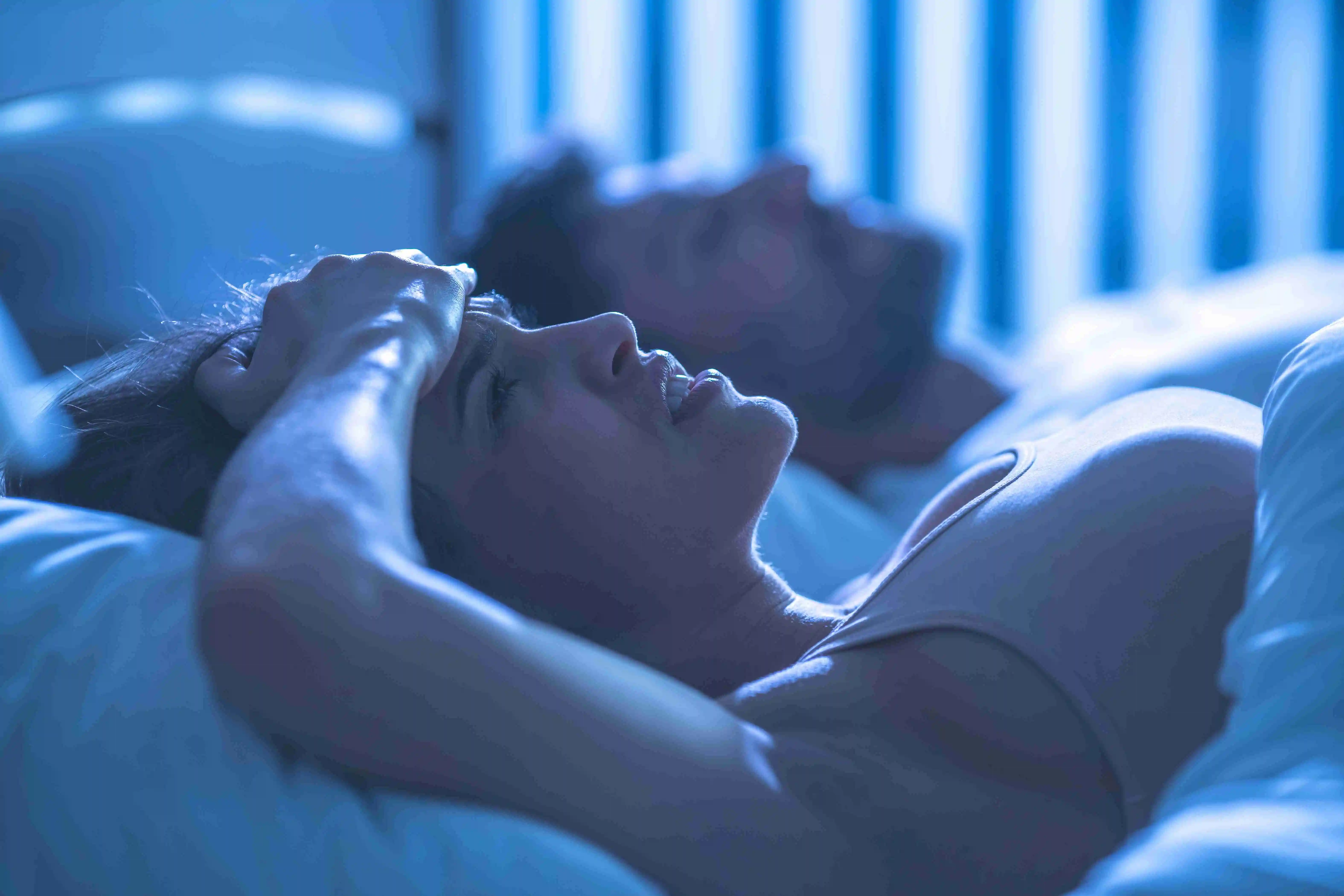


Sleep and teen depression are closely linked, and the relationship can run in both directions. Depression may come with trouble falling asleep, repeated waking, early waking, or sleeping much longer than usual. Sleep disturbance can also appear before later depressive symptoms. Neither finding means that sleep is the sole cause of depression or that improving sleep will cure it 12.
A late bedtime also does not diagnose either condition. Puberty shifts many teenagers toward later sleep and wake times, while early school schedules, homework, jobs, sports, caregiving, and transportation can leave too little time to sleep. The useful question is not simply, “What time does this teen go to bed?” It is, “What pattern is occurring, what is driving it, and how is the teen functioning?”
What the longitudinal research shows
A 2021 review combined 22 prospective studies involving 28,895 children and young people. After accounting for depression at the start of each study, disturbed sleep was associated with a higher likelihood of later depression, but the pooled effect was small. The studies varied substantially, showed evidence of publication bias, and the review rated confidence in the overall evidence as very low 1.
Some adolescent studies also support the reverse direction. In one six-month high-school study, insomnia symptoms predicted later depressive symptoms, and depressive symptoms predicted later insomnia symptoms after the researchers accounted for baseline symptoms, age, sex, and chronotype 2.
This evidence makes sleep worth assessing and treating. These observational results cannot establish that changing sleep would prevent or treat depression. Genetics, trauma, anxiety, substance use, chronic illness, family circumstances, social stress, and other factors may contribute to one or both problems 3.
First identify the sleep pattern
Several very different problems can look like “a depressed teen who sleeps badly.”
| Pattern | What it can look like | What separates it from the others |
|---|---|---|
| Insufficient sleep opportunity | The teen sleeps too little because the available window is compressed by school, work, activities, caregiving, transport, or late-night demands | Sleep may be reasonably easy and restorative when the teen has enough protected time |
| Normal adolescent circadian delay | Bedtime and wake time shift later after puberty | Later timing alone is not an illness if sleep is adequate and the teen can function within a compatible schedule |
| Delayed sleep-wake phase disorder | Sleep and waking remain persistently much later than required, causing repeated difficulty meeting school or social obligations | Sleep may be fairly normal on the delayed schedule, but the mismatch causes significant impairment and warrants clinical assessment |
| Insomnia | There is repeated difficulty falling asleep, staying asleep, or returning to sleep despite enough opportunity | The problem persists even when a suitable sleep window is available and causes daytime impairment |
| Depression-related long sleep or time in bed | The teen sleeps longer than usual, struggles to get up, naps often, or spends long periods in bed while still feeling unrefreshed | Mood, interest, energy, thinking, appetite, and functioning must be assessed rather than assuming that extra time in bed is restorative sleep |
Most teenagers ages 13 to 18 need about 8 to 10 hours of sleep per 24 hours, although individual needs vary 4. The range is a population guide, not a diagnostic cutoff.
Puberty-related later timing is well established, and early school starts can work against it 5. Delayed sleep-wake phase disorder is more than an evening preference. It involves a persistent delay that interferes with required activities and should be distinguished from an overloaded schedule, inconsistent routines, insomnia, and depression 6.
When a sleep change may be part of depression
Depression in teenagers is not defined by sleep alone. A clinician looks for a sustained change in depressed or irritable mood, or loss of interest or pleasure, together with other symptoms and meaningful impairment. Those symptoms can include hopelessness, guilt or worthlessness, appetite change, low energy, difficulty concentrating, slowed or agitated behavior, and thoughts of death or suicide 3.
Insomnia and hypersomnia are both recognized presentations 3. Fatigue is not the same as sleepiness: a teen may feel drained without being likely to fall asleep, or may be genuinely sleepy because of insufficient sleep, a medication, sleep apnea, narcolepsy, or another condition.
Changes deserve assessment when they persist, differ clearly from the teen’s usual pattern, or interfere with school attendance, relationships, self-care, safety, or activities they normally value. A screening questionnaire can identify a teen who needs a closer look, but a positive score is not a diagnosis. The US Preventive Services Task Force recommends depression screening for adolescents ages 12 to 18 when systems are available for accurate diagnosis, treatment, and follow-up 7.
What a complete assessment should cover
A useful assessment looks at the whole day and the whole clinical picture, not only bedtime. A clinician may ask about:
- usual sleep and wake times on school days, weekends, and breaks
- time in bed compared with estimated time asleep
- difficulty falling asleep, night waking, early waking, naps, and daytime sleepiness
- snoring, breathing pauses, restless legs symptoms, unusual sleep behaviors, or sudden sleep attacks
- mood, irritability, loss of interest, anxiety, trauma, substance use, eating concerns, and self-harm
- recent medication, supplement, caffeine, nicotine, cannabis, or other substance changes
- school attendance, academic pressure, work, sports, caregiving, transport, family conflict, and bullying
- periods of unusually high or irritable mood, much less need for sleep without tiredness, racing thoughts, or risky behavior
The last distinction matters because bipolar disorder can first appear as a depressive episode. A reduced need for sleep with sustained energy is different from wanting to sleep but being unable to. Depression guidance also recommends considering medical conditions, substances, medication effects, anxiety, attention-deficit/hyperactivity disorder, and other psychiatric or developmental conditions that can overlap with sleep and mood symptoms 3.
A sleep diary can help reveal opportunity, timing, and variability. If a circadian disorder or another sleep disorder is suspected, a pediatric or sleep clinician may use a more detailed history, actigraphy, laboratory testing, or a sleep study according to the suspected condition. Not every teen needs every test.
Treat sleep alongside depression
Sleep care should support a depression treatment plan, not replace it. Current child and adolescent psychiatry guidance supports evidence-based psychotherapy, medication, or both according to severity, safety, previous response, coexisting conditions, family preferences, and access to care 8.
Start by correcting the problem that is actually present:
- Protect enough sleep opportunity before assuming the teen cannot sleep.
- Keep the daily wake time reasonably consistent when a drifting schedule is the issue.
- Reduce late obligations where possible instead of blaming the teen for failing to fit an impossible schedule.
- Address snoring, severe sleepiness, restless legs symptoms, pain, substance use, or medication effects rather than treating every complaint as “sleep hygiene.”
- Involve the school when attendance, workload, or an early schedule is obstructing treatment. Temporary academic adjustments may be part of a clinical plan.
Family support works best when it is collaborative. A teen may have limited control over school times, transport, a job, a shared bedroom, household conflict, or caregiving duties. A plan that ignores those constraints is unlikely to be sustainable.
CBT-I can be an adjunct when insomnia is present
Cognitive behavioral therapy for insomnia, or CBT-I, is a structured treatment for insomnia rather than a general lesson about healthy habits. It addresses the behaviors and thought patterns that keep insomnia going and should be adapted for the adolescent’s development, schedule, family setting, and mental-health needs.
A 2025 meta-analysis found that CBT-I improved insomnia symptoms and subjective sleep quality in adolescents, but it included only four randomized trials with 527 participants in its pooled analysis. The authors called for more high-quality trials and better evidence about delivery 9.
Mood benefits are less certain. A systematic review of seven youth trials found generally encouraging effects on depressive symptoms, but judged the findings preliminary and called for larger studies 10. The practical conclusion is that age-appropriate CBT-I may be useful when a depressed teen also has insomnia. It is not a stand-alone treatment for major depression, self-harm, or suicide risk.
A teen with a markedly delayed circadian pattern may need a different plan from a teen with insomnia. Timed light or melatonin can shift the body clock in different directions depending on timing, so these should not be improvised as universal depression treatments. A clinician familiar with adolescent circadian disorders can decide whether either belongs in the plan 6.
Antidepressants can change sleep in different ways
Sleep may improve as depression responds to treatment, but antidepressants can also cause sleep-related effects. Depending on the medicine and the individual, these can include difficulty sleeping, agitation, tiredness, or drowsiness. The FDA advises close attention to sudden changes in mood, behavior, suicidal thinking, severe sleep problems, or unusual activation when a young person starts an antidepressant or the dose changes 11.
Record the exact medicine, dose, timing, start date, and recent changes when discussing sleep with the prescriber. Do not stop, change, or move the timing of an antidepressant without that clinician’s guidance.
Make safety the first priority
Asking directly about self-harm or suicide does not turn a sleep conversation into a diagnosis. It identifies whether the teen needs immediate help. Ask about current thoughts, a plan, intent, access to lethal means, past attempts, and whether the teen feels able to stay safe.
If a teen has current suicidal thoughts, a plan or intent, access to the planned method, or says they cannot stay safe, do not leave them alone. Secure or remove medications, firearms, and other lethal means if this can be done safely, and seek an emergency mental-health evaluation immediately. NIMH guidance treats current suicidal thoughts as requiring urgent assessment and advises that the young person not be left alone 12.
Self-harm, past attempts, escalating hopelessness, abrupt behavioral change, or new suicidal thoughts still need prompt professional assessment even when the teen denies an immediate plan. A safety plan should name trusted adults, professional contacts, coping steps, and how lethal means will be secured. It is not a promise that the teen simply agrees to “be safe.”
The bottom line
Sleep is an important part of teen depression care because insomnia, long sleep, circadian delay, and insufficient sleep can each affect daily functioning and the treatment experience. The best response is to identify the actual sleep pattern, assess depression and safety directly, and address both problems together. Better sleep can support recovery, but it should never carry the full burden of treating depression.