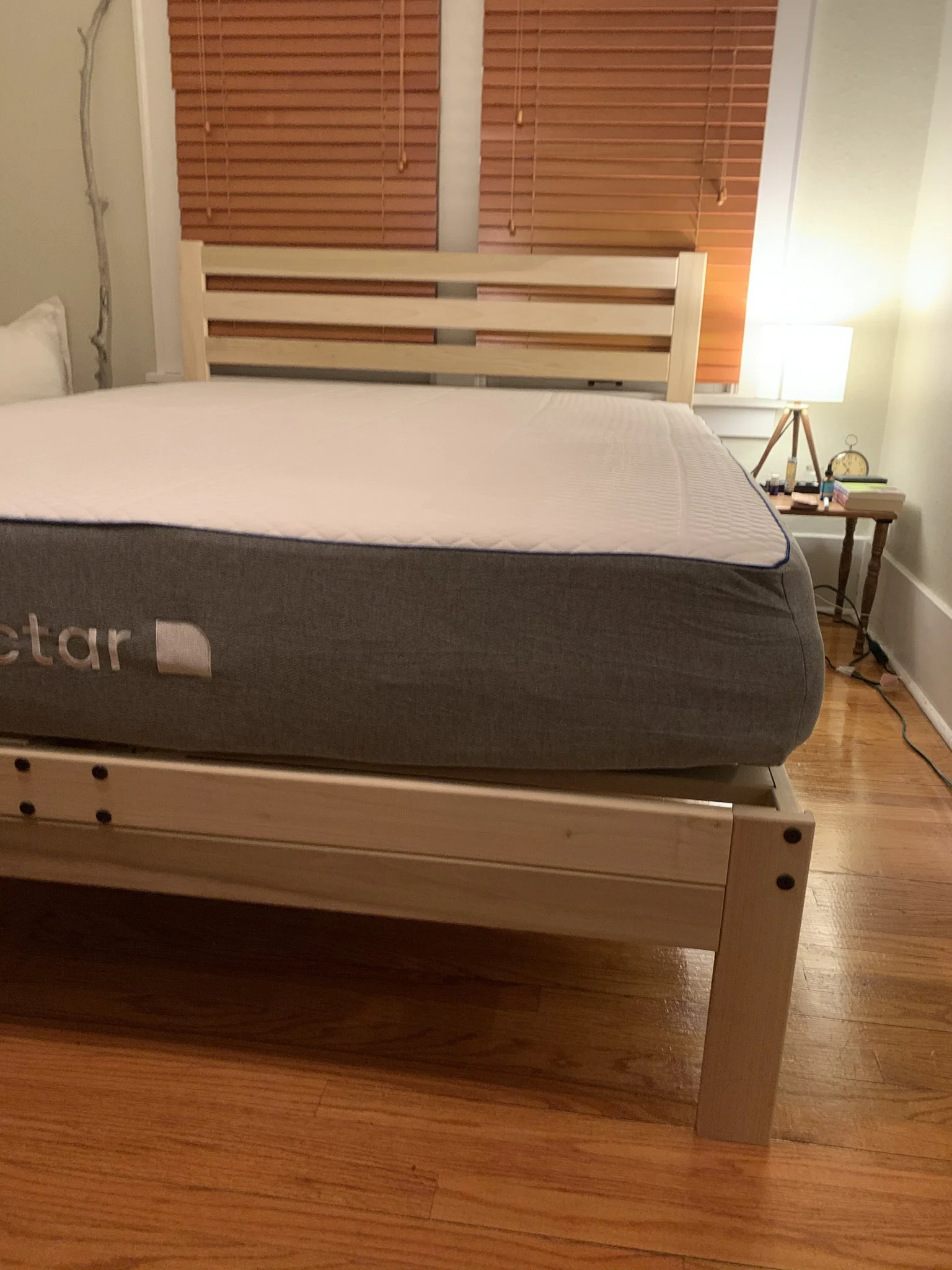


There is no evidence-based universal deadline that makes every mattress due for replacement after 7, 8, or 10 years. Replace based on the exact mattress's physical condition, support system, cleanability, safety, fit for current needs, and manufacturer terms.
Age is useful as a reminder to inspect an older mattress and find its records. It cannot tell you whether a particular mattress is sound, comfortable, cleanable, compatible with its base, or covered by a warranty.
A fast first inspection
Strip off the bedding, protector, and removable topper. Use bright light and inspect the whole mattress, both long edges, seams, corners, and the support beneath it.
| Finding | First action | Replacement becomes reasonable when |
|---|---|---|
| Visible dip or body impression | Let the mattress recover without weight, then measure it under the maker's method | The problem persists after the support system is corrected, no satisfactory remedy is available, or the maker confirms a covered defect |
| Lumps, valleys, or uneven firmness | Remove a removable topper and compare different areas without assuming the cause | The change is persistent, materially affects use, and cannot be corrected under the care or warranty terms |
| Noise or movement | Check the frame, foundation, slats, fasteners, floor, and adjustable-base parts separately | A broken or displaced mattress component is confirmed and cannot be safely repaired under the maker's instructions |
| Weak or collapsed edge | Inspect the frame perimeter and verify that no support is missing | The mattress edge remains unstable or damaged with the approved support in place |
| Tear, split, broken seam, exposed part, or protruding component | Stop using the affected area and photograph it | Continued use could cause injury, the damage cannot be safely contained, or repair is not permitted |
| Moisture, persistent odor, mold, or contamination | Find and stop the moisture source, follow maker cleaning limits, and assess the full depth of the problem | The mattress cannot be cleaned and dried completely or safely, mold has entered porous layers, or contamination remains |
| Suspected insects | Identify the pest and assess the room, frame, and nearby spaces | A pest professional or treatment plan says the mattress cannot be treated, encased, or retained safely |
| Comfort no longer suits the user | Compare the mattress with current needs after checking the base and removable layers | The mismatch is persistent and an acceptable adjustment, return, exchange, or other remedy is unavailable |
A problem can justify replacement even when it is not a warranty defect. The reverse is also possible: a visible change may qualify for warranty service even if the owner can still sleep comfortably. Keep those decisions separate.
First isolate the mattress from everything beneath and above it
A dip, noise, tilt, or movement can come from the mattress, a topper, foundation, box spring, frame, slats, adjustable base, fasteners, center supports, legs, or an uneven floor.
Use a low-effort sequence:
- Remove temporary layers. Take off the protector and any removable topper. Check whether a bunched, stretched, or compressed layer created the surface change.
- Check the room floor. Look for a rocking leg, uneven contact, damaged caster, or missing floor protector. Do not improvise shims unless the bed maker permits them.
- Tighten only what the manual identifies. Inspect frame joints and fasteners. Do not open a foundation, mattress, or powered base to reach internal parts.
- Inspect the support map. Check for cracked, bowed, displaced, or missing slats; failed center support; a warped platform; foundation sag; and legs that no longer contact the floor.
- Compare the required setup. Use the mattress manual and warranty for the approved foundation type, slat width and spacing, center support, load limits, and adjustable-base compatibility. Do not transfer requirements from another model.
- Locate noise carefully. With safe help, test the frame, foundation, and mattress as separate components only when the manufacturers permit that handling.
- Recheck the mattress on the corrected approved support. If the concern remains, document it before changing anything else.
Do not put the mattress on the floor as a diagnostic step unless its maker expressly allows that setup. A short test on an unapproved base can complicate the assessment and may conflict with care or warranty terms.
Measure sagging by the maker's method
There is no universal indentation depth that orders every owner to replace a mattress. Warranty thresholds are contract definitions, not medical or comfort thresholds.
A typical claim method may require you to:
- Remove all bedding and removable layers
- Let the mattress recover with no person or object on it
- Place a rigid straightedge across the affected sleeping surface
- Measure vertically from the straightedge to the deepest point
- Avoid pressing the ruler into the material
- Photograph the complete mattress, measurement, support system, label, and receipt
Current manufacturer terms show why the exact method matters. As checked on July 26, 2026, Tempur-Pedic's support page used different visible-indentation thresholds for quilted and non-quilted mattresses and required an unloaded straightedge measurement. Purple's warranty used its own one-inch definition, required recovery from load, excluded settling of cover fill, and tied coverage to proper support 12.
These are brand-specific warranty examples, not replacement rules and not comparisons of product quality. Your mattress may use another depth, recovery time, measurement location, support requirement, or exclusion. Use the terms that applied to the exact model and purchase date.
A shallow impression below a warranty threshold can still bother an owner. That makes it a comfort or fit decision, not proof that the seller owes a warranty remedy. A deeper impression can still be excluded if it comes from an unsupported base, misuse, or another stated exclusion.
Comfort, trial, return, and warranty are different decisions
Comfort or fit asks whether the mattress still works for the people using it. It can change without a manufacturing defect.
A trial or return policy is a seller's time-limited offer for returning or exchanging a purchase under stated conditions. It may require a minimum use period, acceptable condition, pickup, or fees.
A written warranty covers only the defects and remedies defined in its contract. FTC consumer guidance advises reading the coverage, exclusions, claim process, remedy, and maintenance requirements and keeping the warranty and receipt 3.
Do not assume:
- A long warranty predicts the mattress's service life
- Discomfort qualifies as a defect
- A warranty replacement comes with a new comfort trial
- A seller return remains open for the full warranty period
- A stain, tear, odor, unsupported base, or removed cover has no effect on a claim
- Replacement is the only remedy, since a contract may allow inspection, repair, replacement, credit, or another stated response
Contact the seller for an open trial or return. Contact the warranty provider for a possible defect. Save its written answer before discarding the mattress.
When a change in comfort matters
A mattress can remain structurally intact but stop fitting the household. That may happen when:
- A partner joins or leaves the bed
- Space, movement, edge use, or firmness preferences change
- Pregnancy temporarily changes comfort, movement, or entry and exit
- An injury, disability, illness, or mobility aid changes transfers or bed-height needs
- A flat frame is replaced with an adjustable base
- The mattress moves between a primary bedroom, guest room, daybed, or other use
None of these events automatically requires a new mattress. Check usable space, surface feel, total bed height, edge stability, movement, ease of repositioning, transfers, current load, base compatibility, and whether every user can enter and leave the bed safely.
Morning pain or stiffness deserves a wider view. Compare timing, daytime activity, illness or injury, sleep position changes, and other symptoms. A different mattress may change comfort, but a mattress inspection cannot diagnose the cause, and a replacement is not a treatment promise. Persistent, severe, or neurologic symptoms need appropriate clinical assessment rather than a mattress purchase rule.
What age, material, price, and specifications cannot tell you
Material names describe parts of a construction, not a fixed lifespan. “Memory foam,” “latex,” “hybrid,” “innerspring,” “pillow top,” and “airbed” each cover many designs.
The following can affect how one model behaves, but none supplies a universal replacement year by itself:
- Foam type, formulation, density, thickness, and position in the layer stack
- Latex formulation and processing
- Coil type, gauge, count, turns, zoning, and edge design
- Cover, quilting, adhesives, seams, air chambers, pumps, and valves
- Total load, how it is distributed, and how often the bed is used
- Foundation design, slat spacing, center support, and floor contact
- Rotation, flipping, cleaning, moisture, moving, and storage history
A higher price does not prove longer service. A higher coil count does not describe coil gauge, geometry, working turns, foam layers, or frame support. Higher foam density can change material behavior, but density alone does not predict the complete mattress's usable life. A sleeper's weight or position can change load distribution without producing an individual calendar deadline.
Inspect the actual product and records instead of applying lifespan tables to broad categories.
Moisture, mold, contamination, and infestation
Moisture, odor, and mold
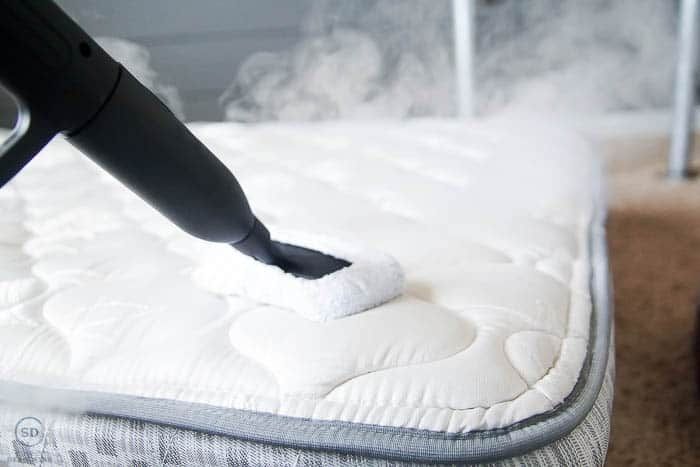
Stop the leak, condensation, or other moisture source before deciding what can be saved. Follow the mattress maker's cleaning and drying limits. Do not saturate foam, use steam, apply bleach, or put the mattress in direct heat unless the instructions specifically permit it.
EPA guidance explains that mold can enter the spaces and crevices of porous materials and may be difficult or impossible to remove completely. It says moldy absorbent or porous material may need to be discarded when it cannot be cleaned 4.
Replace rather than mask the problem when the mattress cannot be completely cleaned and dried, mold reaches internal porous material, odor returns after permitted cleaning, sewage or another hazardous contaminant entered it, or safe restoration cannot be established. Do not rely on fragrance, a topper, or a new cover to establish that hidden material is clean.
Bed bugs or another pest
Replacing a mattress does not by itself eliminate a room infestation. EPA's bed-bug guidance uses a whole-area plan that includes identification, inspection, containment, repeated monitoring, and treatment. It also describes sealed encasements as one option for mattresses and box springs 5.
Confirm the pest before disposal. Ask a qualified pest professional or local extension service whether the mattress can be treated or encased and how to keep the infestation from spreading. If it must be removed, follow the treatment and local waste instructions for wrapping, marking, transport, and disposal.
Keep the label, instructions, and fire-resistance system intact
Photograph the manufacturer label, law label, model name, serial or production code, and every care label before they fade or become inaccessible. Keep the receipt, order confirmation, warranty, trial terms, foundation specification, and dated photographs.
This documentation can matter directly. As checked on July 26, 2026, Tempur-Pedic's mattress claim instructions asked for the receipt, whole mattress, measured area, support system, and law tag 6. That is a current manufacturer example, not a requirement shared by every brand.
In the United States, mattresses and mattress sets are subject to federal smoldering and open-flame performance standards. CPSC explains that the standards test prototype mattress or mattress-set designs and require applicable labeling and certification 7.
A zipper does not prove that a mattress cover is intended for consumer removal. Do not unzip, cut, replace, wash, or repair the cover or material beneath it unless the exact instructions allow that action. The cover and layers may be part of the tested construction, and changing them can also affect a warranty. Purple's current warranty, for example, tells owners not to remove the cover when assessing the mattress and says removal may void coverage 2.
If a component is exposed, torn, recalled, or involved in a fire, stop using the affected area and contact the manufacturer or the CPSC rather than attempting an internal repair. Search the CPSC recall database using the brand, model, and identifying label information 8.
A low-effort decision path
- Record the product. Photograph labels, receipt, warranty, full mattress, damaged area, and support system.
- Inspect and measure. Check the unloaded surface, edges, seams, components, moisture, odor, mold, contamination, and pests. Use the maker's indentation method.
- Check everything beneath it. Correct approved frame, slat, center-support, foundation, adjustable-base, fastener, or floor-contact problems.
- Review current fit. Ask whether space, height, movement, firmness, edge, partner, mobility, adjustable-base, or room-use needs changed.
- Read all three sets of terms. Check care instructions, any open return or trial, and the warranty that applied on the purchase date.
- Contact the right party. Give the seller a return question, the warranty provider a defect question, the manufacturer a safety or compatibility question, and a qualified cleaner or pest professional a contamination question.
- Choose the least disruptive adequate remedy. That may be correcting the base, using an authorized repair, completing a claim, changing a removable component, or replacing the mattress.
- Replace when the remaining problem is unacceptable. Do so when safety, structural condition, cleanability, contamination, compatibility, or persistent comfort and access needs cannot be resolved on acceptable terms.
Do not continue using a mattress with a protruding component, unstable edge, active recall that directs consumers to stop use, fire damage, or another condition that presents an immediate injury risk while waiting for a comfort comparison.
Handle and dispose of it safely
Find the mattress's weight, dimensions, and moving instructions before lifting it. Clear the route, remove bedding, protect stairs and doors, and use enough capable people or a qualified service. Do not fold, roll, drag, or lift by handles unless the exact manufacturer permits that method.
Keep a contaminated or infested mattress contained as directed by the pest, remediation, or waste authority so material is not spread through the home or building. Do not donate or resell a mattress that is recalled, structurally unsafe, infested, moldy, or contaminated.
Disposal and recycling options depend on location and condition. EPA lists mattresses among items that municipal programs may accept at transfer stations, while telling consumers to confirm what their community accepts 9. Check the official local solid-waste authority, a verified mattress-recycling program, and any retailer pickup terms. Confirm whether stained, wet, moldy, infested, or powered components need separate handling before moving the item.
The bottom line
Replace a mattress when its condition, safety, cleanability, compatibility, or current fit is no longer acceptable after you have checked the support system and available remedies. Do not replace it solely because a generic lifespan chart reached a birthday.
A quick record, unloaded measurement, support inspection, terms review, and manufacturer contact usually separate a correctable base problem, a warranty claim, a comfort decision, and a mattress that genuinely needs to leave service.