

The best sheet is not the one with the largest thread-count number or the longest list of marketing claims. It is the one whose fiber, fabric construction, fit, care needs, and purchase terms work for your bed and preferences.
Use this order when comparing products:
- Read the exact fiber percentages.
- Identify whether the fabric is woven or knitted, then note the weave, knit, weight, and finish.
- Choose the feel and warmth you prefer.
- Measure the mattress with everything that will remain on it.
- Confirm every piece in the package and the pillowcase closure.
- Read the care label, certification details, and claim evidence.
- Compare the return policy and cost per useful piece.
Thread count comes after those checks. It can help compare some similar woven sheets, but it cannot summarize the whole product.
Start with the fiber label, not the product name
Fiber and fabric construction answer different questions. Fiber is what the yarn is made from, such as cotton, polyester, rayon, or lyocell. Construction is how those yarns become fabric, such as a percale or sateen weave, a jersey knit, or a brushed flannel.
In the United States, covered textile products such as sheets and pillowcases generally must carry the generic fiber names and percentages, country of origin, and the identity or Registered Identification Number of the manufacturer or another responsible business. Fiber percentages appear in descending order by weight. A trademark can accompany a generic fiber name, but it does not replace it 1.
Look for a line such as "60% cotton, 40% polyester," not just a collection name. If an online listing does not show the sewn label, packaging, or full fiber percentages, ask the seller before buying.
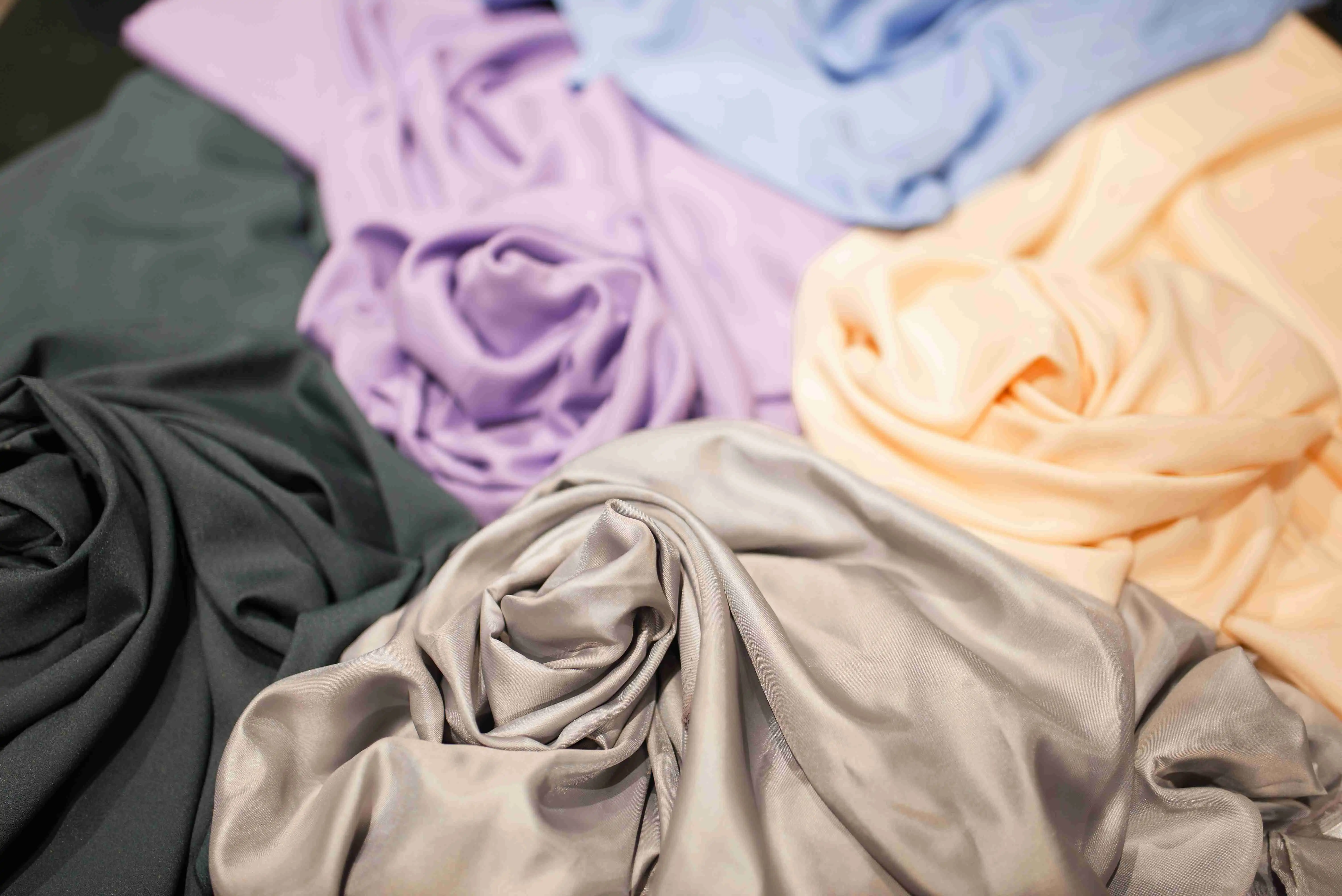
The same fiber can feel quite different in different constructions. Cotton percale and cotton sateen are both cotton, but percale is a plain weave usually associated with a crisper surface, while sateen uses longer floats that create a smoother, more lustrous face. Jersey is knitted and stretches more like a T-shirt. Flannel gets its familiar fuzzy surface from brushing or napping and can be made from more than one fiber 2.
Our bed sheet materials guide compares fibers in more detail. For a purchase, return to the exact percentage label because a broad material name does not describe a blend, construction, finish, or fabric weight.
Choose construction by feel, warmth, and airflow
Product descriptions can suggest how a sheet may feel, but they cannot guarantee how it will feel to you. Use these descriptions as a shortlist:
- Percale: usually crisp, matte, and less drapey than sateen. It can suit someone who dislikes a slick or clingy surface.
- Sateen: usually smooth, lustrous, and more drapey. Its exposed yarn floats can also be more vulnerable to snagging than a basic plain weave.
- Jersey: soft and stretchy, with a familiar knit feel. It will not behave like a tightly woven hotel-style sheet.
- Flannel: brushed or napped for a fuzzy surface that tends to feel warmer on first contact. Compare fabric weight when the seller provides it.
- Linen sheeting: usually has more visible texture and a relaxed appearance. Check whether the label says 100% linen or a blend.
Warmth and airflow depend on more than the fiber name. Yarn size, weave or knit density, fabric weight, brushing, and finishing can all change how a finished sheet behaves. A swatch, a display sample, or a return policy that permits a careful home evaluation is more informative than an unsupported adjective.
If you often feel too warm, first avoid constructions that feel heavy, dense, fuzzy, or clingy to you. Then compare the finished fabric rather than assuming one named fiber is always "cooling." If you prefer a warmer bed, look for a brushed surface or a heavier fabric, and confirm that the care routine will not be burdensome.
Use thread count as a limited comparison
For woven fabric, thread count is based on the number of warp ends and filling picks in a specified area. ASTM D3775 is a test method for this count in woven fabrics; it points to a different test method for the wale and course count of knitted fabrics 3.
That distinction matters. A woven sheet and a jersey sheet should not be judged by the same thread-count scale. Even among woven sheets, thread count does not tell you:
- which fiber is present
- the quality or size of the yarn
- whether yarns are single or plied
- the weave and fabric weight
- the dyes, softeners, or wrinkle-resistant finishes
- how the seams and elastic are constructed
- how the sheet will fit, launder, pill, snag, or feel after repeated use
There is no universal "best" thread count. Compare the number only when the fiber, weave, and general construction are otherwise similar. Ask whether the figure was measured using ASTM D3775 and how plied yarns were counted.
In a 2005 opinion letter, FTC staff said consumers could be misled when a seller multiplies the actual thread count by the number of plies within a yarn. The letter gave "300 thread count, 2 ply yarn" as an example of a clearer disclosure for fabric that might otherwise be advertised as 600 thread count 4. If measurement or ply-counting methods differ or are not disclosed, the numbers are not a sound basis for ranking two products.
Very large numbers should prompt more questions, not an automatic upgrade. A lower stated count made with a yarn and construction you like can be the better purchase.
Decode common sheet claims
Bamboo
"Bamboo" alone may not accurately name the fiber. The Federal Trade Commission says a textile can be described simply as bamboo only when it is made directly from actual bamboo fiber. Most soft bamboo-derived textiles are regenerated fibers and should be identified with wording such as "rayon made from bamboo" or "viscose made from bamboo" 5.
Read the generic fiber line. Do not infer a particular feel, manufacturing process, environmental benefit, or temperature effect from the bamboo plant source alone.
Microfiber
Microfiber describes very fine fibers, not a complete fiber-content answer. A microfiber sheet may be polyester or another manufactured fiber, alone or in a blend. Check the required generic names and percentages, then judge the finished fabric for feel, weight, static, pilling, care, and durability.
Egyptian cotton
"Egyptian" names a claimed cotton type or origin, not a weave or quality grade. FTC guidance says the claim must be truthful and the generic word "cotton" must still appear. If a product names a cotton type while mixing it with other cotton, the percentage of the named cotton must be disclosed 6.
Look for a specific fiber statement and credible traceability. "Cotton sateen" tells you the generic fiber and weave; "100% Egyptian cotton sateen" adds a specific origin or type claim that should be substantiated. Neither phrase, by itself, proves how the yarn was spun or how the finished sheet will wear.
Organic
Find out whether "organic" describes an ingredient or the finished textile. USDA guidance permits an accurately stated percentage of a certified organic fiber, but a product cannot imply that the entire finished textile is USDA certified organic or display the USDA Organic seal unless the finished product is certified under USDA regulations 7.
GOTS is a textile standard with chain-of-custody, processing, and labeling requirements. Under GOTS version 8.0, the "Organic" label grade requires at least 95% certified organic fiber content, excluding accessories; the "Made with (x%) organic materials" grade requires at least 70%. The label also includes the certification body and certification number 8.
Check the exact label grade, certification number, and product scope. A brand saying it uses some organic cotton is not the same claim as a certified finished sheet set.
Cooling, hypoallergenic, and wrinkle-free
These terms need definitions. Objective advertising claims should have a reasonable basis before they are made, and that obligation applies to implied claims as well as express ones 9.
For a "cooling" claim, ask what was measured. It might refer to a cool-to-the-touch finish, moisture spreading, drying time, or another laboratory result. None of those automatically establishes that the sheet lowers body temperature or improves sleep.
"Hypoallergenic" is not a substitute for a fiber label, a disclosed test method, or medical allergy advice. Ask which allergen or reaction the seller means and what evidence supports the claim. A sheet should not be treated as a treatment for allergies, eczema, asthma, or another health condition.
"Wrinkle-free," "easy care," and "wrinkle-resistant" may describe a finish, a performance test, or ordinary marketing language. Ask whether a chemical finish is used, how long the effect is expected to last, and whether special laundering is required. If the answer matters to you and the seller does not provide it, choose a better-documented product.
Measure the whole sleep surface
A size name is only a starting point. Measure the mattress width, length, and depth with the protector, pad, or topper that will remain on the bed. Measure depth at the thickest point without compressing the layers.
Then compare those numbers with the finished dimensions and stated fit range for each piece. Our bed sheet size guide covers standard dimensions and specialty configurations in detail.
For a fitted sheet, pocket depth is not the only construction detail. Check:
- whether the elastic runs around the entire edge or only at the corners
- the minimum and maximum mattress depth claimed by the seller
- whether thick elastic, reinforced corners, or corner straps are included
- whether a head or foot label helps with orientation
- whether the product is designed for an adjustable base, split mattress, or other unusual configuration
A pocket advertised as "deep" or "extra deep" is less useful than an actual depth range. A pocket that is much deeper than the mattress can still bunch, while a barely sufficient pocket may pull loose after shrinkage. If the listing gives only one pocket number, ask what mattress depth the sheet is guaranteed to fit.
Flat sheets also need enough width and length for your preferred drop and tuck. If you do not use a top sheet, do not pay more for one merely because it is bundled into the set.
Check every piece in the package
"Sheet set" does not have a universal piece list. Before comparing prices, verify whether the package includes:
- one fitted sheet
- one flat sheet
- one, two, or more pillowcases
- standard, queen, or king pillowcase dimensions
- two fitted sheets for a split configuration
- any shams, duvet cover, or accessories shown only for styling
Read the written contents instead of relying on the product photograph. Also check the pillowcase closure. An open-ended case is simple to use; an envelope or tuck closure helps cover the pillow end; a zipper contains the pillow more completely but adds hardware and another possible failure point.
Separates can be better value when partners use different pillow sizes, when you skip the flat sheet, or when one piece wears faster than the others. Before buying a coordinated set, see whether the manufacturer sells replacement fitted sheets and pillowcases in the same color.
Read the care label before paying
The useful care routine is the one you can repeat. Check the maximum wash and dry temperatures, bleach restrictions, whether dark colors should be washed separately, and whether line drying, low heat, ironing, or dry cleaning is required.
Consider your equipment too. A bulky king set may exceed a compact washer or dryer even when it is technically machine washable. Laundering pieces separately may add time and energy cost.
For durability, look beyond words such as "premium" and "luxury." Useful information includes seam construction, elastic coverage, fabric weight, documented shrinkage, pilling or abrasion results, and a warranty that clearly defines defects. Reviews after several washes can reveal recurring problems, but a few anecdotes cannot establish how every set will wear.
If softness is created mainly by a finish, the hand feel may change with laundering. Wash one set according to its label before buying several, but only after checking whether washing makes it ineligible for return.
Understand what a certification does and does not cover
Certifications answer specific questions. They are not interchangeable:
- GOTS addresses certified organic fiber content plus textile processing and chain-of-custody requirements. Check the label grade and certification number.
- USDA Organic on a finished textile indicates certification under USDA organic regulations. A claim about a percentage of organic cotton has a narrower meaning.
- OEKO-TEX STANDARD 100 indicates that a certified textile and its components have been tested for substances covered by that standard. Bed linens fall within the direct-skin-contact product class. The label can be checked using its QR code or certificate number 10.
OEKO-TEX STANDARD 100 does not mean the fiber is organic. An organic-fiber claim does not automatically answer which substances were tested in the finished sheet. Decide which question matters, then verify the product in the certification program's database rather than trusting a logo in an image.
Compare return terms and total value
Sheets are personal-contact products, so return restrictions can change after the package is opened or the set is washed. Before ordering, record:
- the return window and when it begins
- whether opened, tried, or washed bedding is eligible
- who pays return shipping
- any restocking, handling, or original-shipping deductions
- whether clearance, personalized, or final-sale colors are excluded
- the difference between a comfort return and a defect warranty
Save the listing, size chart, fiber claim, care instructions, and return terms shown at purchase. They are useful if the delivered product or label differs from the description.
Compare price per piece you will actually use, not just the advertised set price. Add expected shipping, special-care costs, and the price of missing pillowcases or replacement pieces. A more expensive set can be reasonable when it fits reliably, is easy to maintain, and can be returned if the description is wrong. A high price, luxury label, or high thread count is not proof of those qualities.
Final checkout checklist
Before placing the order, make sure you can answer all ten questions:
- What are the generic fibers and exact percentages?
- Is the fabric woven or knitted, and what is the specific construction?
- Does its likely feel, warmth, weight, and drape match your preference?
- If thread count is given, is it a comparable woven-fabric measurement?
- What are the finished dimensions and fitted-sheet depth range?
- How is the fitted edge made, and what type of pillowcase closure is used?
- Which pieces and pillowcase sizes are included?
- Can your washer, dryer, time, and care preferences handle the label instructions?
- Are marketing claims and certifications specific and verifiable?
- What happens if the fit, label, or feel is not as described?
If a listing leaves several of these unanswered, its price is difficult to evaluate. Choose the best-documented product that fits your priorities, then buy one set before committing to multiples.
FAQs
What thread count is best for bed sheets?
There is no single best number. Thread count applies to woven fabric and says nothing by itself about fiber, yarn, finish, fit, or workmanship. Compare it only among otherwise similar woven products measured in the same way.
Are bamboo sheets made from natural bamboo fiber?
Usually, soft bamboo-derived sheets are labeled rayon or viscose made from bamboo. Read the generic fiber label rather than assuming "bamboo" means a mechanically processed natural fiber.
Is microfiber a material?
It is primarily a fineness description, not a full composition statement. Check whether the sheet is polyester, another manufactured fiber, or a blend, and read the percentages.
Does hypoallergenic mean a sheet will prevent allergies?
No such conclusion should be drawn from the word alone. Look for the specific claim, test method, and fiber content. Ask a qualified clinician about managing a diagnosed allergy or skin condition.
Is a sheet set always cheaper than buying separates?
Not necessarily. A set can be wasteful if it includes a flat sheet you do not use or cases in the wrong size. Compare the cost of the pieces you need, their replacement availability, and the return terms.