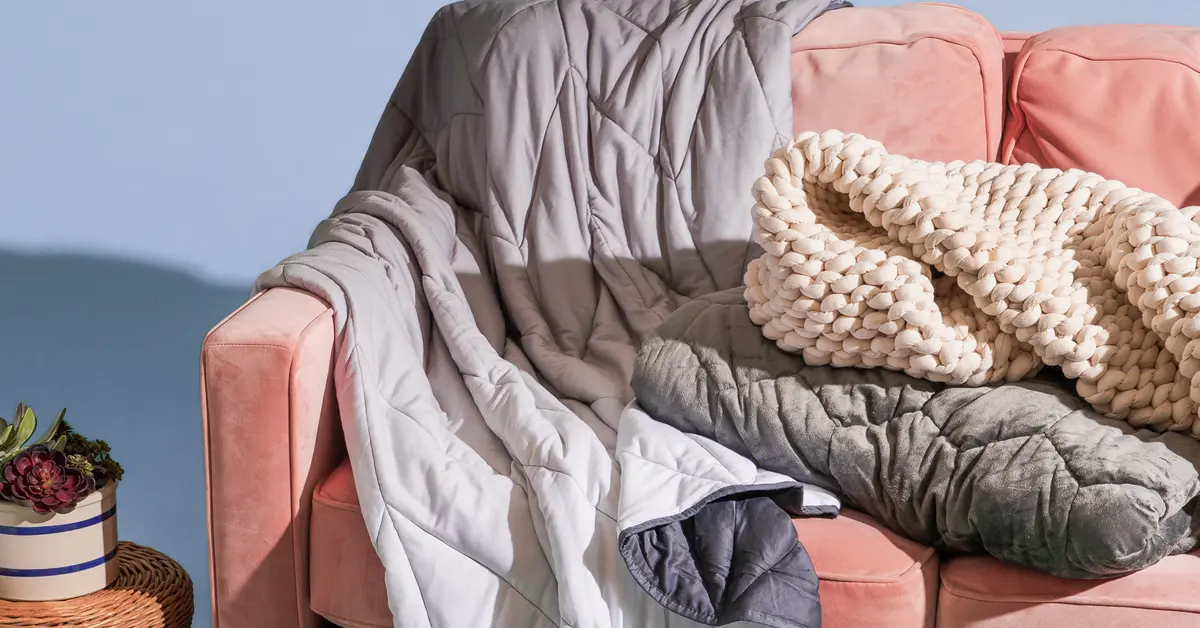
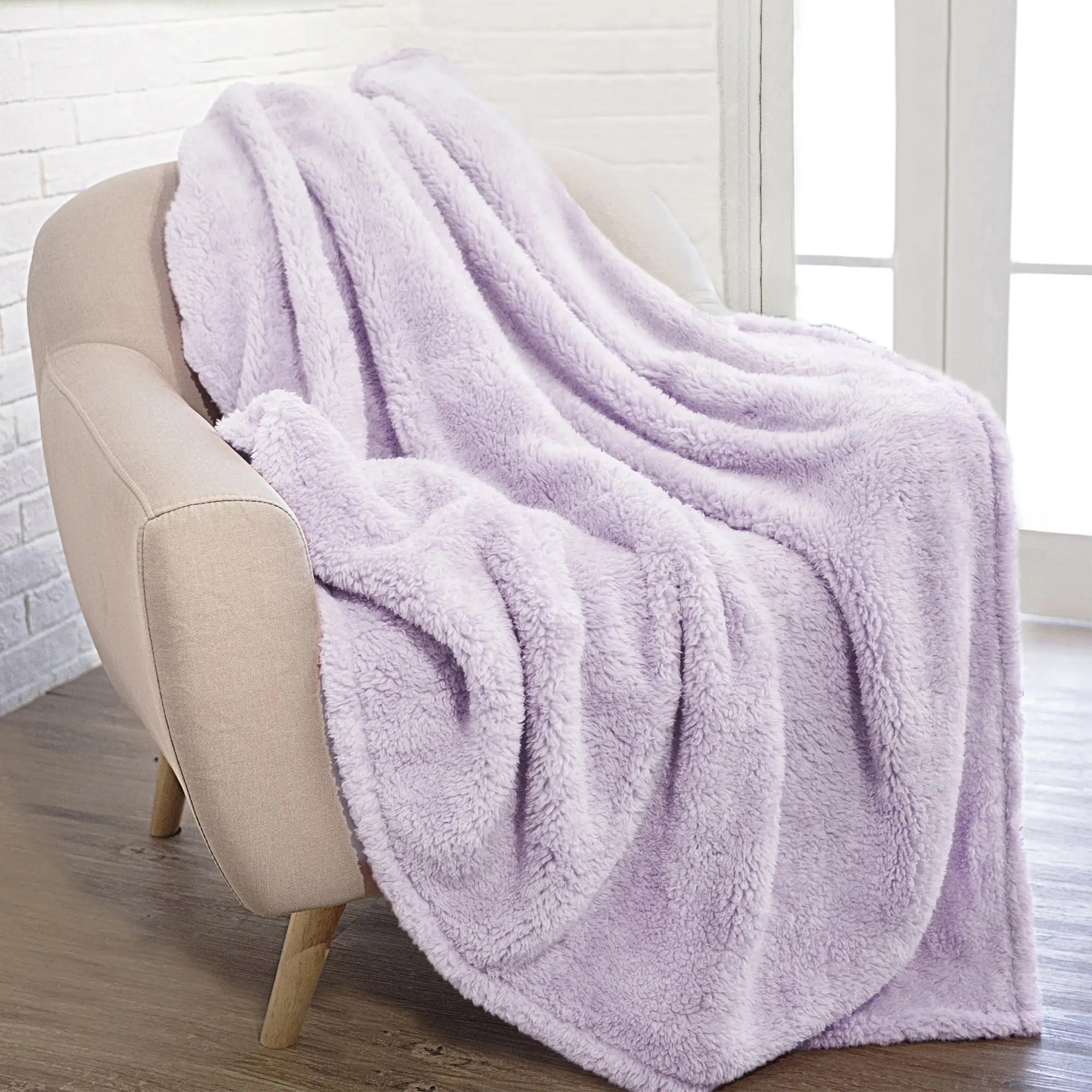
A fluffy blanket has either a raised surface, called pile, or a lofty layer of fill that holds the shell apart. “Fluffy” is a description of feel and appearance. It is not a fiber name, warmth rating, breathability rating, or quality standard.
Two blankets that look equally fluffy can behave very differently. A long-pile faux-fur throw may feel dense and warm, a lightweight fleece may trap enough air for a cool room, and a cotton chenille blanket may be heavier but more open. Read the construction and fiber label before relying on a name such as plush, teddy, cozy, or luxury. In the United States, federal textile-labeling requirements cover blankets and throws and generally require disclosure of fiber content, country of origin, and the responsible business 1.
What kinds of blankets are called fluffy?
The useful distinction is how the texture or loft is made, not which marketing name appears first.
| Construction | What creates the feel | Tradeoffs to check |
|---|---|---|
| Sherpa or fleece | A knitted fabric is brushed or finished into a soft pile. “Sherpa” usually describes a curly, fleece-like face rather than a fiber. | Often light for its warmth, but the pile can pill or mat. Static, edge finish, and heat tolerance vary. |
| Faux fur | Longer cut fibers rise from a knitted or woven backing. | Can feel dense and drape heavily. Long pile can shed, trap pet hair, hide tangles, and take longer to dry. |
| Plush or microfiber | Broad sales terms, often used for a smooth, short synthetic pile. | May range from thin to very dense. Check the actual fiber percentages, backing, weight, and care label. |
| Chenille | Fuzzy yarns create a velvety or caterpillar-like surface in a knit or weave. | Can be soft and substantial, but loops and decorative yarns may snag on claws, jewelry, or rough hardware. |
| High-pile cotton | Raised loops, tufts, or brushed cotton create texture. | May absorb more water and become heavy when wet. It can shed lint, and drying space matters. Construction is more informative than the word cotton alone. |
| Wool or mohair blend | Animal fibers and a brushed or napped finish create loft. | Can combine warmth with an airy structure, but hand feel, shedding, cleaning, moth protection, and price depend on fiber percentage and finish. |
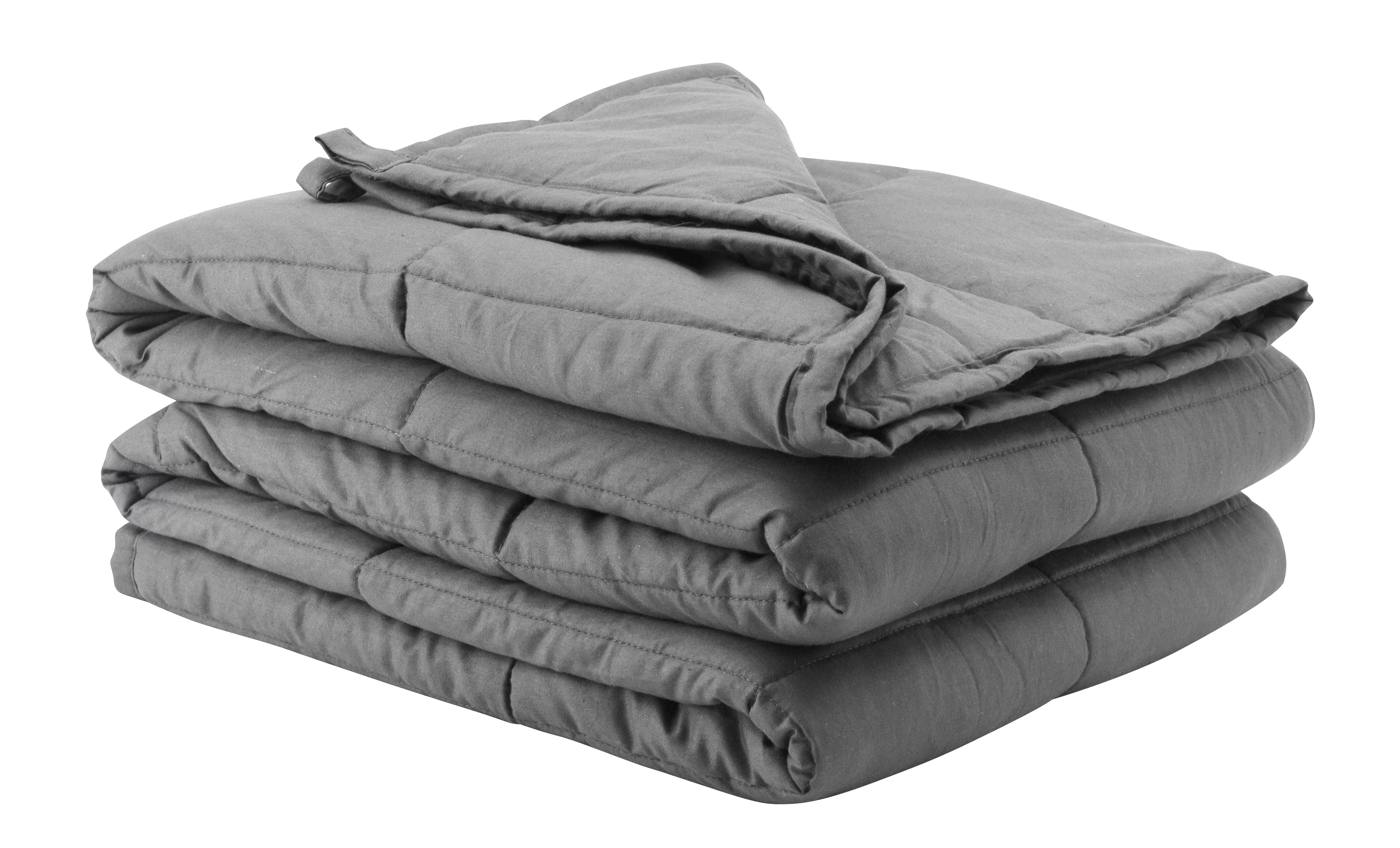
| Down or synthetic-filled throw | Loft sits between a shell rather than standing only on its surface. Quilting keeps the fill distributed. | Warmth depends on fill amount, distribution, shell, and size. Check for fill migration, leakage, clumps, drying capacity, and whether the label names down, feather, or synthetic fill. |
These are not universal rankings. A dense short-pile blanket can be warmer than a loose long-pile one. A carefully finished synthetic blanket may shed less than a poorly made natural-fiber blanket. Fiber content matters, but so do pile density, backing, stitching, fill distribution, and overall weight.
A blanket is not necessarily a duvet
A blanket is normally used as one complete layer. A duvet is a filled insert intended to go inside a removable duvet cover. Some fluffy throws also contain fill, but their smaller size, decorative shell, and care method may make them impractical as a duvet insert.
A throw is sized mainly for a sofa, chair, or one person's lap. A bed blanket is meant to cover the mattress and sleepers. Product names are not standardized enough to guarantee coverage, so use the listed measurements.
Warmth, breathability, weight, and surface feel
Fluffiness can help a material hold still air, but appearance alone does not predict warmth. Thickness, pile density, backing, quilting, gaps in the construction, blanket size, room temperature, drafts, clothing, and other bedding all affect how warm it feels.
Breathability is also a property of the full construction. A loose wool blend and a tightly backed polyester plush may have very different airflow even when they have similar pile height. Cotton can absorb moisture but may become heavy and dry slowly. Synthetic fleece may dry quickly but feel clammy or create static for some users. Treat these as tendencies to test, not guaranteed outcomes.
Weight and drape change comfort as much as softness. A thick faux fur may pull at the edge of a bed, while a lighter fleece may shift more easily. If hand strength, pain, limited mobility, or overheating is a concern, try lifting, folding, and removing the blanket before buying. A person using it in bed should be able to move it away from the face and get out without becoming tangled.
Static, pilling, and shedding
Static is more noticeable with some synthetic piles, dry indoor air, and friction. Pilling occurs when loose or broken fibers tangle into small balls. Shedding is the release of fibers from the pile, yarn, seam, or fill. These problems are related, but they are not the same.
Before buying in person, rub a small area with a dark or light sleeve, depending on the blanket color. Look for loose fibers, pills, color transfer, or a crackling cling. Part the pile and inspect the backing. Gently tug several places rather than pulling hard enough to damage the sample. Online, look for close-up images, an actual item weight, care instructions, and a return policy that allows you to assess the texture.
Initial lint does not always mean the blanket will keep shedding, but exposed backing, loose edge fibers, open seams, or fill escaping through the shell are stronger warning signs. No label term guarantees a shed-free product.
Skin sensitivity
Test the blanket against the neck or inner forearm if possible. The pile may feel soft to a hand but irritating on more sensitive skin. Check for coarse fibers, stiff seams, rough binding, fragrance, and finishes as well as the named fiber.
“Hypoallergenic” does not explain which material or exposure the claim addresses. Ask whether it refers to the fiber, a finish, washability, or a specific finished-product test. It does not guarantee that every person will tolerate the blanket. If a new blanket causes persistent itching, rash, wheezing, or swelling, stop using it and seek medical advice appropriate to the symptoms.
Pets and everyday wear
For a home with pets, check whether claws catch in chenille loops or long pile, whether the color makes hair easy to spot, and whether the blanket fits the washing machine when wet. A tightly finished short pile is often easier to inspect than a deep faux fur, but the actual sample matters more than the category.
Trim loose threads instead of pulling them. Stop using a blanket if a pet opens a seam, exposes fill, chews a fringe into loose pieces, or damages a heated blanket's cord or internal wiring. Do not assume a washable label makes electrical damage repairable.
A practical buying path
1. Define the job
Decide whether the blanket is for a lap, sofa, guest bed, full bed layer, travel, pets, or decoration. Then rank what matters most: warmth, low weight, easy washing, low shedding, smooth skin feel, natural-fiber content, animal-welfare criteria, or price.
A single blanket rarely maximizes every feature. Long pile can increase visual softness while making pet hair and matting harder to manage. A heavy cotton construction may feel substantial but exceed a small washer's capacity when wet. A delicate mohair blend may not suit a household that needs frequent machine washing.
2. Measure the space and desired coverage
For a bed, measure the mattress width and length, then decide how much fabric should hang over each side and the foot. A practical estimate is:
- blanket width = mattress width + twice the desired side drop
- blanket length = mattress length + desired foot drop + any amount you want to tuck at the head
This is a measurement method, not a standard size chart. Mattress depth, foundation height, two sleepers, and whether the blanket sits under or over a duvet can change the amount you want.
For a sofa throw, measure the user or the section of furniture it needs to cover. A throw should not trail across a walking route. If it is for a chair, confirm that the user can reach and remove it without leaning into an unsafe position.
3. Inspect construction, not just softness
Check:
- the fiber percentages for the face, reverse, shell, and fill when listed separately
- whether the backing shows when the pile is bent
- seam, binding, fringe, and corner finish
- pile attachment and visible loose fibers
- quilting that keeps fill from migrating into large empty areas
- finished dimensions and item weight
- whether the care method fits your washer, dryer, budget, and available drying space
- whether a heated product has intact instructions, controls, and a current recall status
Terms such as microfiber, sherpa, plush, and velvet describe only part of the product. The FTC notes that labels for most household textiles, including blankets and throws, must identify the fiber content rather than relying on a trademark or decorative name 1.
4. Read special claims narrowly
A useful claim tells you what was measured or certified, which component it covers, and who verified it.
- Antibacterial or antimicrobial: Find out whether the treatment is intended only to protect the textile from odor, staining, or deterioration, or whether the seller makes a human-health claim. The EPA's treated-article exemption covers qualifying products whose pesticide treatment protects the article itself, not unregistered claims that the product controls human pathogens or prevents illness 2.
- Non-toxic: Ask which substances, exposure route, test method, and limit the claim covers. The FTC says a non-toxic environmental marketing claim needs reliable scientific evidence for safety to people and the environment. A broad phrase without scope is not a substitute for results on the finished product 3.
- Tested for harmful substances: OEKO-TEX STANDARD 100 means the labeled item has been tested under that program for listed harmful substances. It does not, by itself, mean the fiber is organic, the product will not irritate anyone, or every environmental tradeoff was assessed 4.
- Recycled: Look for the percentage, the component involved, and whether the figure is pre-consumer or post-consumer when disclosed. FTC guidance says a partial recycled-content claim should state the amount and should refer to material recovered or diverted from the waste stream 3. Standards such as RCS or GRS can add third-party chain-of-custody verification, but their scopes differ.
- Organic: Check whether the claim covers a named fiber or the finished textile. USDA guidance allows a label to identify certified organic fibers and their percentage, while a finished textile may not imply that the whole product is USDA organic or use the USDA seal unless the finished product meets USDA certification requirements. Textiles meeting GOTS may also be sold as organic in the United States under the stated conditions 5.
- Cruelty-free or responsible animal fiber: A broad phrase does not identify the animal, prohibited practice, or audited supply-chain stage. Look for a named certification and verify the product, not only the brand. Textile Exchange's RDS, RWS, and RMS claims apply to down, wool, and mohair respectively and include defined animal-welfare and chain-of-custody requirements 6.
- Sustainable, green, or eco-friendly: Ask for the specific benefit and its basis. The FTC advises against broad, unqualified environmental-benefit claims because they are difficult to substantiate and can hide tradeoffs 3. Durability, repairability, wash needs, product weight, fiber source, processing, packaging, and end-of-use options are separate questions.
A certification can answer the question within its scope. It does not automatically establish superior warmth, softness, durability, health benefit, or total environmental impact.
How to wash and dry a fluffy blanket
The sewn-in care label and the maker's instructions take priority over a generic fiber rule. A blanket may combine a heat-sensitive pile, different backing, adhesive, decorative trim, fill, and electrical parts. Follow the most restrictive instruction that applies to the complete item.
Before washing:
- Photograph the care label in case it fades.
- Check for open seams, exposed backing, loose fill, stains, and electrical components.
- Confirm that the washer and dryer can hold the blanket without packing it tightly. Consider its wet weight, not only how easily it fits while dry.
- Remove a detachable cover, controller, or cord only when the product instructions say to do so.
- Spot-test any permitted cleaner in a hidden area.
If machine washing is allowed, use the water temperature, cycle, detergent type, and bleach instruction on the label. More detergent does not make a blanket cleaner and can leave residue in dense pile. Do not add fabric softener, vinegar, scent beads, bleach, or a stain treatment unless the label and product instructions allow it. These additions can affect different fibers, finishes, backing materials, and flame or electrical components in different ways.
Dry by the stated method. High dryer heat can shrink some fibers, distort backing, set tangles, or melt a heat-sensitive pile. Air drying is not automatically safer for every blanket either. A heavy wet knit can stretch when hung, and a thick filled blanket can remain damp inside. Support the weight as directed and make sure the entire blanket, including seams and fill, is dry before use or storage.
“Dry clean only” means use a professional cleaner and show them the label. Do not assume dry cleaning is better for every wool, faux-fur, down, or filled blanket. The shell, backing, dye, finish, and fill determine the safe method.
Can a matted blanket become fluffy again?
Sometimes. First identify what changed:
- Compressed pile: Shaking the dry blanket and gently lifting the pile with clean fingers may help.
- Detergent residue: If the care instructions allow machine washing, a correctly sized load and permitted rinse may remove residue. Do not keep rinsing a dry-clean-only or damaged item.
- Tangled cut pile: On a fully dry, non-electric blanket, test a soft brush or wide-tooth comb on a hidden area. Use light, short strokes while supporting the backing. Stop if fibers pull out.
- Clumped fill: If the label permits tumble drying, an air-only or specified low-temperature cycle may help redistribute fill. Use dryer balls only when the maker allows them and the dryer has enough room for the blanket to move.
- Heat damage, broken fibers, or separated backing: Melted tips, hardened patches, thinning pile, and delamination are usually physical damage rather than reversible compression.
Do not brush chenille loops, force a comb through faux fur, beat a delicate textile, steam an unknown backing, or put a heated blanket in a dryer unless its instructions expressly permit the method. There is no universal tennis-ball, fabric-softener, sunlight, or steam treatment for fluffy blankets.
Storage and replacement
Clean and dry the blanket completely before storing it. Fold or roll it without tight compression, then place it in a dry location where it will not be crushed by heavy items. Use breathable protection when moisture is controlled. Animal-fiber blankets may need additional moth prevention, but follow the textile and pest-product instructions rather than placing loose chemicals against the blanket.
Store a heated blanket flat or loosely rolled according to its manual so internal wires are not sharply folded or pinched. Keep the controller and instructions with it.
Replace a blanket based on condition and function, not a universal age:
- the fabric, backing, seams, or binding is torn beyond a safe repair
- fill escapes or shifts into large permanent gaps
- matting, thinning, or shrinkage prevents the blanket from covering or warming as intended
- mildew, smoke, body-fluid contamination, or another odor remains after an appropriate cleaning
- a heated blanket has scorch marks, exposed wires, cracked connectors, frayed cords, unusual hot spots, or recall instructions to stop use
Cosmetic flattening alone does not require replacement if the blanket remains clean, intact, comfortable, and suitable for its job.
Safety around heat, children, pets, and mobility
Keep blankets away from open flames, candles, cooking surfaces, and smoking materials. Never drape one over a space heater. The CPSC recommends keeping bedding and other combustible materials at least three feet from a space heater 7.
A heated blanket is an electrical product, not a regular fluffy layer. Use it only in the position and configuration stated in its manual. Inspect the fabric, plug, cord, connector, and controller before use. The CPSC advises discarding a damaged electric blanket, keeping it flat while operating, avoiding pinched heating wires, and not placing other blankets, objects, or pets on top unless the instructions specifically allow that setup 8. Stop using it after overheating, wetting that is not covered by its washing instructions, chewing, puncture, controller damage, or a recall.
Keep sofa throws off stairs and walking paths. A person with limited strength, sensation, balance, or mobility may need a lighter or smaller blanket that is easy to remove. Long fringe, large loops, loose threads, and open covers can catch on mobility equipment, jewelry, pet claws, or small hands. Repair or retire the item when those features become loose.
Follow the age and supervision limits for children's and heated products. Do not let a child or pet play inside a zippered cover, chew electrical parts, or build a blanket tent near a heater or flame.
No loose blankets in an infant sleep space
A fluffy blanket is not safe crib bedding. The CPSC recommends a bare crib, bassinet, or play yard with only a fitted sheet, and says not to add blankets, pillows, quilts, comforters, bumpers, or other soft items. Place an infant on their back on a firm, flat sleep surface intended for infant sleep 9.
Use appropriate sleep clothing for warmth instead of a loose blanket. This infant rule is separate from choosing a throw for an older child or adult.
The bottom line
Choose a fluffy blanket by its job, measurements, construction, feel, weight, care demands, and safety in your home. Surface pile and internal loft can both create fluffiness, but neither tells you the fiber, warmth, durability, or quality by itself.
Read the fiber label, inspect the backing and seams, test the texture, and interpret special claims only within their stated scope. Care for the whole construction according to its sewn-in label. Gentle handling can recover some compressed or tangled pile, but heat-damaged fibers, failed backing, exposed fill, and damaged electrical parts are replacement problems rather than fluffing problems.