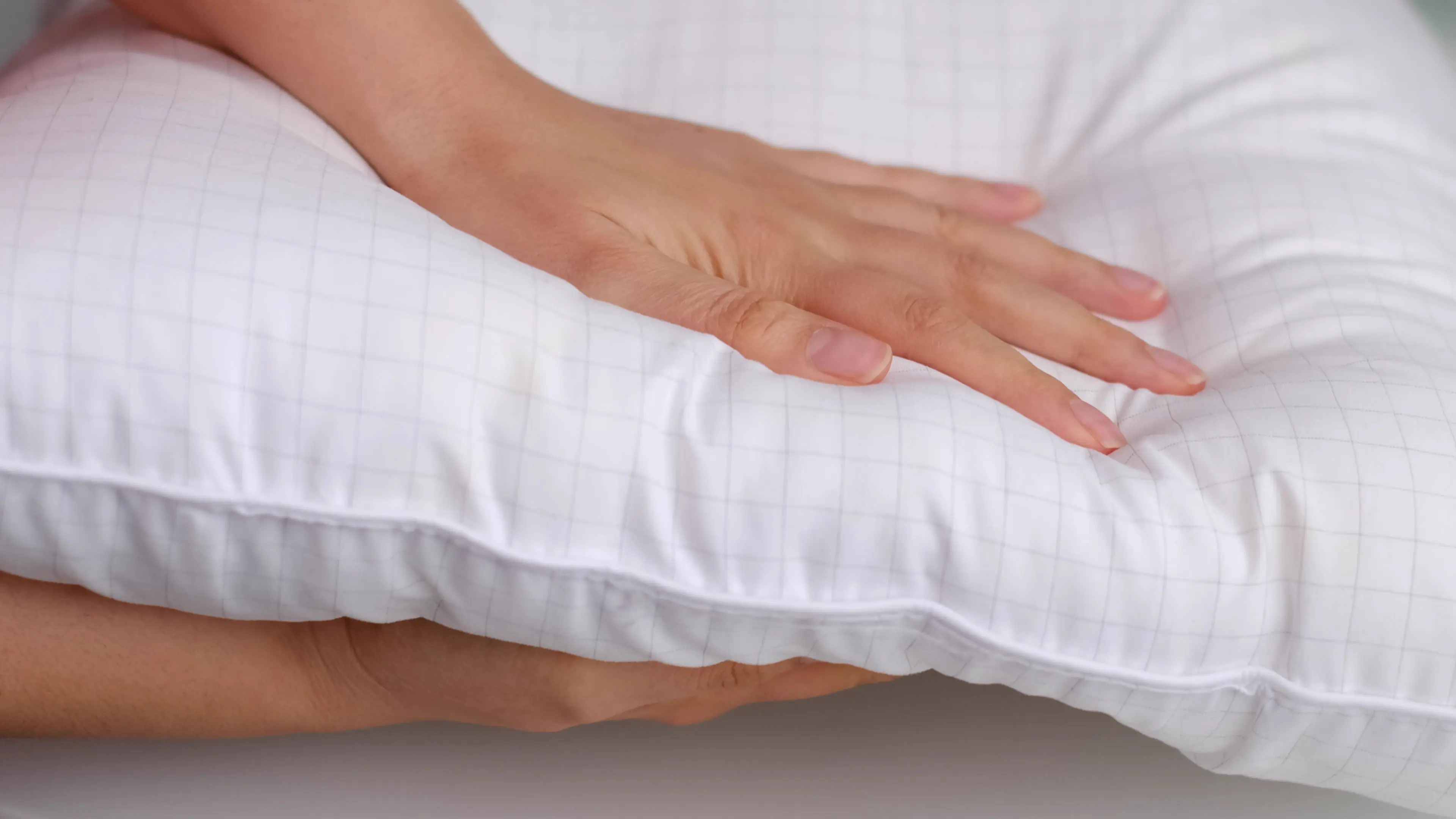


There is no medically correct number of pillows for an adult to sleep with. A useful setup provides comfortable support without creating pressure, worsening symptoms, or interfering with breathing and movement.
For many people, one well-fitted pillow under the head is a sensible starting point. Two thin pillows can work as one thicker head support if they stay stable. Some stomach sleepers are more comfortable with no head pillow. Extra pillows under or around the body serve different purposes, so a person using one head pillow and one knee pillow is not really using “two pillows for the neck.”
Research does not establish a universal one-pillow rule. A 2025 systematic review found only five eligible intervention studies in people with chronic neck pain. Pain changes were minor, disability findings were inconsistent, sleep-quality differences were not statistically significant, and no pillow material was clearly superior 1.
Count the job, not just the pillows
Separate your setup into two questions:
- What supports your head and neck? This might be one pillow, two thin layers acting together, a contoured support, or no pillow.
- What supports the rest of your body? Optional pillows may go between or under the knees, under the abdomen, in front of the chest for an arm, behind the back, or along the whole body.
The right head support depends on your usual sleep position, head and shoulder shape, how deeply your torso sinks into the mattress, and how much the pillow compresses after you lie down. Symptoms, pregnancy, disability, positive airway pressure equipment, and clinician-directed recovery after surgery can change the setup again.
This is why uncompressed loft measurements and pillow count are poor shortcuts. A thick, soft pillow may compress to the same working height as a thinner, more resilient one. Two thin pillows may act like one thick pillow, while two unstable pillows that slide apart may provide inconsistent support.
Position-aware starting points
These are adaptable starting points, not proven prescriptions. Keep your usual position unless a clinician has advised otherwise, then adjust the support in small steps.
Side sleepers
Start with enough head support to fill the space created by your shoulder after both your body and the pillow have settled into the mattress. Your face should feel comfortably forward rather than tipped toward the mattress or ceiling, and your ear should not feel forced toward your shoulder.
A pillow between the knees or legs is optional. Use it if it reduces contact pressure or makes the hips and lower back feel more comfortable. A pillow hugged in front can support an arm, and a body pillow can combine arm and leg support. None of these additions has a mandatory firmness or count.
Back sleepers
Start with head and neck support that does not force the chin toward the chest or leave the head tipping uncomfortably backward. One pillow often does this job, but two thin layers can make small height adjustments easier.
A support under the knees is optional. It may feel more comfortable for some people with lower-back or hip tension, but it is not required for spinal health.
Stomach sleepers
Because the head is already turned to one side, a thick head pillow can add more neck bend. A thin pillow or no head pillow may feel better, but neither choice is a medical requirement.
Some people like a thin support under the abdomen or pelvis. Keep it only if it eases pressure without making breathing, turning, or the lower back feel worse.
Combination sleepers
A combination sleeper needs a setup that remains usable after a position change. This could be one compressible or adjustable head pillow, two thin stable pillows, or separate body support that can be moved without creating a trip or entrapment hazard.
Do not force one height to feel perfect in every position. Aim for a workable compromise in the positions where you spend most of the night.
A simple pillow-fit check
Test one change at a time so you can tell what helped.
- Lie in your usual position long enough for the mattress and pillow to compress.
- Notice whether the head and neck feel comfortably supported without a strong bend, pressure at the ear or jaw, or a need to brace the muscles.
- Check that you can breathe freely, turn when needed, and use any PAP mask, brace, or mobility aid as instructed.
- Pay attention to arm tingling, numbness, weakness, or pain. Do not treat a new neurological symptom as a normal adjustment.
- The next morning, compare neck comfort, stiffness, headache, arm symptoms, pressure points, and sleep disruption with your usual response.
- If needed, change only one variable in a small step, such as removing one thin layer, reducing fill, adding a small amount of height, or moving a body-support pillow.
You do not need to tolerate a worsening setup for a fixed trial period. Return to the previous arrangement if a change clearly increases pain, pressure, breathing difficulty, or neurological symptoms.
What pillow research can and cannot tell you
Pillow studies usually compare designs or materials in small, selected groups. They do not establish an ideal total count for the general population.
A 2021 systematic review reported modest improvements in neck pain or waking symptoms with some spring and rubber pillows, but found no meaningful sleep-quality benefit in people with chronic neck pain. Results for pillow height, shape, and side-lying cervical alignment remained uncertain 2. The newer 2025 review found no clear superiority for latex, foam, or standard pillows and judged the evidence too heterogeneous for a definitive clinical recommendation 1.
A pillow can therefore be a comfort aid or one part of a neck-pain plan, but current evidence does not justify claims that a particular count, material, or shape guarantees ideal spinal alignment, deeper sleep, injury prevention, protection from chronic damage, or treatment of a medical condition.
When a medical need changes the setup
Reflux
Do not stack ordinary pillows under only the head as a treatment for nighttime reflux. The American College of Gastroenterology advises raising the head of the bed or using an under-mattress foam wedge rather than relying on head pillows 3.
The support should elevate the upper torso, not simply bend the neck. Ask a clinician how to combine elevation with your neck, back, pregnancy, mobility, or fall-risk needs, especially if symptoms are frequent or you have trouble swallowing, bleeding, unexplained weight loss, or chest pain 3.
Obstructive sleep apnea and PAP equipment
More head pillows are not a substitute for diagnosis or treatment of obstructive sleep apnea. Positive airway pressure treatment should follow an established diagnosis and include follow-up to confirm that therapy is effective and usable 4.
If you use PAP, choose a head-support arrangement that does not push the mask out of position or kink the hose. Do not change prescribed pressure or stop treatment because a pillow arrangement seems to reduce snoring. Ask the sleep clinic or equipment provider for mask-fit troubleshooting if position changes cause leaks.
Pregnancy
Pregnancy may add support pillows without changing the head-pillow requirement. The American College of Obstetricians and Gynecologists suggests side sleeping in the second and third trimesters and notes that a pillow between the knees, one under the abdomen, or a full-length body pillow may improve comfort 5.
Use only the supports that help you, and follow advice from your obstetric clinician or physiotherapist when pelvic pain, dizziness, limited mobility, or another pregnancy complication affects positioning.
Disability, injury, and recovery after surgery
Pillows may help support a weak arm, reduce pressure on a sensitive area, or make turning and transfers easier. They can also obstruct a transfer, limit independent repositioning, or interfere with a brace or medical device.
If a surgeon, physical therapist, occupational therapist, or other clinician has prescribed elevation, side avoidance, a brace, or a specific postoperative position, follow that plan instead of a general sleep-position guide. Do not improvise a tall stack that can collapse or remove prescribed equipment to make a pillow fit.
Infants
Infants are the clear exception to adult pillow advice. The American Academy of Pediatrics recommends keeping pillows, pillow-like toys, quilts, comforters, mattress toppers, and other loose bedding out of an infant's sleep area. An infant should sleep on a firm, flat, noninclined surface made for infant sleep 6.
Do not use a positioning pillow, wedge, nursing pillow, or adult pillow in an infant sleep space, including for reflux, head shape, or to keep the baby on one side. If the child's medical team gives different instructions for a specific condition, use that setup only as directed.
When to replace a pillow
Replace pillows based on condition, cleanability, and the manufacturer's care instructions rather than a universal one- or two-year schedule.
Consider replacement when:
- the pillow no longer returns to a usable shape or maintains its support after normal fluffing or adjustment
- permanent lumps, compressed areas, or shifting fill create uncomfortable pressure
- a seam, zipper, or cover is damaged and fill is escaping
- the pillow has moisture, mold, persistent odor, or contamination that cannot be safely cleaned according to its label
- the material has been damaged by washing, heat, or drying methods that the care label does not allow
Use a washable pillowcase and follow the label for cleaning and drying. If you have confirmed dust-mite allergy, an allergen-impermeable pillow encasement can be one part of a broader exposure-control plan. Practice guidance cautions that an encasement alone may reduce exposure without guaranteeing symptom relief 7.
A new pillow is not automatically cleaner enough to solve persistent nasal, eye, skin, or breathing symptoms. Discuss ongoing symptoms with a healthcare professional so allergy, asthma, infection, and sleep-disordered breathing are not reduced to a bedding problem.
When to get medical help
Arrange an assessment if neck pain is persistent, worsening, repeatedly disrupts sleep, or spreads into an arm. Numbness, tingling, or weakness in an arm or hand can occur when a nerve is affected and should not be managed only by changing pillows 8.
Seek urgent care for a severe or sudden headache, major weakness or numbness, trouble walking, loss of bladder or bowel control, fever with a very stiff neck, or neck pain after a significant fall, collision, or other injury 9 8.
Repeated breathing pauses, gasping, loud snoring with marked daytime sleepiness, or sleepiness that affects driving also warrant medical evaluation. These are recognized symptoms of sleep apnea, which may require a sleep study and treatment rather than a different pillow count 10.
Bottom line
Start by fitting the head support to your body, mattress, usual position, and symptoms. Then add a knee, leg, abdominal, arm, back, or body pillow only when it has a clear comfort, access, or clinician-directed purpose. The number that results is personal, and it can change when the pillow compresses, the mattress changes, pregnancy progresses, a device is added, or symptoms change.