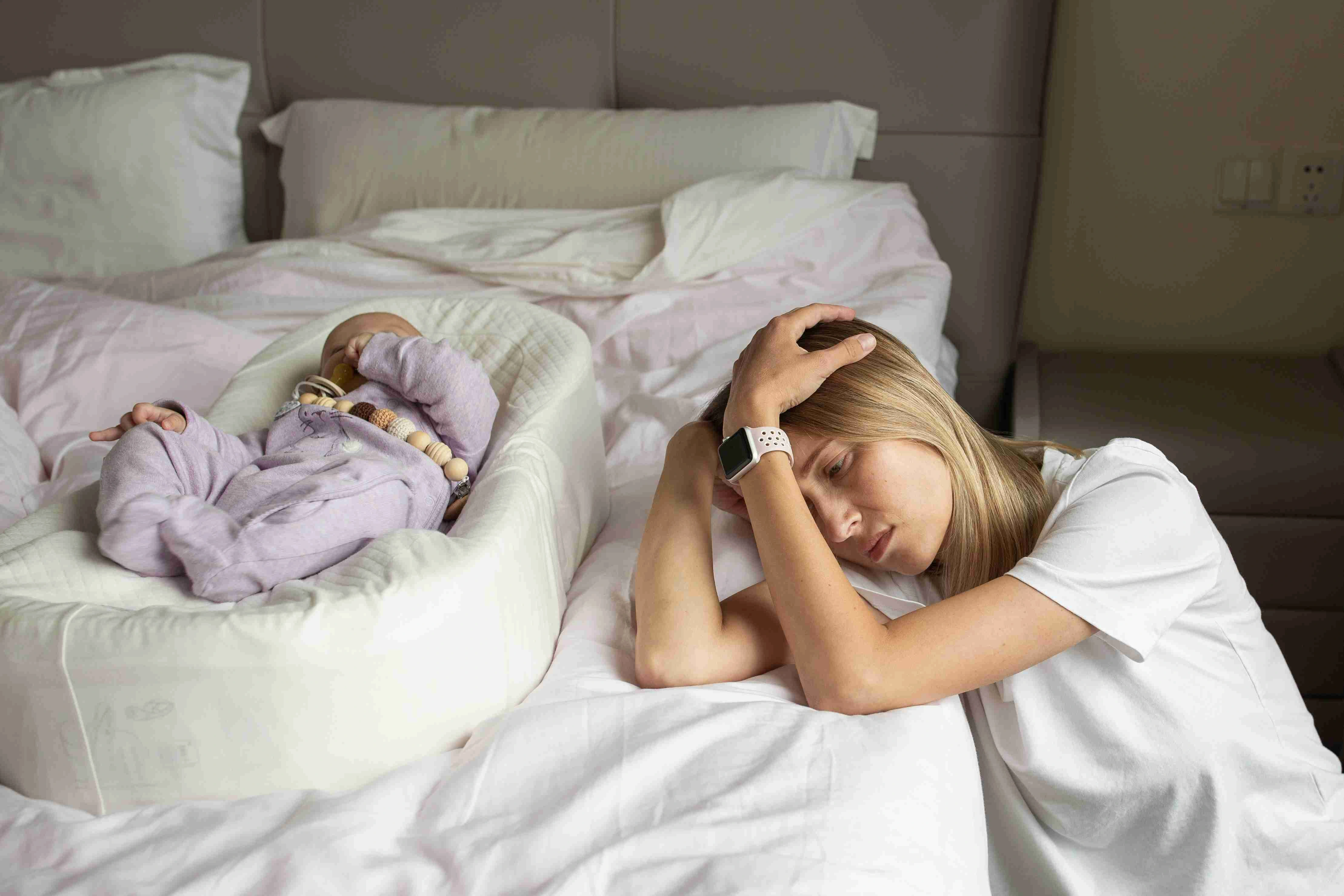


Broken, unpredictable sleep is common after childbirth. A newborn may need care around the clock, while the parent who gave birth is also recovering from delivery and adapting to pain, bleeding, feeding, temperature changes, and a new level of alertness to the baby.
Common does not mean easy, and it does not mean every sleep problem should be accepted as part of parenthood. The useful first question is whether care demands are interrupting sleep that would otherwise happen or sleep remains out of reach during a real chance to rest. The second pattern can point to insomnia, a mental health condition, a medical problem, or another sleep disorder.
Why postpartum sleep feels different
Early postpartum sleep is often divided into many short episodes. In a small actigraphy study of healthy first-time mothers, sleep fragmentation remained pronounced across the first four postpartum months even when total sleep time changed little. This matters because a total number of hours can hide how often sleep was interrupted and how restorative it felt 1.
The pattern differs among families and can change from one week to the next. Common contributors include:
- infant feeding, changing, soothing, illness, or monitoring
- pain from vaginal or cesarean birth, uterine cramping, breast or chest discomfort, headaches, and musculoskeletal strain
- night sweats, urinary symptoms, reflux, or medication effects
- worry about the baby, birth-related trauma, or becoming alert to every sound
- depression, anxiety, obsessive-compulsive symptoms, bipolar-spectrum illness, or psychosis
- obstructive sleep apnea, restless legs syndrome, a thyroid disorder, anemia, infection, or another medical condition
- work schedules, other children, housing conditions, financial pressure, and too little practical support
There is no universal postpartum sleep requirement, recovery date, or minimum uninterrupted stretch that separates coping from illness. Function, symptoms, sleep opportunity, and change from your usual pattern are more useful than comparing yourself with another parent.
Sleep loss or insomnia?
Insomnia means difficulty falling asleep, staying asleep, or getting good-quality sleep even when there is enough time and an appropriate environment for sleep. It also affects daytime functioning 2. A parent can have infant-driven sleep loss and insomnia at the same time.
| Pattern | What it can look like | What to do |
|---|---|---|
| Limited sleep opportunity | You can usually sleep when given a protected chance, but feeds, care, pain, work, or other responsibilities end the opportunity | Reduce or share the interruption where possible and address pain or care barriers |
| Possible insomnia | You remain awake despite being tired while the baby is safely cared for, or you dread bedtime, watch the clock, and cannot return to sleep after care ends | Tell a postpartum or primary care clinician, especially if it persists, worsens, or affects safety |
| Excessive sleepiness | You unintentionally doze while holding or feeding the baby, cannot stay alert for driving, or have repeated near misses | Stop driving or hazardous tasks and arrange another alert adult for infant care while seeking prompt help |
| Reduced need for sleep | You sleep very little but feel unusually energized rather than tired, with racing thoughts, markedly elevated or irritable mood, impulsive behavior, or rapidly changing behavior | Seek urgent mental health assessment; this is not ordinary newborn fatigue 3 |
A sleep diary can help if the pattern is unclear. For several days, note the opportunities you had to sleep, why each sleep period ended, time awake that was not due to infant care, naps, medications or substances, pain, mood, and daytime sleepiness. The goal is not a perfect sleep score. It is to show a clinician where the sleep opportunity is being lost.
Sleep and postpartum mental health
Sleep and mood affect each other, but poor sleep alone does not prove postpartum depression and it is not a parenting failure. A systematic review of actigraphy studies found associations between postpartum nighttime sleep and depression or fatigue, but the studies could not establish that sleep loss was the sole cause 4.
Depression and anxiety
Postpartum depression can include persistent sadness, loss of interest, hopelessness, guilt, irritability, difficulty concentrating, appetite changes, trouble bonding, and difficulty sleeping even when the baby sleeps. Severe or lasting anxiety may involve constant dread, panic, checking, or worry that prevents rest. Mild, short-lived mood changes in the first two weeks are often called the baby blues, but severe symptoms or symptoms that last beyond that period deserve assessment 5.
Unwanted intrusive thoughts can occur with postpartum anxiety or obsessive-compulsive symptoms. They are not automatically the same as wanting to act. Tell a clinician promptly so they can assess the thought, distress, intent, control, and any psychotic symptoms. If you may act, cannot keep yourself or the baby safe, or the thought comes with a command, fixed false belief, or severe confusion, use emergency help now.
Bipolar-spectrum illness and postpartum psychosis
Wanting sleep but being unable to get it is different from feeling that sleep is unnecessary. Childbirth can precipitate mania or hypomania, and bipolar disorder is sometimes first recognized after birth. Warning signs include a sharply reduced need for sleep with unusually high energy, racing thoughts, rapid speech, markedly elevated or agitated mood, impulsive behavior, or a sudden change that others find out of character 3.
Hallucinations, delusions, paranoia, severe confusion, disorganized behavior, or mania that is out of touch with reality can signal postpartum psychosis. Emergency psychiatric evaluation is required, and hospitalization is generally indicated 53.
A previous manic, hypomanic, psychotic, or postpartum episode, or a personal or family history of bipolar disorder, should lower the threshold for contacting the existing mental health or obstetric team. Do not wait for a routine visit if sleep and behavior are changing quickly.
A practical postpartum sleep plan
The plan should fit the family's health, feeding needs, resources, and available help. ACOG treats sleep and fatigue as part of postpartum care and recommends discussing coping options and engaging family or friends in care responsibilities 6.
1. Protect one realistic sleep opportunity
Choose the part of the day or night when another capable adult can take full responsibility for the tasks they can safely do. A handoff works better when it is specific:
- who listens for the baby
- who changes, burps, settles, and returns the baby to the sleep space
- who prepares and cleans feeding equipment
- when the sleeping parent should be awakened
- which symptoms or feeding concerns require an earlier handoff
If direct feeding is needed, the helper can bring the baby for the feed and handle the care before and after it. If bottle feeding is already part of the infant's feeding plan, the helper may be able to cover that feed. Pumping, milk supply, recovery, infant growth, prematurity, and medical instructions can change what is workable, so ask the pediatric or lactation team when the plan is unclear.
A shift does not need to produce a fixed number of uninterrupted hours to be worthwhile. Even removing the monitoring, changing, and settling work from one period can reduce how long the parent stays alert.
2. Ask for help with the tasks that consume the sleep window
"Let me know if you need anything" puts the planning back on the exhausted parent. More useful requests include:
- take the baby from 7 to 10 p.m. except for direct feeds
- handle the next diaper change and settling
- prepare food, wash feeding equipment, or do laundry
- take an older child to school
- sit with me during a feed if I may fall asleep
- call the clinician or drive me to the appointment
If no partner is available, consider whether a trusted relative, friend, community program, postpartum doula, or home-visiting service can cover a defined period. Lack of support is a care constraint, not a personal shortcoming.
3. Do not treat feeding method as a guaranteed sleep treatment
Research comparing breastfeeding and formula feeding is heterogeneous. One systematic review found no consistent difference in maternal total sleep time or sleep quality, while another meta-analysis found a small average advantage in nighttime sleep among breastfeeding participants but more wake time after sleep onset. Neither supports promising that formula, exclusive breastfeeding, pumping, or a bedtime bottle will make a particular parent or infant sleep longer 78.
Choose or change feeding with the parent’s health, the infant’s nutrition and growth, the desired feeding relationship, and practical capacity in mind. If sleep loss is destabilizing a parent with bipolar disorder or another severe mental health condition, ACOG advises weighing feeding choices alongside stress and sleep deprivation with the treatment team 3.
4. Treat physical barriers instead of trying to out-relax them
Use postpartum pain treatment exactly as recommended, and contact the obstetric team if pain is worsening, not controlled, or linked to wound redness, drainage, fever, breast or chest inflammation, urinary symptoms, or foul-smelling discharge. Review the timing and alertness effects of prescription medicines, over-the-counter products, caffeine, nicotine, alcohol, cannabis, and supplements with a clinician or pharmacist.
Postpartum thyroiditis can cause trouble sleeping, irritability, heat intolerance, fatigue, and a fast heartbeat during an overactive phase, or cold intolerance, dry skin, poor concentration, and fatigue during an underactive phase. Symptoms overlap with ordinary postpartum changes, so diagnosis requires clinical assessment and blood tests 9.
5. Keep the infant's sleep surface safe when adults are exhausted
Put the baby on their back on a firm, flat, noninclined sleep surface designed for infants, with a fitted sheet and no pillows, loose bedding, toys, or other soft items. Room sharing uses a separate infant sleep surface rather than the adult bed 10.
Avoid feeding on a sofa or cushioned armchair when you might fall asleep. If you bring the baby into an adult bed for feeding or comfort and there is any chance you will fall asleep, remove pillows, sheets, blankets, and other items that could cover the baby's head or face. Return the baby to their own sleep space as soon as you wake. Alcohol, cannabis, opioids, sedating medicines, and extreme fatigue make sharing a sleep surface especially dangerous 10.
If a medicine makes you difficult to wake, arrange for an alert adult to handle infant monitoring and transfers. Do not use a home breathing monitor or sleep product as a substitute for the recommended sleep environment.
Other conditions that can hide behind postpartum fatigue
Obstructive sleep apnea
Loud frequent snoring, witnessed breathing pauses, gasping, morning headache, dry mouth, nocturia, or severe daytime sleepiness can point to obstructive sleep apnea 11. Do not assume apnea diagnosed during pregnancy has resolved after delivery. In one single-center study of 65 participants tested in late pregnancy and again 6 to 15 weeks postpartum, the proportion with apnea did not decline, although the sample was small and largely included people with obesity 12.
Continue prescribed positive airway pressure unless the treating clinician changes the plan. Ask about repeat assessment rather than stopping it because pregnancy has ended.
Restless legs syndrome
Restless legs syndrome causes an urge to move the legs, usually with uncomfortable sensations that begin or worsen at rest, improve temporarily with movement, and are worse in the evening or at night. It is different from a sudden painful muscle cramp.
Tell a clinician if this pattern delays sleep or persists after pregnancy. Current AASM guidance recommends iron studies for clinically significant restless legs syndrome and review of contributing medicines, substances, and untreated sleep apnea. Do not start high-dose iron or a restless-legs medicine based on symptoms alone, especially while breastfeeding 13.
Depression, trauma, pain, and medical recovery
Nightmares, panic, avoidance, or intense alertness after a frightening pregnancy or birth may warrant assessment for trauma-related symptoms. Persistent pain, heavy bleeding, infection, anemia, urinary problems, thyroid disease, and medication effects can also disturb sleep or cause fatigue. Postpartum follow-up should assess physical recovery, mood, feeding, sleep, fatigue, social support, and chronic conditions rather than treating sleep as an isolated problem 6.
When treatment is needed
Contact an obstetric, primary care, or mental health clinician when:
- you regularly cannot sleep during a genuine opportunity
- sleep worry or checking keeps you awake
- sleep problems persist as infant-care interruptions ease
- fatigue, sleepiness, mood, or concentration affects safe care, driving, work, or basic tasks
- depression, anxiety, panic, intrusive thoughts, trauma symptoms, or loss of pleasure is present
- snoring, gasping, restless legs, pain, bleeding, fever, palpitations, or heat or cold intolerance suggests another cause
A clinician may review the birth and recovery, mood and bipolar history, medicines and substances, feeding and lactation, sleep opportunity, pain, infant-care pattern, and symptoms of apnea or restless legs. Blood testing or a sleep study is useful only when the history points to it.
CBT-I and mental health care
Cognitive behavioral therapy for insomnia, or CBT-I, addresses sleep-related arousal and habits that keep insomnia going. Postpartum-specific trials are promising, but a 2025 systematic review rated the evidence as low certainty because studies were small and varied, and benefits tended to be clearer later in the postpartum period 14.
For a postpartum parent, CBT-I should account for unavoidable infant care, feeding, severe sleep loss, mood symptoms, and daytime safety. Do not apply a rigid internet sleep-restriction schedule on your own when sleep opportunity is already very limited. A clinician trained in behavioral sleep medicine or perinatal mental health can adapt treatment and address depression, anxiety, obsessive-compulsive symptoms, or trauma alongside sleep.
Sleep medicines, psychiatric medicines, and lactation
There is no one postpartum sleep medicine that is safe or suitable for everyone. The decision depends on the actual diagnosis, other medicines or substances, next-day caregiving demands, the infant's age and health, and whether the parent is breastfeeding.
Do not abruptly stop an effective psychiatric medicine or change its dose to improve sleep or breastfeeding without guidance from the prescriber. ACOG recommends considering the risk of untreated illness as well as medication exposure and notes that infant age and prematurity can affect medication clearance during lactation 3. LactMed provides referenced, drug-specific information on milk levels, reported infant effects, and possible alternatives, but it does not replace individual clinical judgment 15.
Ask the prescriber and pediatric clinician what adult and infant effects to monitor, whether another adult should cover care after a sedating dose, and what to do if the infant is unusually sleepy, feeds poorly, or has breathing difficulty.
When to get urgent or emergency help
Call emergency services or go to an emergency department now for:
- thoughts of suicide or harming the baby when you may act, cannot ensure safety, or have a plan
- hallucinations, delusions, paranoia, severe confusion, disorganized behavior, or rapidly escalating mania
- seizure, fainting, chest pain, severe trouble breathing, or a fast heartbeat with dizziness or disorientation
- a severe or worsening headache, especially with vision changes
- heavy bleeding that soaks one or more pads in an hour, clots larger than an egg, or foul-smelling discharge
- severe one-sided leg or arm swelling, redness, or pain
These are among the CDC's urgent maternal warning signs during pregnancy and the year after delivery 16. If mental status or behavior is unsafe, do not leave the parent alone with the baby. Have another adult stay with them and take over infant care while emergency help is arranged.
Frequently asked questions
Is it normal to be unable to sleep when the baby sleeps?
It can happen after birth because pain, stress, mental alertness, or a disrupted schedule can outlast the baby's waking period. Repeated inability to sleep during a protected opportunity is still worth discussing with a clinician, especially when mood, behavior, or safety is affected. "Sleep when the baby sleeps" is an option, not a test of whether you are trying hard enough.
How long does postpartum sleep disruption last?
There is no reliable universal timeline. Infant care, feeding, recovery, health conditions, work, other children, and support all shape the course. Some fragmentation may improve as the infant's sleep and care needs change, while insomnia or another disorder can continue independently. Seek help based on symptoms and function rather than waiting for a specific postpartum month.
Should I switch feeding methods to get more sleep?
Not on the promise that one method will produce longer sleep. Reviews have reached different conclusions about small average differences, and they do not predict what will happen in one family 78. Discuss feeding changes with the infant's clinician and, when relevant, a lactation professional, while giving the parent's health and sleep a real place in the decision.
Is sleep training the treatment for postpartum insomnia?
No. An infant sleep plan and treatment for the parent's insomnia are different decisions. Infant age, development, growth, feeding needs, medical conditions, and safe-sleep guidance determine which infant strategies are appropriate. Even when infant sleep improves, a parent who has developed insomnia, depression, anxiety, or another condition may still need direct treatment.
Can naps help?
A nap can replace some lost opportunity when another person can provide safe infant care. It is not mandatory, and many parents cannot nap on demand. If long or late naps consistently make a protected nighttime opportunity harder to use, record the pattern and discuss it as part of insomnia care rather than forcing yourself to stay awake while dangerously sleepy.