
The usual difference between a Twin and Twin XL mattress is five inches of length. Both are commonly listed at 38 inches wide, while a Twin is about 75 inches long and a Twin XL is about 80 inches long 1.
That does not make Twin XL the automatic choice for an adult or Twin the automatic choice for a child. Choose the size that fits the sleeper, the complete bed, and the room. Then verify the exact dimensions of every product in the setup.
Twin vs. Twin XL dimensions
| Comparison | Twin | Twin XL |
|---|---|---|
| Common nominal width | 38 in | 38 in |
| Common nominal length | 75 in | 80 in |
| Usual length difference | Baseline | 5 in longer |
| Usual change in mattress footprint | None in width | Adds 5 in at the foot end |
These are nominal dimensions, which means they describe the usual size family rather than promising an exact finished measurement. Sealy, for example, currently lists Twin mattresses from 38 by 74 to 38 by 74.5 inches and Twin Long mattresses from 38 by 79 to 38 by 79.5 inches across several lines. It also says individual mattress dimensions may vary 2.
Use the size name to narrow your search. Use the manufacturer's written width, length, height, and stated tolerance to decide whether a product fits. Our complete mattress-size guide explains how this applies to the other common and specialty sizes.
Decide whether the extra length is useful
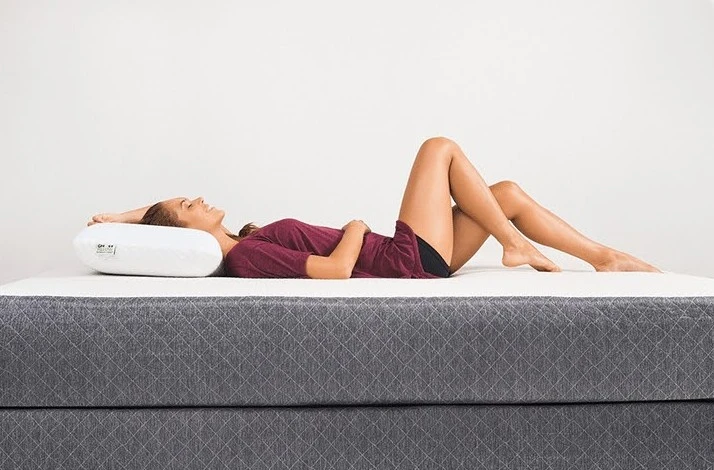
Twin XL changes length, not nominal width. It can help when a Twin does not leave enough usable space from the sleeper's pillow position to the foot of the bed. It does not add elbow room, space beside the sleeper, or more room for two people.
Do not use a height cutoff alone. Standing height leaves out pillow placement, sleep position, how much a person moves, and how much open space they prefer at the head and feet.
A more useful check is to measure the current sleep setup:
- Lie in the positions you actually use, with your usual pillow in place.
- Note the farthest point reached by your head, feet, and bedding during normal movement.
- Measure the usable mattress length and how much clear space remains.
- Decide whether five additional inches would solve the problem.
- If width is the problem, compare a wider size instead of expecting Twin XL to fix it.
Repeat the check for every regular sleeper who may use the bed. Age labels such as child, teen, or adult do not replace the measurement.
Measure the room and the complete bed
At the common nominal dimensions, a Twin XL mattress extends five inches farther into the room than a Twin mattress 1. The mattress is only one part of the footprint. A headboard, footboard, posts, shelves, storage drawers, controls, or an adjustable mechanism can make the finished bed wider and longer.
Put painter's tape on the floor using the frame's outside dimensions, not just the nominal mattress dimensions. Check whether you can still:
- Open the bedroom and closet doors fully
- Open drawers and storage compartments
- Reach outlets and adjustable-base controls
- Move along the required walking or mobility route
- Remove the mattress and service the base later
There is no universal bedroom size or walkway that makes one option correct. The useful layout is the one that preserves the access needed in that room.
Also calculate the complete bed height. Add the frame or base height, foundation, mattress, and any topper. Twin and Twin XL refer to width and length, not height, so either size can produce a low or high finished bed depending on the components.
Match the mattress to the support system
Do not place a Twin XL mattress on a Twin base or assume that a frame marketed with the same size name has the right opening. Compare the exact dimensions and the support instructions for:
- The mattress
- Platform, slats, foundation, or box spring
- Decorative frame and its usable inside opening
- Center supports, retainers, and guardrails
- Adjustable-base platform and permitted mattress construction
- Load limit for each component
A load limit may apply to one sleeping level, one side, or the complete product, and it may or may not include the mattress and bedding. Read the definition in the exact manual rather than transferring a number from another size or model.
An adjustable setup needs an additional compatibility check. Confirm that both the mattress maker and base maker permit the combination, that the dimensions match, and that the retainer system will hold the mattress as the base moves. Compare the available sizes and return terms for the exact model before ordering.
Check every fitted layer
A Twin fitted sheet, protector, or topper can be too short for a Twin XL. Match fitted products to the mattress's exact width, length, corner shape, and covered depth. Include a pad or topper when calculating the depth a fitted sheet must cover.
If a flat sheet, blanket, or comforter is sold under a combined Twin/Twin XL label, check its finished dimensions. The label alone does not tell you how much fabric will tuck at the foot or drape over the sides.
Dorm beds require the housing specification
The words “dorm bed” do not establish one dimension. A Texas A&M housing page updated in August 2025 lists its residence-hall Twin mattresses at 36 by 77 inches and Twin XL mattresses available by request at 36 by 80 inches 3.
Before buying bedding or a topper, check the current housing page for the assigned building or ask housing staff for:
- Mattress width, length, and depth
- Whether the assigned bed is Twin or Twin XL
- Whether room or bed assignments can change
- Any limits on toppers, risers, lofting, or replacement mattresses
The institution's specification controls. A generic retail dimension chart does not.
Daybeds, trundles, and bunk beds are product-specific
A daybed or trundle can have a tight frame opening, a maximum mattress depth, or a moving section that needs extra clearance. As one current example, IKEA markets its FYRESDAL daybed frame as Twin while listing the mattress space at 38 1/4 by 74 3/8 inches 4. Check the product manual and actual opening before substituting either a Twin or Twin XL mattress.
Bunk and loft beds add a safety boundary. U.S. Consumer Product Safety Commission guidance says bunk beds must be marked with the proper mattress width, length, and thickness. It also requires the upper guardrail to remain at least five inches above the top of the mattress 5.
Use the size and maximum thickness printed on the exact bunk or loft bed. A mattress can have the expected Twin width and length but still be too thick for the guardrails to protect as designed. Check the bed's load limit and all upper-bunk warnings as well.
Do two Twin XL mattresses make a king?
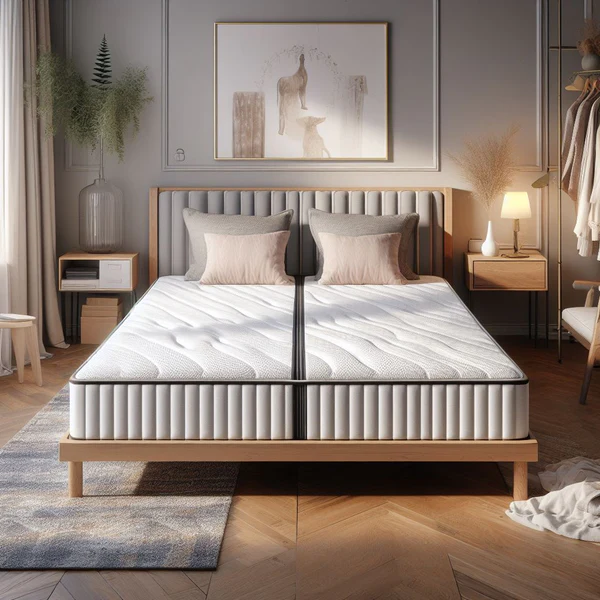
Under the common nominal dimensions, two 38-by-80-inch Twin XL mattresses placed side by side form a 76-by-80-inch footprint, the usual nominal size of a king. Saatva, for example, currently defines its Split King as two Twin XL mattresses 6.
The arithmetic does not guarantee that any two Twin XL products form a properly matched split king. Before combining them, verify:
- Each mattress's exact finished width, length, and height
- Whether the mattresses and bases are approved for the intended setup
- Whether the base sides move independently or can be synchronized
- Whether retainers or connectors are supplied or permitted
- Whether separate fitted sheets and protectors are needed
- How the center seam, perimeter, and different mattress heights affect the users
Exact finished dimensions can also change the combined width. In one current Sealy line, the company lists a one-piece king at 76 inches wide and each split-king component at 37.5 inches wide, for a combined nominal width of 75 inches 2.
Two ordinary Twins are not the same configuration. At the common nominal dimensions, they create a 76-by-75-inch surface, which is five inches shorter than a nominal king 1.
A split king also differs from a one-piece king. Separate mattresses preserve a center seam and can allow independent adjustable-base movement. A shared topper or other layer may change that movement, so follow the component manufacturers' instructions.
Compare delivery, price, and policies by model
Do not assume Twin XL is heavier, more expensive, or harder to find than Twin. Compare the exact mattress, seller, and accessories.
Compare the complete order:
- Mattress, foundation, frame, and bedding prices
- Expanded dimensions, shipping carton dimensions, and component weights
- Doorways, stairs, elevators, landings, and turns on the delivery route
- Setup and old-mattress removal
- Trial, return, exchange, and collection fees
- Support requirements and warranty exclusions
- Availability of replacement sheets, protectors, and base parts
Keep the written specifications and policy that applied when you ordered. A retailer can change its size range or terms later.
Which one should you choose?
A Twin is the better fit when its exact usable length works for the sleeper and the five inches saved at the foot materially improves the room or furniture layout.
A Twin XL is the better fit when the sleeper uses the extra length and the exact mattress, support system, bedding, room, and delivery route all accommodate it.
If the problem is width, neither size solves it. If the bed is in a dorm, bunk, loft, daybed, or trundle, the institution or product specification takes priority over this general comparison.
Before paying, put the exact mattress and outer frame dimensions on a room sketch, confirm every fitted component, and save the seller's written return and warranty terms. That short check is more dependable than choosing from the words Twin or Twin XL alone.