
The best blanket is the one that fits where and how you will use it. A light woven blanket may suit a warm bedroom, while a lofty filled layer can make more sense in a cold room. Someone who shares a bed, has pets, or uses a laundromat may need a different design from someone choosing an occasional sofa throw.
Treat the choice as three separate decisions:
-
Category: blanket, throw, quilt, comforter, duvet insert, coverlet, weighted blanket, heated blanket, or another purpose-built design.
-
Construction: woven, knitted, piled, or filled, along with details such as stitch pattern, fill distribution, and edge finish.
-
Fiber or fill: cotton, linen, wool, polyester, acrylic, silk, down, feathers, an alternative fill, or a blend.
A fiber name alone does not tell you how warm, cool, soft, durable, or washable the finished product will be. Construction, thickness, total material, finish, and care requirements matter too.
Blanket Categories at a Glance
Product names are not perfectly consistent between brands or countries. Read the construction and intended-use details instead of relying only on the name.
Blanket
A conventional blanket is usually a single unfilled layer. It may be woven, knitted, or made from a raised-pile fabric such as fleece. It works well when you want adjustable warmth because you can add or remove layers without changing the rest of the bed.
Throw
A throw is a smaller blanket intended for a sofa, chair, lap, or portable use. It may be decorative, but it can still be warm. Check its measurements if you expect it to cover your feet and shoulders or span a bed.
Coverlet
A coverlet is a relatively light bed covering that normally reaches the sides of the mattress rather than the floor. It can provide a little warmth or serve as a tidy top layer. Some are woven in one layer, while others are lightly quilted.
Quilt
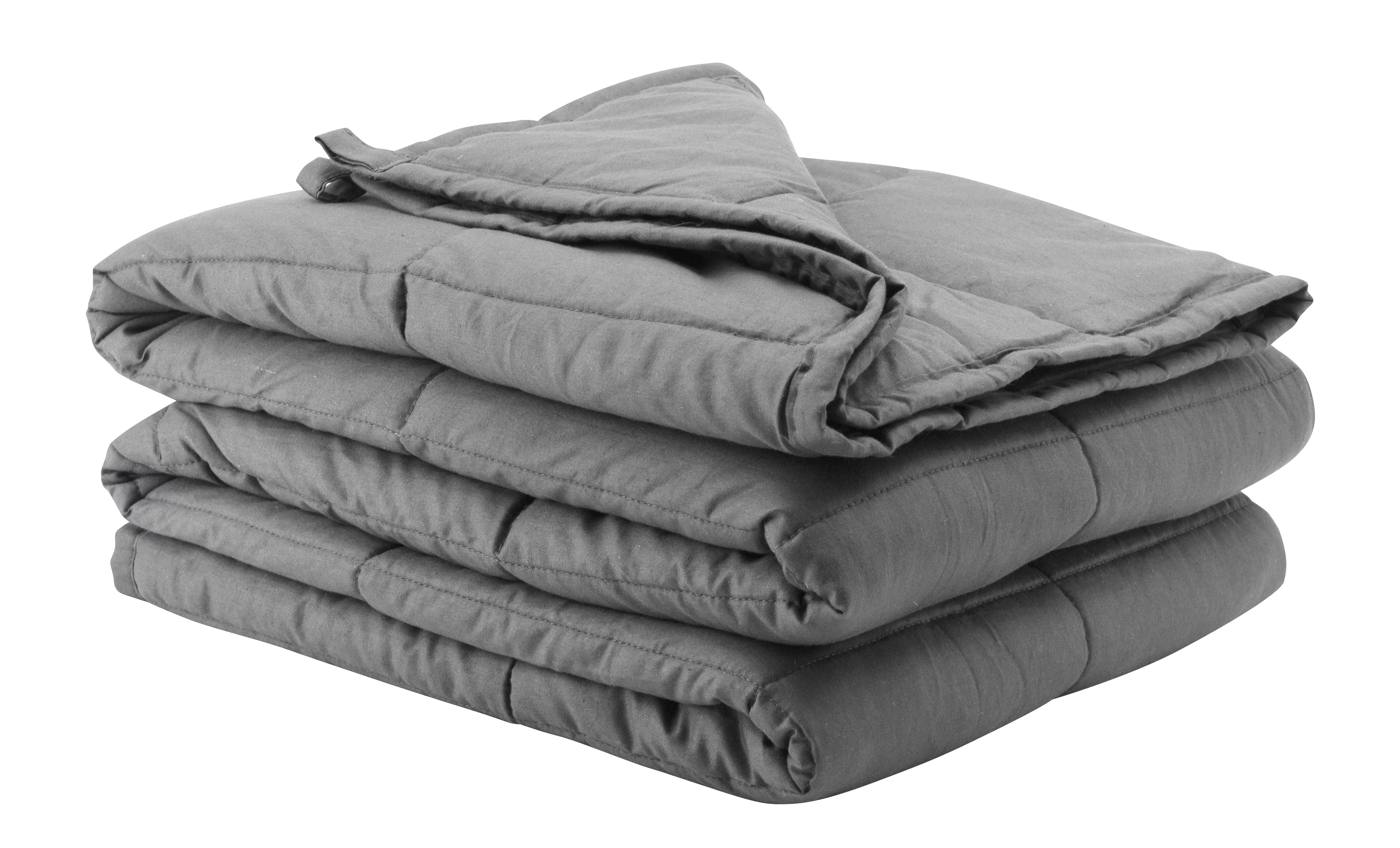
A quilt usually has a top fabric, a thin layer of batting, and a backing held together with stitching. Closely spaced stitching can keep the batting stable, but the fiber content and care label still determine whether the whole quilt can tolerate frequent washing.
Comforter
A comforter is a filled bed covering with a decorative outer shell. It is generally used as a finished top layer without a separate cover. Its shell, fill amount, and internal box or channel design influence warmth and whether the fill stays evenly distributed.
Duvet Insert
A duvet insert is also a filled bed covering, but it is designed to sit inside a removable duvet cover. The cover can take much of the contact with skin, pets, and spills. This can simplify routine upkeep, although the insert itself still needs care according to its label. Some sellers use duvet and comforter interchangeably, so look for cover loops, shell fabric, and washing instructions.
Weighted Blanket
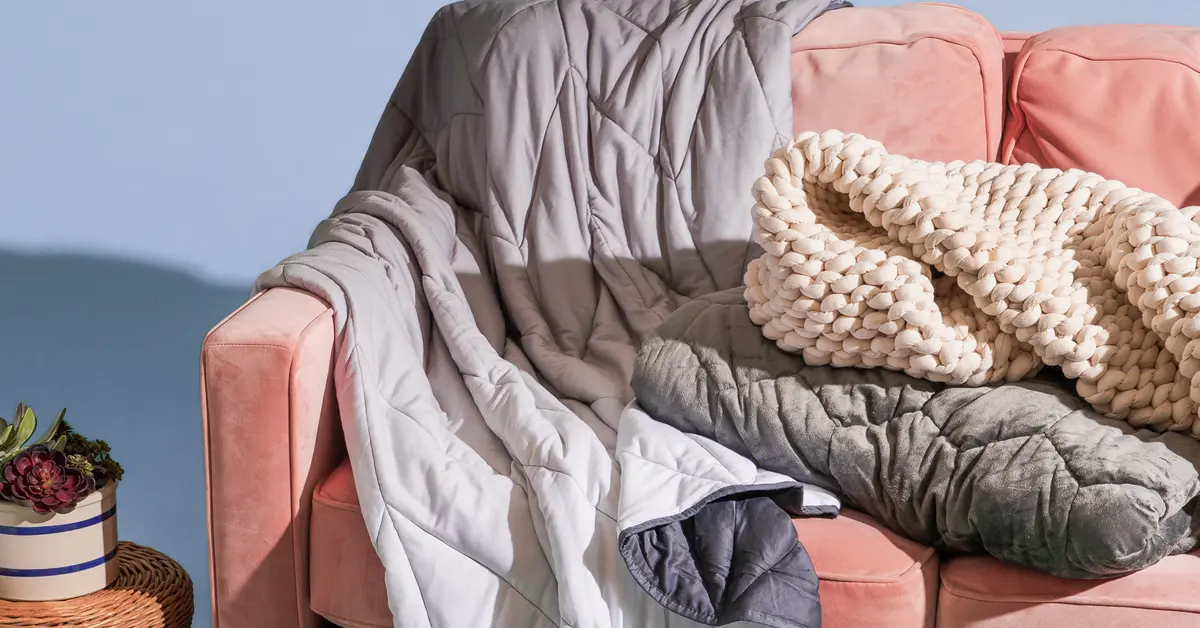
A weighted blanket creates deliberate pressure using glass beads, plastic pellets, metal beads, or a dense knitted construction. Pressure and warmth are different properties. A weighted blanket can feel hot or cool depending on its shell, fill, airflow, and the room.
Heated Blanket
An electric heated blanket contains wiring or another electrical heating system and a controller. An overblanket, underblanket, mattress pad, and heated throw may have different placement and layering rules. Use the exact product only in the way its manual describes.
Wearable Blanket
Adult wearable blankets are loose garments or throws with sleeves or hoods. An infant wearable blanket, often called a sleep sack, is a fitted sleep garment rather than a loose crib blanket. Those two products are not interchangeable, and an infant product should never be weighted.
Cooling and Outdoor Blankets
“Cooling blanket” is a performance claim, not a single material category. A product may use a low-mass weave, open structure, moisture-managing finish, smooth surface, or phase-change material. None of those features guarantees that every sleeper will feel cool all night.
Outdoor blankets often emphasize packability, a water-resistant face, or protection from the ground. Check whether the product is intended for picnics, stadium use, emergency warmth, or sleeping. A general outdoor blanket is not necessarily a temperature-rated sleeping bag, waterproof shelter, or fire-resistant layer.
How Common Blanket Materials Compare
Cotton
Cotton absorbs moisture and is available in everything from open woven blankets to dense knits and quilts. Many cotton products can be machine washed, but a large quilt or blanket may become heavy when wet, dry slowly, or shrink. Cotton is not automatically cool: a thick cotton knit can retain much more heat than a light open weave.
Linen and Other Flax Fibers
Linen often has a dry, textured hand and can soften with use. It may suit someone who likes a less plush surface, but it also wrinkles readily and can feel crisp at first. Fiber blends and finishes can change that feel substantially.
Wool and Cashmere
Wool can provide substantial warmth without a very bulky structure and can buffer some moisture. The tradeoffs can include a higher price, a texture some people find irritating, susceptibility to felting or shrinkage, and special washing or storage needs. Cashmere is a fine goat fiber valued for softness and low bulk, but it is typically expensive and may require gentle care.
A wool label does not make a blanket suitable for every season or every sleeper. Thickness, weave, room temperature, and personal heat preference still decide whether it feels comfortable.
Polyester, Microfiber, and Fleece
Polyester appears as smooth microfiber, plush pile, faux fur, sherpa-style fabric, fill, and many other constructions. Fleece is a raised fabric construction, usually made from polyester, rather than a separate fiber. These blankets can be light for their warmth, quick to dry, and relatively inexpensive.
Polyester pile may hold hair, develop pills or static, and retain oily odors. High heat can damage or melt synthetic fibers, so the care label and distance from heat sources matter.
Acrylic
Acrylic can imitate the soft, lofty feel of wool at a lower price and weight. It can also pill, build static, and be sensitive to heat. Check the actual fiber percentages because acrylic is often blended with wool, cotton, or polyester.
Silk
Silk offers a smooth surface, fluid drape, and warmth without much bulk. It can be expensive and may require delicate cleaning. Do not assume that a silk blanket is allergy-proof or suitable for sensitive skin simply because the fiber is marketed as natural.
Down and Feathers
Down clusters create loft that traps air, while feathers contain shafts and contribute more structure and weight. A down-filled blanket can offer a high warmth-to-weight ratio, but shell quality, fill quantity, baffle construction, and leakage all affect the result.
Fill power describes the loft of a given weight of down. It does not state the total amount of fill, so it cannot tell you the finished blanket's warmth on its own. If animal welfare sourcing matters to you, a standard such as the Responsible Down Standard addresses bird welfare and chain of custody. It does not certify warmth, durability, or allergy performance 1.
Down-Alternative Fill
“Down alternative” most often means polyester fill engineered to imitate loft. It may be easier to wash or less expensive than down, but quality varies. Some fills flatten, shift, or clump over time. The term does not guarantee that a product is free of every possible allergen.
Blends
Blends combine properties and tradeoffs. Cotton-polyester may dry faster than all-cotton fabric, while a wool-synthetic blend may cost less or resist some wear better than an all-wool version. Read the percentages rather than treating the first fiber named in marketing copy as the whole composition. In the United States, most textile and wool products must disclose fiber content, country of origin, and the responsible business on the label 2.
Construction Changes How a Blanket Performs
Two blankets made from the same fiber can feel entirely different.
-
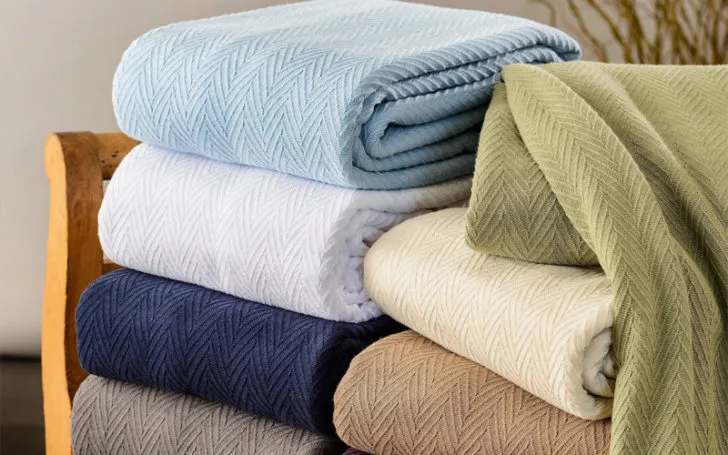
Tight woven structures tend to feel stable and resist stretching. An open weave allows more air movement but may snag more easily.
-
Waffle and cellular weaves use recessed areas that add texture and air spaces. Their warmth and durability still depend on yarn, density, and thickness.
-
Knits stretch and drape around the body. Large loops can catch on jewelry, claws, or rough hardware.
-
Pile fabrics, including fleece, plush, faux fur, and sherpa-style surfaces, trap air around raised fibers. Longer pile can collect lint and pet hair.
-
Filled designs rely on stitched boxes, channels, or baffles to limit fill migration. Examine whether large unstitched areas could leave cold spots after use or washing.
-
Bindings and reinforced edges can protect the perimeter, but loose stitching, weak seams, and exposed fill are still early signs of wear.
Grams per square meter, often shortened to GSM, describes fabric mass per area. It is useful when comparing closely related products from the same maker, but it is not a universal warmth rating. A dense cotton blanket and a lofty synthetic blanket with the same GSM can feel very different. Total blanket weight also includes shell, stitching, and hardware, so it should not be confused with warmth or therapeutic pressure.
A Practical Way to Choose
1. Start With the Job
Decide whether the blanket is for nightly bed use, an extra winter layer, a sofa, travel, outdoor seating, or a guest room. Then check dimensions. A throw may be generous on a chair but frustratingly short in bed. Our blanket size guide explains bed fit, overhang, and common measurements.
2. Match Warmth to the Room and Sleeper
Think about the bedroom temperature, your usual sleepwear, mattress and sheet materials, and whether you tend to wake hot or cold. Couples with different temperature preferences may do better with separate blankets or several removable light layers instead of one very warm shared covering.
Do not use “all-season” as a precise rating. Look for comparable specifications from the same manufacturer, read return terms, and test the blanket during the return window without removing labels or damaging packaging.
3. Account for Moisture and Drying
If you sweat heavily, live in a humid climate, or cannot line-dry a large item, consider how quickly the complete blanket can release moisture and whether your washer and dryer can handle it. An absorbent fiber may feel comfortable initially yet stay damp longer. A quick-drying synthetic may be easier to manage but may hold odors differently.
4. Choose the Surface Feel
Decide whether you want crisp, smooth, fuzzy, nubby, or stretchy fabric. If possible, feel a sample against your neck or forearm, not just your hand. Review the return policy before buying a texture you have not tried.
5. Check Movement and Sharing
A heavy, oversized, or high-friction blanket can be hard to reposition. If either sleeper has limited strength or mobility, choose a layer each person can move and remove without help. For a shared bed, consider whether the blanket drapes evenly, slides off one side, or transfers movement when one person turns.
6. Plan for Children and Pets
Claws can snag open knits, and long pile can trap hair. Loose embellishments, beads, damaged seams, controllers, and cords require extra scrutiny around children and pets. A washable cover can protect a hard-to-clean insert, but it adds weight and can bunch if it does not fit securely.
7. Investigate Allergy and Sensitivity Claims
“Hypoallergenic,” “antibacterial,” and similar terms should not replace an examination of the actual materials. Check the shell, fill, dyes or finishes, removable-cover design, and whether the product can be cleaned often enough for your needs. If you have a known contact allergy, asthma trigger, or severe allergy, ask a clinician what you specifically need to avoid.
8. Price the Maintenance, Not Just the Blanket
Include the cost of a duvet cover, commercial washing, dry cleaning, replacement controllers, repairs, and storage space. Check the care label before purchase and compare the blanket's wet bulk with your machine's manual. Our blanket care guide covers washing, drying, stains, storage, and when professional cleaning makes sense.
9. Read Labels and Certifications Narrowly
A label or certification supports only the claim within its scope. Fiber labels identify composition; a care label gives cleaning instructions; a responsible-sourcing standard may trace material; and an electrical safety mark concerns testing against a safety standard. None of these alone proves that a blanket will be cool, durable, comfortable, or medically beneficial.
Before buying, save the model number, instructions, warranty, and receipt. Be cautious when a seller provides no fiber percentages, no care directions, vague safety logos, or no practical return process.
Safety Boundaries for Special Blankets
Weighted Blankets
A weighted blanket may be a comfort preference, but it should not be presented as a treatment for anxiety, autism, or insomnia. A systematic review found only eight eligible studies, described the evidence as sparse, and found insufficient evidence that weighted blankets help insomnia 3.
Skip advice that treats one percentage of body weight as a universal rule. A fixed percentage cannot account for a person's mobility, breathing, heat tolerance, blanket construction, or whether the blanket covers the whole body. The user should be able to remove the blanket independently, keep it away from the head and neck, and stop using it if it causes pain, numbness, overheating, breathing difficulty, panic, or a trapped feeling.
Ask the treating clinician or occupational therapist before use when a health condition, disability, medication, or recovery limits breathing, circulation, movement, heat sensation, judgment, or the ability to respond. For a child, get individualized professional guidance, use only a product appropriate for the child's age and size, and confirm that the child can remove it without help. Never substitute an adult weighted blanket for a child's product. Do not use a design whose cover a child can enter and become trapped inside. CPSC has recalled children's weighted blankets for this entrapment and asphyxiation hazard 4.
Infants should never sleep with weighted blankets, weighted swaddles, or weighted sleep sacks. Loose and weighted bedding do not belong in an infant sleep space 5.
Heated Blankets
Read the manual before the first use because safe placement and layering vary by product. Confirm that the blanket has certification from a recognized independent testing organization, but remember that a mark does not protect against later damage or a recall. UL advises checking for damaged fabric, wiring, plugs, connectors, and charred areas; keeping a blanket flat during operation; avoiding use with a heating pad; and keeping cords from being pinched or pierced 6.
Search current CPSC recalls and warnings using the brand and model before use, particularly for an older, secondhand, or unfamiliar product. Internal heating wires in recalled blankets have overheated and melted through fabric, creating burn and fire hazards 7.
Stop using a heated blanket if the controller or cord is damaged, the fabric is scorched, wiring can be felt out of place, heat becomes uneven, or the unit behaves unexpectedly. Do not fold or bunch it while it is operating, pierce it with pins, use it when wet, or attempt a home wiring repair. Do not place another blanket on top unless the manual explicitly allows that arrangement. An automatic shutoff is a backup feature, not permission to ignore the instructions.
Do not use a heated blanket for an infant or young child. For an older child, use one only if the exact product instructions permit that age and use, and have an adult supervise setup and operation. Pets can chew cords or damage internal wires. Anyone who may not sense heat, operate the controls, move away, or remove the blanket reliably should ask a clinician and the manufacturer whether the product is appropriate.
Infant Sleep
For every infant sleep, use a firm, flat, level sleep surface with only a fitted sheet. Keep loose blankets, quilts, comforters, weighted products, and other soft items out of the sleep space. NIH guidance recommends suitable sleep clothing, such as a nonweighted wearable blanket, for warmth without loose bedding and warns against overheating 5 8.
Choose a fitted wearable blanket in the correct size so it cannot ride over the face or head. This is a garment designed for infant sleep, not an adult wearable blanket, ordinary throw, or weighted product.
Heat and Flame
Any textile can burn, smolder, or melt. Keep blankets away from open flames, cigarettes, cooking equipment, space heaters, and other ignition or high-heat sources. Do not assume a camping, emergency, “thermal,” or outdoor label means fire resistance. Rely only on a specific, verifiable claim with instructions for the intended use.
Quick Shortlist
If you are still deciding, use these starting points:
-
For adjustable bed warmth, try two lighter, removable layers rather than one thick layer.
-
For frequent household washing, prioritize a durable construction that fits your machines and has clear wash and dry instructions.
-
For pets, favor a close surface without large loops, fragile embellishments, or exposed wiring.
-
For different-temperature partners, consider separate blankets in compatible sizes.
-
For travel, compare packed size, total weight, drying time, and the conditions it is designed to handle.
-
For a filled bed layer, compare shell fabric, fill type and quantity, internal compartments, care, and return terms rather than fill name alone.
The final check is simple: Can you use it comfortably, remove it easily, maintain it as directed, and use it safely in the intended setting? If any answer is unclear, keep looking.