Most people can get some sleep on a plane, but in an ordinary seat that sleep is lighter, shorter, and more broken than a night in bed. The realistic goal is a few hours of imperfect sleep plus time spent resting quietly, not a full night. Within that limit, a handful of choices genuinely change the outcome: deciding whether sleeping on this particular flight helps you at all, timing that sleep to the clock at your destination, supporting your head so your neck is not holding it up, blocking light and sound, and leaving alcohol and sedatives out of the plan.
This page is about sleeping during the flight itself. If your main worry is how you will feel for the next three days, the jet lag article covers the full adjustment protocol, and travel and sleep covers the wider trip.
What sleep in an airplane seat is actually like
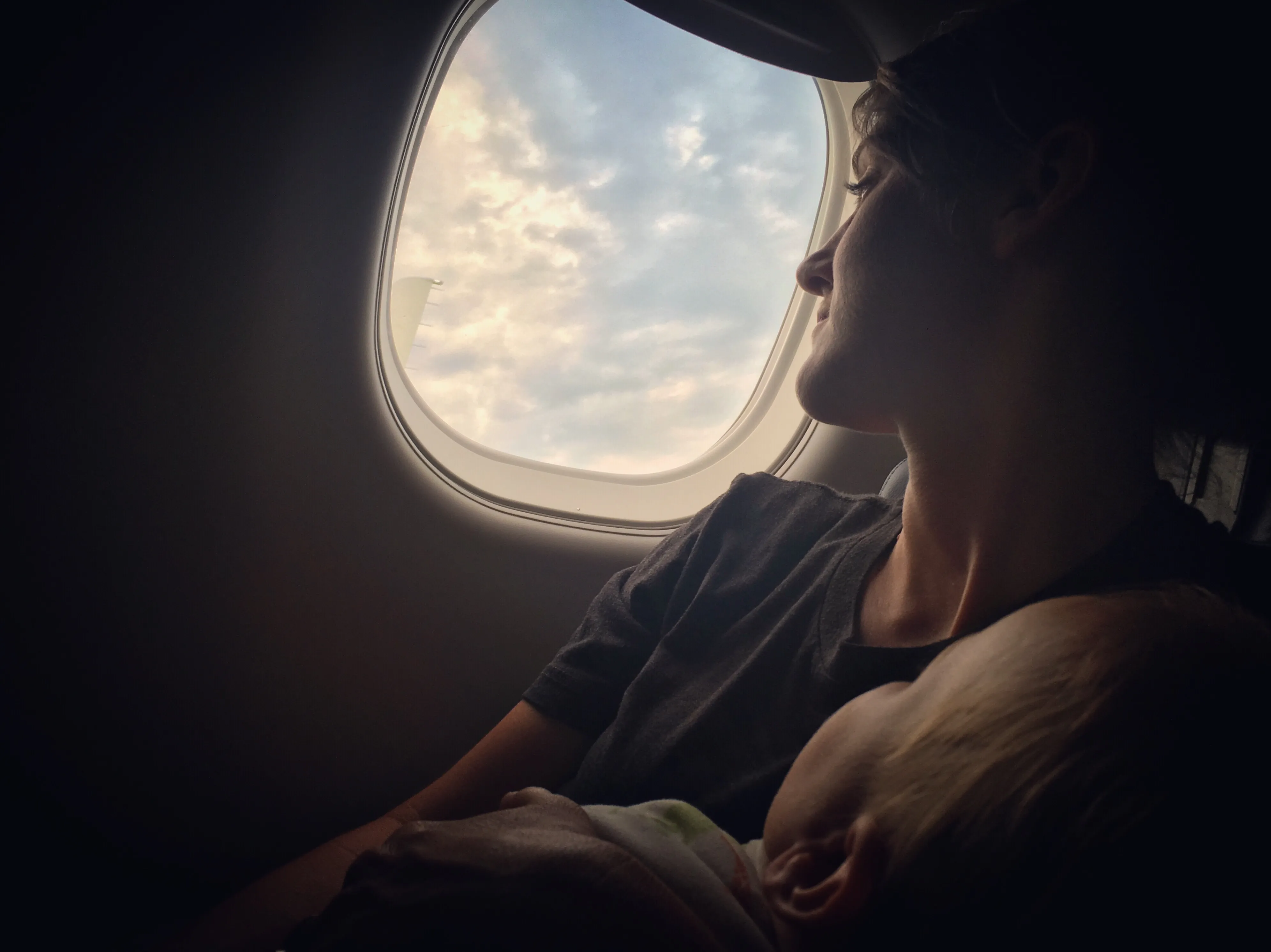
Two features of the cabin work against you before you even sit down.
The first is pressure. Cabins are pressurized, but not to sea level. The Federal Aviation Administration requires cabin pressure equivalent to no more than about 8,000 feet in normal flight, and in practice most cabins sit somewhere between about 5,000 and 8,000 feet 12. At that pressure a healthy person's blood oxygen saturation falls to around 90 percent, which is well tolerated while awake 2. Sleep pushes it lower still. In a study that put volunteers in an altitude chamber set to 2,438 meters, roughly the pressure of a cabin at 8,000 feet, sleepers spent a median of about 173 minutes below the 90 percent threshold during a four-hour sleep opportunity, compared with no time at all below it in a sea-level sleep laboratory 3. Cabin air is also dry, usually 10 to 20 percent humidity, which is why your eyes, nose, and throat feel it 1.
The second is the seat. Aviation research gives a rough sense of the penalty. In a study of 31 cabin crew flying a route of roughly ten and a half hours, sleep taken in an onboard crew bunk had a sleep efficiency of about 76 percent, while sleep taken in an upright jump seat came in at about 61 percent 4. Crew bunks are flat, dark, and relatively quiet, and even there the sleep was not efficient by the standards of a bed at home. Sleep was measured with wrist activity monitors rather than full brain recordings, so the numbers are approximate, but the gap between lying flat and sitting up is the point. It is also the honest answer to whether a lie-flat premium seat is different: it is, because being horizontal is the part that matters most, and no accessory reproduces it in economy.
Noise fills in the rest of the picture. Measurements inside commercial cabins have put continuous noise at cruise in the range of about 80 to 85 dB(A), before you add announcements, service carts, and conversation 5.
So on a long overnight flight, a few hours of broken sleep is a good result. That is worth having. It is not the same as arriving rested, and planning as though it were is how people end up driving tired from the airport.
First decide whether to sleep on this flight at all
Sleep on the plane when the flight covers nighttime at your destination, and stay awake when it covers destination daytime. This single decision does more for how you feel on arrival than any pillow or eye mask.
Jet lag comes from the mismatch between your body clock and local time, and the clock only moves so fast. Adjustment averages about one hour per day when you travel east and about one and a half hours per day when you travel west, because the internal clock is slightly longer than 24 hours and finds delaying easier than advancing 6. Timing your sleep, meals, and light exposure to the destination clock while you are still in the air is what starts that shift moving in the right direction 6.
In practice:
- An overnight eastbound flight covers your destination's night, but a short one. Set your watch and phone to destination time at the gate, skip the first meal service if it is already the middle of the night there, and use every remaining hour for sleep.
- A daytime westbound flight usually lands in the afternoon or evening. Sleeping through it makes the first local night harder. Stay awake, and if you are struggling, keep naps to about 20 to 30 minutes, since longer daytime naps interfere with the following night's sleep 6.
- A trip of less than about two days is not worth adapting to. Keep home hours where you can, and sleep on the plane if that is when you would normally be asleep at home 6.
A jet lag calculator or a clinician can personalize the timing of light, darkness, and melatonin for a specific route 6. The circadian rhythm article explains why the timing matters as much as the amount.
Choose the seat for the sleep you want
A window seat is the better sleeping seat for most people. You get a wall to lean against, control of the shade, and nobody climbing over you at three in the morning.
There is a real trade-off worth knowing. In travel medicine reviews, window seats have been associated with a two- to sixfold higher risk of venous blood clots compared with aisle seats, depending on body mass index, most likely because window passengers get up less 7. If you have clot risk factors, the aisle and the interruptions that come with it are the better choice.
A few other seat notes:
- Rows over or slightly forward of the wing tend to be steadier and further from the noisiest parts of the cabin.
- Seats beside galleys and lavatories get light, conversation, and traffic all night.
- Exit rows and bulkheads buy legroom, but bulkhead rows have no under-seat storage, some exit row seats do not recline, and armrests are sometimes fixed.
- The last row is often against a wall and may not recline at all.
- If you are traveling as a pair, booking the window and the middle keeps a stranger out of your row.
Set the seat up so your neck is not doing the work
This is where common advice most often goes wrong. Reclining sounds like the obvious fix, but reclining without head support can make your neck worse. In a study of 17 people sleeping in an economy seat without a pillow, a backrest reclined to 110 degrees produced more head and neck rotation and more neck muscle fatigue than an upright backrest, and taller people, whose heads rose above the top of the backrest, had the most awkward postures 8.
The practical reading is that recline and head support belong together. Recline gently, glance behind you first, and then give your head something to fall against. A wraparound or U-shaped travel pillow worn with the bulk at the front or side of the neck, a folded jacket wedged between your head and the window, or a rolled blanket against the headrest all do the same job. No pillow design turns an economy seat into a bed, so choose whichever one actually stops your head from tipping sideways.
Then handle the rest of the pressure points:
- Put a rolled blanket or small bag behind your lower back if the seat's lumbar curve does not match yours.
- Fasten the seatbelt low and snug over the blanket, where cabin crew can see it without waking you.
- Wear shoes you can slip off and back on quickly, and keep them where you could find them in the dark. Feet swell on long flights, so loose shoes and socks beat tight ones.
- A footrest or a bag under your feet can be more comfortable, but treat it as comfort only. Elevating your feet is not a clot precaution, and it should never be set up in a way that stops you standing and walking.
Block light first, then sound
Light and noise are the two problems an individual passenger can genuinely reduce.
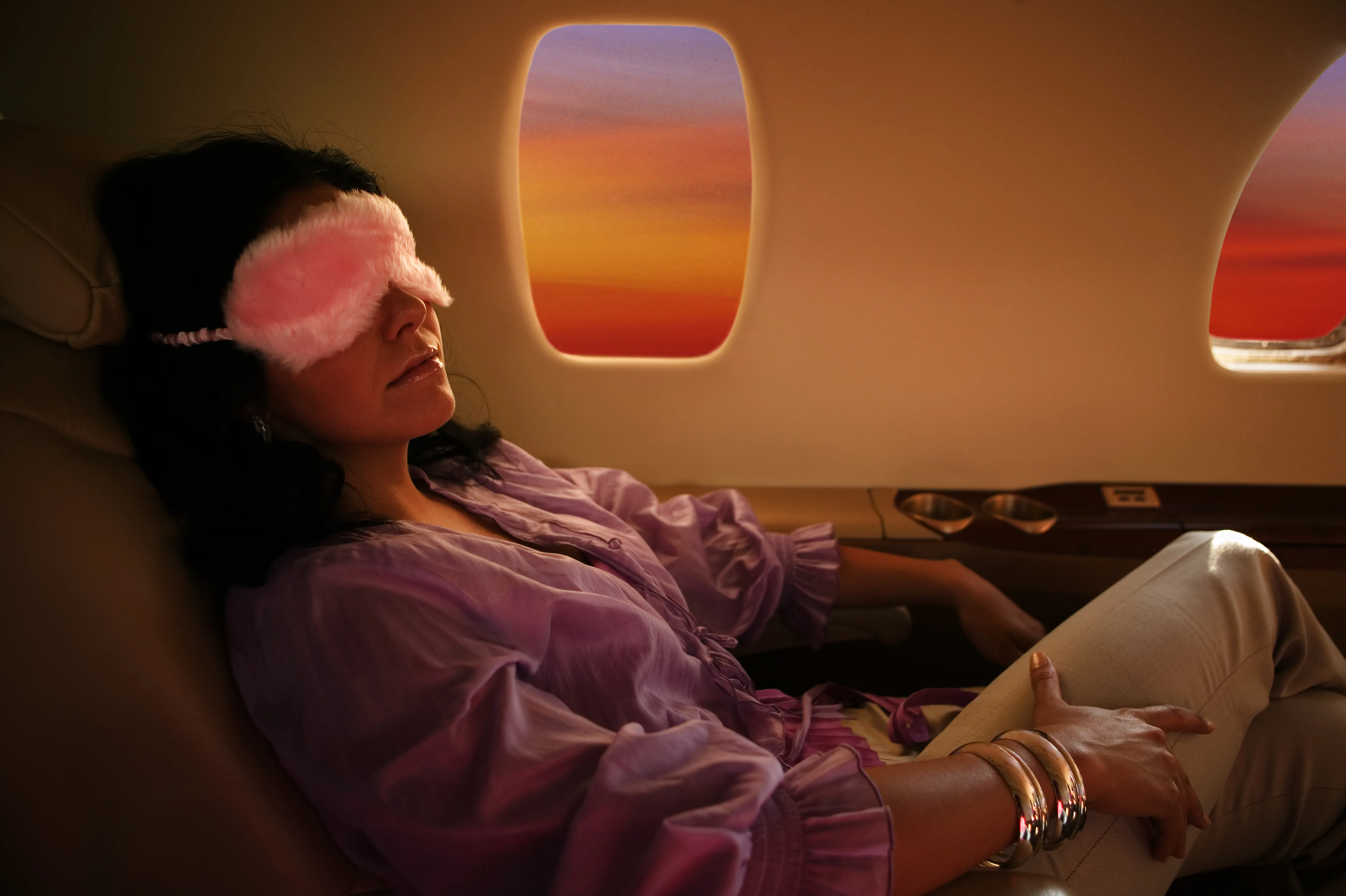
For light, an eye mask is the simplest tool, and a window shade helps if you have the window. The best available evidence for masks and earplugs comes from critical care, where the same two problems wreck sleep. A systematic review of 35 studies and 2,687 participants found that eye masks and earplugs improved self-reported sleep quality, and in the smaller studies using brain recordings they increased total sleep time by roughly 25 minutes, increased the proportion of REM sleep, and reduced awakenings 9. Those participants were hospital patients and volunteers in simulated intensive care units rather than passengers, and the studies were varied and mostly small, so treat the size of the benefit as uncertain rather than the direction of it.
Blocking light does a second job as well. Bright light in the hours after your body clock's low point pushes your clock earlier, and evening light pushes it later 6. That makes an eye mask part of your timing plan, not only a comfort item, and it is a reason to put the seatback screen and your phone away when you are trying to sleep. If you want the screen anyway, dim it and accept the cost.

For sound, noise-cancelling headphones and foam earplugs solve different halves of the problem. Active noise cancellation works best on the steady low-frequency engine rumble. Well-fitted foam earplugs do more against voices, crying, and clattering. Some people use earplugs under headphones. A steady soundscape or white noise track masks sudden sounds better than music with changes in volume.
One exception to sleeping through everything: if you are prone to ear pain, it is worth being awake for descent. Pressure in the middle ear equalizes with swallowing or chewing, and infants can nurse or suck on a bottle 10.
Temperature and layers
Cabin temperature is not yours to control, and it often swings between too warm during boarding and cold in the small hours. Layers solve this better than one heavy garment. A light long-sleeved top, a jacket or wrap that doubles as padding, and socks cover most of the range. Airline blankets are thin and not always available, so bring your own light blanket or large scarf if warmth matters to you. A hood or a wrap across the back of the neck also blocks the cold air coming down from the overhead vent.
Drinks, meals, and cabin service
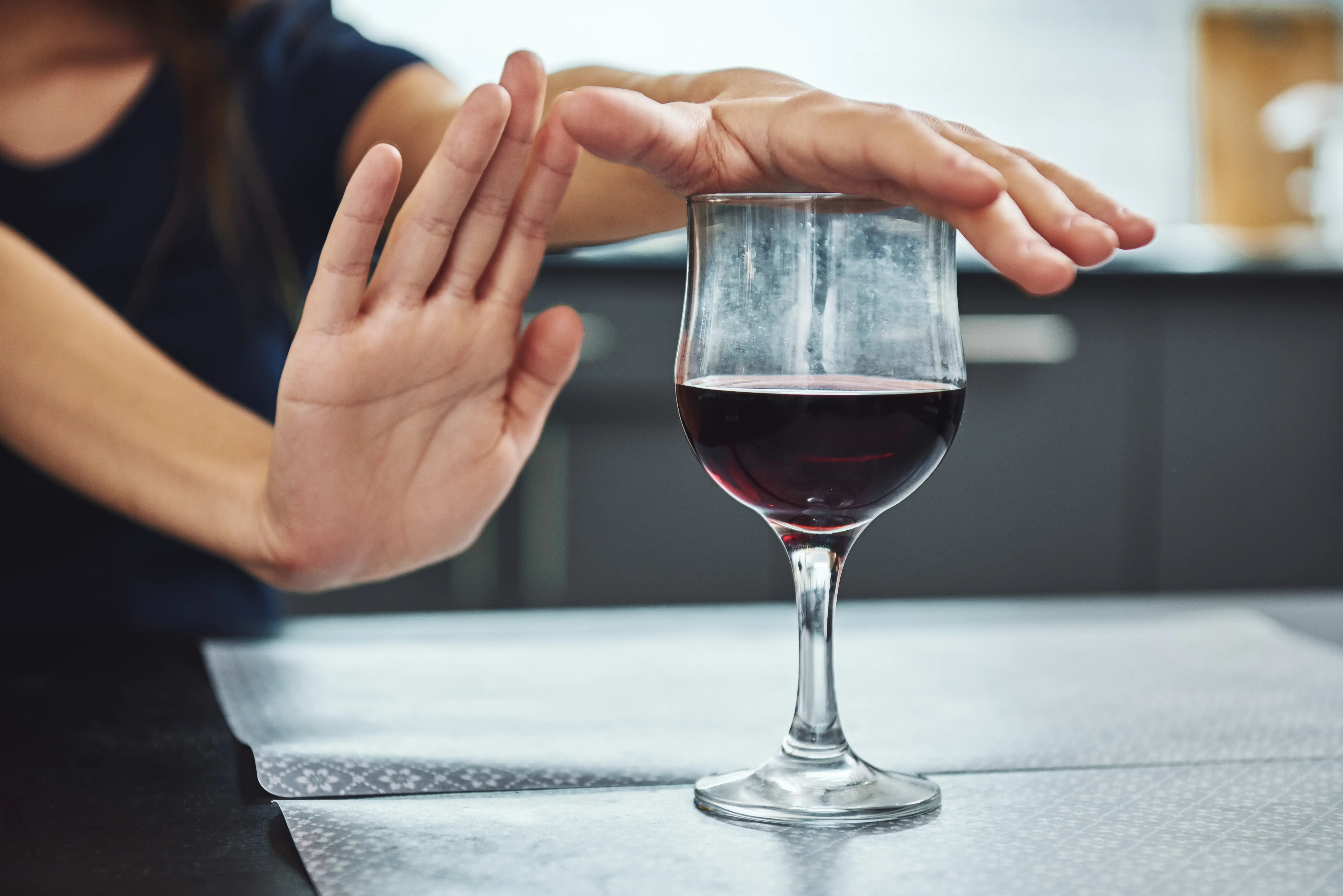
Alcohol is the easiest thing to remove from an in-flight sleep plan. The UK Civil Aviation Authority puts it plainly: many people fall asleep faster after a drink, but alcohol reduces sleep quality, so it is not a good way to deal with jet lag 11.
In a cabin, there is a specific added problem. In a study of 40 healthy adults who slept either in a sleep laboratory or in an altitude chamber set to 2,438 meters, drinking to a mean blood alcohol concentration of 0.043 percent before a four-hour sleep opportunity in the chamber pushed median oxygen saturation during sleep down to about 85 percent, raised median heart rate to about 88 beats per minute, and cut deep sleep. Under that combination, saturation stayed below 90 percent for a median of more than three hours 3. These were young, healthy volunteers in a chamber rather than passengers on a real flight, and the sleep window was short, so the exact numbers will not transfer. The direction is consistent though, and anyone with a heart or lung condition has less margin to spare. Our alcohol and sleep article covers the wider picture.
Caffeine has a half-life of roughly five hours, so a coffee with the meal service is still working when you are trying to settle 6.
The usual hydration advice needs a correction. Cabin air really is dry, and that dries out mucous membranes and makes contact lenses uncomfortable 1. But low cabin humidity does not cause dehydration, and the extra fluid loss over an eight-hour flight amounts to something like 150 milliliters 11. Drink for comfort rather than to fight off dehydration, and remember that every extra glass is another climb past your seatmate. Water is still the better choice than a nightcap. If dryness is your main problem, saline nasal spray, lip balm, and glasses instead of contact lenses do more than volume of water. See hydration and sleep for the general picture.
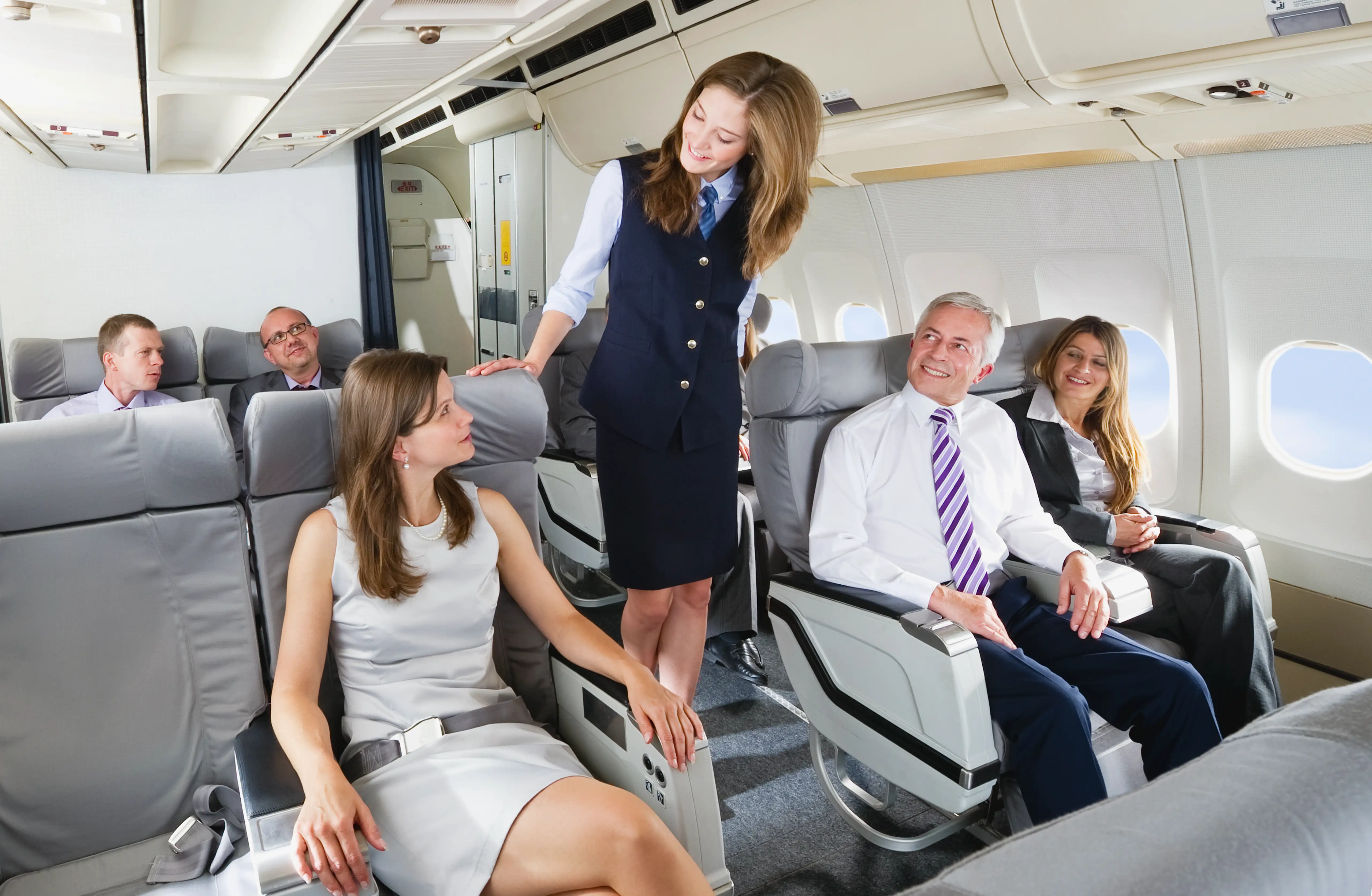
Meal service is often what stands between you and a sleep window. Tell the crew you would rather sleep than eat, and ask them not to wake you for service. Most airlines will note it, keep something aside, and leave you alone. Eating on the destination clock rather than the airline's schedule also supports the shift you are trying to make 6. If you are hungry, something light sits better in a seat than a large or heavy meal.
Sleeping pills, antihistamines, and melatonin
Being sedated is not the same as sleeping well, and in a seat it carries specific costs.
The UK Civil Aviation Authority advises against using sleeping pills during a flight, because staying in one position in your seat for a long stretch may increase your risk of deep vein thrombosis 11. Travel medicine guidance also advises against sedating antihistamines and long-acting benzodiazepines, which worsen next-day thinking, increase fall risk, and impair physical performance 6. Shorter-acting prescription hypnotics such as zolpidem and eszopiclone are used by some travelers, but their half-life and side effects have to be weighed first 6.
The morning after matters as much as the flight. The Food and Drug Administration warns that all drugs taken for insomnia can impair driving and other activities that require alertness the morning after use, even in people who feel fully awake, and it required lower zolpidem doses after data showed blood levels high enough to impair driving the next morning, with extended-release forms carrying the highest risk and women clearing the drug more slowly than men 12. If any of this applies to you, read how to use sleep medications safely and over-the-counter sleep aids before you pack anything, and raise it with a clinician rather than experimenting at 35,000 feet. Nothing in this group should be combined with alcohol.
Melatonin is a different kind of tool. It is a timing signal rather than a sedative, and the evidence behind it is about jet lag rather than about falling asleep in a seat. A Cochrane review of ten trials found that melatonin taken close to the target bedtime at the destination, roughly 10 p.m. to midnight local time, reduced jet lag after flights crossing five or more time zones 13. Doses of 0.5 to 1 mg are often enough to shift the clock, doses above 5 mg are not recommended, taking it when your own melatonin is already high is less effective, and because supplements are not regulated as medicines the actual content can differ from the label 6.
Talk to a clinician before using any of these if you are pregnant or breastfeeding, take an anticoagulant such as warfarin, have epilepsy or another seizure disorder, or are buying something for a child. Those are the groups the melatonin evidence specifically flags as needing more care 13.
Keep moving, even if it breaks up your sleep
Long stretches of stillness are the part of air travel with the clearest medical downside, and a passenger asleep in one position is as still as it gets.
The World Health Organization's WRIGHT project found that the risk of venous thromboembolism roughly doubles after travel lasting four hours or more, while the absolute risk for a healthy person sitting still that long stays low 14. Travel medicine reviews put that absolute risk after flights longer than four hours somewhere around 1 in 4,656 to 1 in 6,000 person-flights, note that shorter flights carry negligible symptomatic risk, and note that most travel-associated clots appear in the one to two weeks after the flight rather than during it 7.
Risk is concentrated in people who already have reasons to clot: previous venous thromboembolism, active cancer, recent surgery or hospitalization, estrogen-containing contraceptives or hormone therapy, pregnancy and the postpartum weeks, thrombophilia, obesity, age over 40, and being unusually short or unusually tall 714.
What to do about it:
- Move. Walk the cabin when the seatbelt sign allows it, and flex and extend your ankles regularly in your seat to push blood out of the lower legs 1411.
- Keep your legs free. Avoid constrictive clothing, and do not pack the footwell so full that you cannot shift position 14.
- Consider graduated compression stockings on long flights. A Cochrane review of 12 trials and 2,918 participants on flights longer than five hours found high-certainty evidence that below-knee graduated stockings reduced symptomless deep vein thrombosis, from a few tens per thousand passengers to about two or three per thousand, with no significant harms 15. The honest limit is that no deaths, pulmonary embolisms, or symptomatic clots occurred in those trials, so the review cannot say whether stockings prevent the outcomes that actually frighten people.
- Skip aspirin. It is not recommended for preventing travel-related clots 711.
If you are in one of the higher-risk groups, this is a conversation to have with a clinician before you fly rather than a decision to make at the gate. For travelers at substantially increased risk on trips longer than four hours, guidelines suggest graduated compression stockings or, in selected cases, a prophylactic dose of low-molecular-weight heparin 7.
Stay safe while you are asleep
Turbulence is the reason cabin crew keep asking about seatbelts. The FAA requires passengers to be seated with belts fastened when the aircraft leaves the gate and climbs after takeoff, during landing and taxi, and whenever the seatbelt sign is lit, and it advises keeping the belt buckled at all times to prevent injuries from unexpected turbulence. Of 207 serious turbulence injuries reported to the National Transportation Safety Board between 2009 and 2024, 40 were passengers and 166 were crew, who are the people up and working when it hits 16. A belt fastened over your blanket costs you nothing while you sleep.
Two smaller points: keep your head, arms, and feet out of the aisle, where service carts pass, and follow your airline's carry-on restrictions, which the FAA also lists as a way to prevent in-flight injuries 16.
Children and infants need their own plan. The FAA does not require child restraint systems on commercial flights, but it strongly recommends them, and travel health guidance is blunt that the safest place for a child on an airplane is a government-approved child safety restraint system or device 1710. An infant asleep in a lap has nothing holding them in place in sudden turbulence.
Do not medicate a child to make them sleep on a flight. Antihistamines are contraindicated under one year of age, the FDA and the American Academy of Pediatrics caution against their use under six years except for allergic conditions, and decongestants are not recommended under four years. For ear pain in particular, antihistamines and decongestants have not been shown to help, while swallowing and sucking during descent do 10. If your child struggles to sleep away from home, sleep aids for kids explains what is and is not worth trying, with a clinician involved.
If a health condition could be affected by flying
The mild drop in oxygen at cabin altitude is unremarkable for most people but not for everyone. Travelers with anemia, including sickle cell disease, with cardiopulmonary disease, especially those who normally use supplemental oxygen, or with cerebrovascular disease can have their underlying condition worsen in flight, and the Aerospace Medical Association recommends a pre-flight evaluation for people with cardiovascular disease, diabetes, chronic lung disease, mental illness, seizures, stroke, recent surgery, or a history of deep vein thrombosis or pulmonary embolism 1. If you are in one of those groups and plan to sleep on a long flight, raise it at a routine appointment before you travel rather than hoping for the best.
If you use CPAP, you can generally use it in the cabin. Under US accessibility rules, carriers operating aircraft originally designed for more than 19 seats must allow a passenger with a disability to use a CPAP machine, ventilator, respirator, or FAA-approved portable oxygen concentrator in the cabin, provided the device meets FAA requirements for medical portable electronic devices and carries the manufacturer's label saying so 18. In practice that means checking your device's label, arranging enough battery power for the flight, and telling the airline in advance. Our guide to traveling with a CPAP machine covers the packing side.
When you simply cannot sleep
Some flights are a write-off. Trying harder does not work, and watching the map tick across the ocean makes it worse.
A more useful move is to drop the goal and lower the effort. Keep the mask and earplugs on, recline what you can, and let your eyes stay closed without requiring sleep to follow. Quiet rest is not a substitute for the sleep you missed, and it is better not to pretend otherwise, but it is easier on you than an hour of trying and failing. Low-stimulation options such as an audiobook at low volume, slow breathing, or a familiar podcast keep you closer to sleep than a film or a phone.
If it is daytime at your destination and you are fading, a short nap of about 20 to 30 minutes protects alertness without eating into the coming night 6. Our guides to what to do when you cannot sleep and to napping go further. And if you know you will land unrested, spend some of the flight arranging the arrival instead: transport from the airport, an early check-in, a lighter first day.
Landing tired: do not drive
If you did not sleep, or you took anything sedating during the flight, do not drive from the airport and do not operate machinery on arrival day.
The National Highway Traffic Safety Administration recorded 644 deaths in drowsy-driving crashes in 2024, and its estimate for 2017 put drowsy drivers in about 91,000 police-reported crashes, with roughly 50,000 people injured and nearly 800 killed, figures that traffic safety and sleep researchers broadly regard as undercounts 19. Coffee is not a fix: NHTSA notes that a seriously sleep-deprived driver can still have microsleeps lasting four or five seconds, which at 55 miles per hour is more than 100 yards traveled while asleep 19. Drowsy-driving crashes also cluster between midnight and 6 a.m. and in the late afternoon, which is when a great many long-haul flights land 19.
If you used a sleep medication in the air, the same caution applies with more force. The FDA states that insomnia drugs can impair driving and other alertness-dependent activities the morning after use even when the person feels fully awake 12.
Book a train, a taxi, or a lift instead, and put decisions that need full attention off until you have slept. Then get outside into daylight at the right local time and start the adjustment properly, which is where the jet lag plan and, once you land, the hotel sleep guide take over.
FAQs
How much sleep can I realistically get on a long flight?
Plan on a few hours of light, broken sleep rather than a night's worth. Even cabin crew using flat onboard bunks in one study averaged around two hours of sleep per rest period with a sleep efficiency of about 76 percent, and sleep in a seat was markedly less efficient than that 4.
Is a window or an aisle seat better for sleeping?
A window seat is usually easier to sleep in, because you get something to lean against, control of the shade, and no one stepping over you. The trade-off is movement: window seats have been associated with a two- to sixfold higher risk of travel-related blood clots than aisle seats, so choose the aisle if you have clot risk factors 7.
Does reclining the seat help?
Only if your head is supported. In one study of people sleeping in an economy seat without a pillow, a backrest reclined to 110 degrees caused more head and neck rotation and more neck muscle fatigue than an upright backrest 8. Recline gently and add head support at the same time.
Should I take a sleeping pill to get through a long flight?
Not without medical advice. The UK Civil Aviation Authority advises against sleeping pills in flight because staying in one position for hours may raise your clot risk, and travel guidance advises against sedating antihistamines and long-acting benzodiazepines because of next-day impairment 116.
Does melatonin help me sleep on the plane?
It is not a sedative for the flight. The evidence supports melatonin taken close to bedtime at the destination to reduce jet lag after crossing five or more time zones, at doses of about 0.5 to 1 mg, not high doses taken to knock yourself out in a seat 136.
Do compression socks actually do anything?
On flights over five hours, below-knee graduated compression stockings clearly reduce symptomless deep vein thrombosis, from a few tens per thousand passengers to about two or three per thousand, with no significant harms. Because no serious clotting events happened in those trials, the evidence cannot tell us whether they prevent symptomatic clots or pulmonary embolism 15.
Do I need to drink extra water to avoid dehydration?
Cabin air is dry enough to irritate your eyes, nose, and throat, but it does not dehydrate you. Extra fluid loss over an eight-hour flight is only around 150 milliliters, so drink for comfort rather than to head off dehydration 111.
Can I give my toddler something to help them sleep on the flight?
No. Antihistamines are contraindicated under one year of age, the FDA and the American Academy of Pediatrics caution against them under six except for allergic conditions, and they have not been shown to help with ear pain either. Feeding or a pacifier during descent, familiar comfort items, and a seat of their own in an approved restraint do more 1017.